Image 1 of 18
1 / 18
Plant Reference
Ginkgo, Genus, biloba, Species,
- Genus & species
ginkgo, maidenhair tree
Eastern China in Zhejiang and Anhui provinces; functionally extinct in the wild; cultivated in China and Japan for over a thousand years
Overview
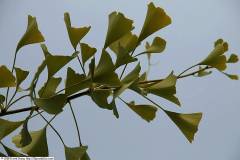
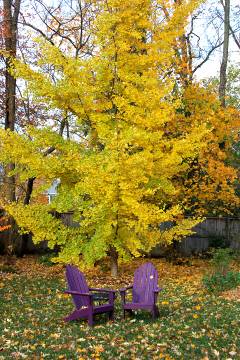
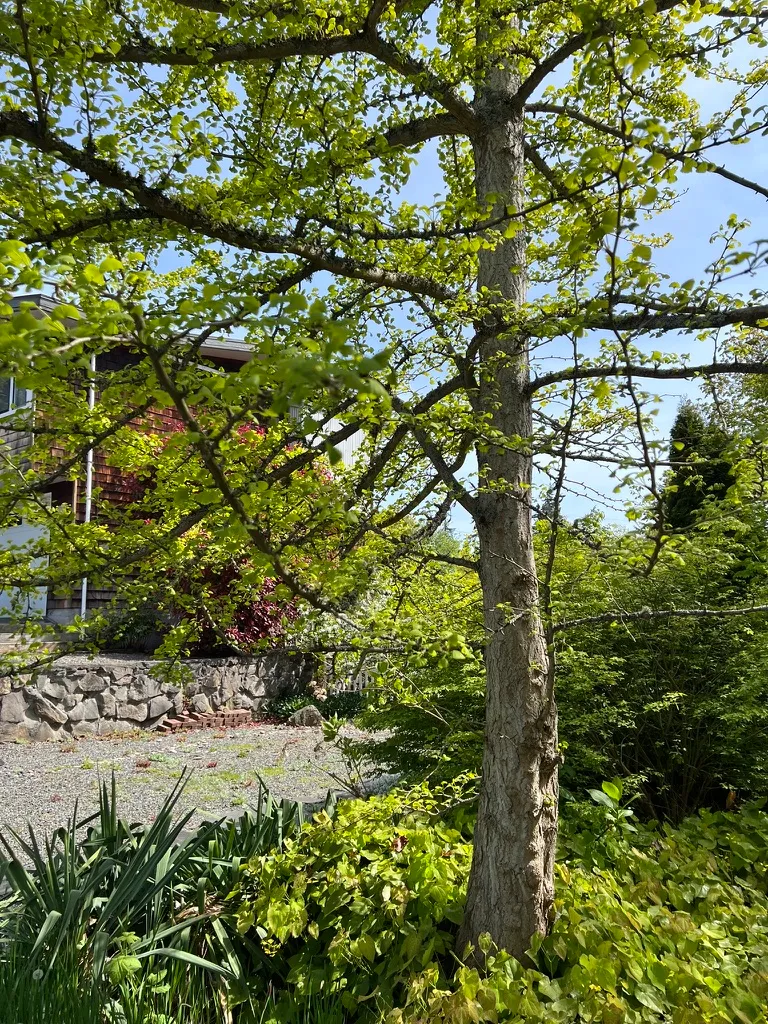
Ginkgo biloba is a large upright deciduous tree in the family Ginkgoaceae reaching 50–80 feet (15–24 m) tall and 25–40 feet (7.5–12 m) wide. The species is the sole surviving member of a lineage dating to the Permian period approximately 270 million years ago, a living fossil with no close living relatives, and although functionally extinct in the wild it has been cultivated in China and Japan for over a thousand years in temple and garden plantings. Leaves are fan-shaped with a central notch dividing the blade into two lobes (the species epithet biloba means two-lobed), 2–3 inches (5–7 cm) wide, carried on long petioles, and medium to dark green through the growing season. In fall the whole canopy turns golden-yellow and then drops within 1–2 weeks, often in a single day after a hard frost, leaving a gold leaf carpet beneath the tree. The species is dioecious: male trees produce yellowish catkins in April and May, and female trees produce paired ovules on long stalks that develop into fleshy tan-orange seed coverings in October. The fleshy seed coverings smell strongly of butyric acid (rancid butter) when they fall and decompose on pavement, which is why only male cultivars are propagated for street tree use, including 'Autumn Gold' (broad conical), 'Princeton Sentry' (narrowly columnar), and 'Magyar' (upright oval). The species tolerates air pollution, salt, compacted soil, and drought, and has no significant insect or disease problems in cultivation. Limitation: the sex of seedling-grown trees cannot be determined until the tree reaches reproductive maturity at 20+ years, and a seedling that turns out to be female produces the foul-smelling fruit coverings, so grafted male cultivars are the standard stock for street tree use; raw seeds contain ginkgotoxin and are toxic to humans and pets if ingested in quantity.
Native Range
Native to eastern China in Zhejiang and Anhui provinces, where only a few small wild populations remain and the species is considered functionally extinct in the wild. Ginkgo biloba has been cultivated in China and Japan for over a thousand years in temple and garden plantings, and living specimens in Chinese temples are documented at over 1,500 years old.Suggested Uses
Used as a street tree, shade tree, specimen, or park tree at 25–40 foot (7.5–12 m) spacing. Grafted male cultivars are the standard stock because the fleshy seed coverings of female trees produce a strong butyric-acid odor when they fall on pavement and because the sex of seedling-grown trees is not determinable for 20+ years. The species tolerates urban positions where many other large shade trees decline because of air pollution, salt spray, and compacted soil. Sites where pets or children may pick up and chew the fleshy seed coverings (in plantings that include female trees) are unsuitable because raw seeds contain ginkgotoxin.How to Identify
Appearance
Size & Dimensions
Height50' - 80'
Width/Spread25' - 40'
Bloom Information
The species is dioecious and produces separate male and female trees. Male trees produce small yellowish pollen-bearing catkins in April and May; female trees produce paired ovules on long stalks at the same time. Wind-pollinated. Female trees produce fleshy tan-orange seed coverings in October that smell strongly of butyric acid as they decompose on the ground, which is why male cultivars are the standard for street tree use.
Detailed Descriptions
Flower Description
not showy; dioecious, with male trees producing yellowish catkins and female trees producing paired ovules on long stalksFoliage Description
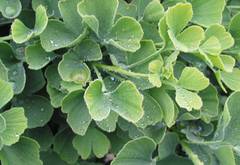
medium to dark green; fan-shaped (bilobed), 2-3 inches (5-7 cm) wide, on long petioles; turns golden-yellow in fall and the entire canopy drops within 1-2 weeksGrowing Conditions
Sun Requirements
Requires 6-12 hours of direct sunlight daily
• Full Sun: 6+ hours of direct sunlight
• Partial Shade: 3-6 hours of direct sunlight
• Full Shade: Less than 3 hours of direct sunlight
Care & Maintenance
Care Guide
Site in full sun with 6–12 hours of direct sun per day in well-drained soil with a pH of 5.5–7.5. The species tolerates clay, sand, compacted urban soil, salt, air pollution, and drought, and has no significant pest or disease problems in cultivation. Grafted male cultivars are the standard stock for street tree and landscape use because female trees produce fleshy seed coverings that smell strongly of butyric acid when they decompose on pavement, and the sex of seedling-grown trees cannot be determined until the tree reaches reproductive maturity at 20+ years. Raw seeds contain ginkgotoxin and are toxic to humans and pets if ingested in quantity. Hardy in USDA zones 3–9.Pruning
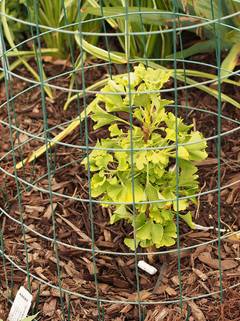
Pruning is done in late winter (February and March) while the tree is dormant. A single central leader is developed in the first 10–20 years to build an upright framework; co-dominant leaders can be reduced at the same time. The angular sparse branching of young ginkgos is natural and fills in over 20–30 years without over-pruning, and attempting to compensate for the open young form by heading cuts produces weak-attachment regrowth.Pruning Schedule
Prune: February–March
early spring