Ginkgo, Genus, biloba, Species,
- Genus & species
maidenhair tree
Overview
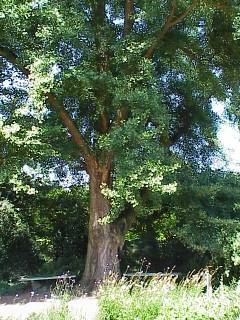
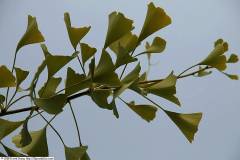
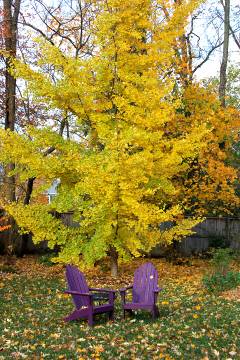
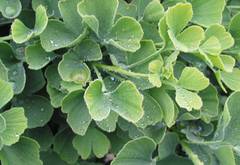
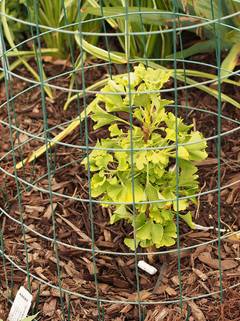
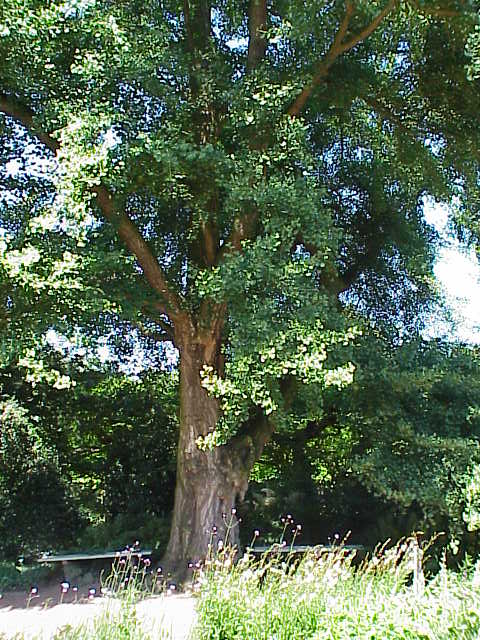
Ginkgo is a genus of deciduous gymnosperm trees in the family Ginkgoaceae, represented today by a single living species, Ginkgo biloba, the maidenhair tree. It is the sole survivor of an ancient lineage that once spread worldwide, and is often called a living fossil because little-changed relatives appear in rocks more than 200 million years old. The tree grows slowly to 50-115 feet (15-35 m) tall, with an open, irregular crown when young that broadens with age. Its fan-shaped leaves, 2-4 inches (5-10 cm) wide, have parallel forking veins and a notch that often divides them into two lobes, and they turn uniform golden yellow in autumn before dropping over a short period. Plants are either male or female; female trees produce fleshy seeds whose outer coat develops a strong, unpleasant smell as it decays, so male trees are usually chosen for planting. The seeds are not true fruit, since the genus bears no flowers. Trees tolerate pollution, compacted soil, heat, and pests, which has made the species a long-lived street and city tree. Slow early growth is the main drawback.
Native Range
Ginkgo survives in the wild only in a few areas of China, with small natural populations in the mountains of Zhejiang province; its original range is uncertain because the tree has been cultivated for so long. It has been planted around temples in China, Korea, and Japan for centuries and is now grown in temperate regions worldwide.Suggested Uses
Grown as a street, park, and lawn shade tree, and as a specimen for autumn color, with male cultivars chosen to avoid seed litter. Dwarf and columnar forms are used in smaller gardens and containers. The leaves are harvested commercially for herbal extracts.How to Identify
Appearance
Size & Dimensions
Height50' - 115'
Width/Spread30' - 60'
Bloom Information
Ginkgo produces no flowers, since it is a gymnosperm rather than a flowering plant. Pollen is shed from male trees in spring, generally April, on small cones, while female trees bear ovules that develop into seeds over the growing season. There is no floral display at any time.
Detailed Descriptions
Foliage Description
green, golden-yellow in autumnGrowing Conditions
Sun Requirements
Requires 6-12 hours of direct sunlight daily
• Full Sun: 6+ hours of direct sunlight
• Partial Shade: 3-6 hours of direct sunlight
• Full Shade: Less than 3 hours of direct sunlight
Care & Maintenance
Care Guide
The tree grows in full sun in deep, well-drained soil but tolerates a wide range of conditions, including clay, sand, drought, salt, and urban pollution. It establishes slowly and may take several years to gain height, then grows steadily for decades to centuries. A wide pH range is acceptable, and the tree needs little feeding once established. Male cultivars are planted to avoid the messy, strong-smelling seeds of female trees. Hardiness covers roughly USDA zones 3 to 8. The species has very few pest or disease problems, which is part of its long use in cities.Pruning
Little pruning is needed beyond removing dead, damaged, or crossing branches and shaping young trees for a single central leader. Pruning is done in late winter while the tree is dormant. The strong wood and slow growth mean mature trees rarely need major work.Container Growing
Suitable for container growing
Minimum container size: 10 gallons