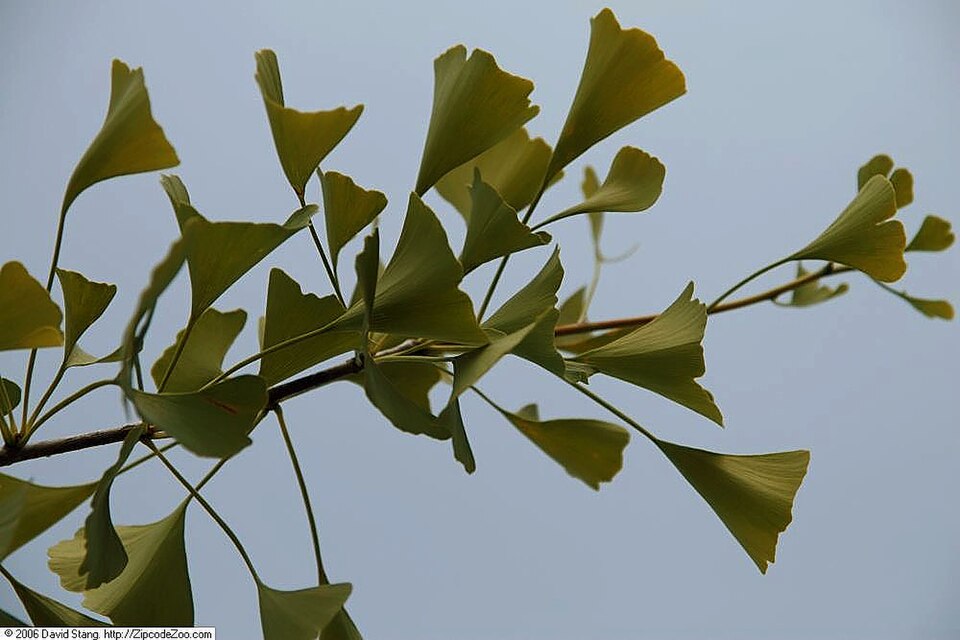
Ginkgo, Genus, biloba, Species, 'Autumn Gold', Cultivar,
- Genus & species
- Cultivar
autumn gold ginkgo
Central China (Zhejiang Province; mixed broadleaf forests)
Overview
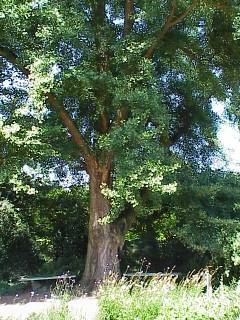
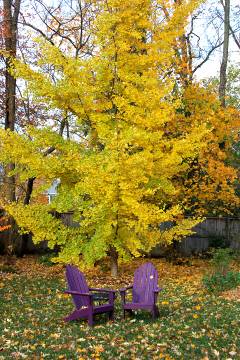
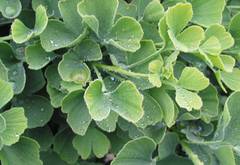
Ginkgo biloba 'Autumn Gold' is a broad, symmetrical, deciduous tree reaching 40–50 feet (12–15 m) tall with a spread of 25–35 feet (7.5–10.5 m) at maturity. This male cultivar was selected for its symmetrical conical to rounded crown, which develops more evenly than seedling ginkgos, which tend toward irregular branching. As a male clone it does not produce the fleshy female seed coats that emit a strong butyric-acid odor as they decompose. The fan-shaped (flabellate) leaves are 2–3 inches (5–8 cm) across, with dichotomous (forking) venation, bright green in summer and turning uniform golden-yellow in fall. The fall leaves drop rapidly, often within 1–3 days of color change, producing a concentrated carpet of gold beneath the tree. Ginkgo biloba is the sole surviving species of the division Ginkgophyta, a lineage whose fossil record dates to the Permian more than 250 million years ago. Growth rate is slow to moderate at 10–15 inches (25–38 cm) per year, so 15–20 years are needed to reach useful shade size. Hardy to zone 3.
Native Range
Ginkgo biloba is native to central China, with scattered populations in mixed broadleaf forests in Zhejiang Province. It has been cultivated in temple grounds throughout East Asia for more than 1,000 years, and wild versus cultivated origins are difficult to distinguish.Suggested Uses
Used as a lawn tree, street tree, and park tree with 30–40 foot (9–12 m) spacing. The symmetrical crown and urban tolerance suit street and civic plantings where narrow or weeping habits are not wanted. The fall display is brief but concentrated, with uniform gold color held for 1–3 days before dropping. Requires 40–50 feet (12–15 m) of vertical space and does not suit containers or small gardens at mature size. Slow growth means 15–20 years to meaningful shade.How to Identify
Appearance
Size & Dimensions
Height40' - 50'
Width/Spread25' - 35'
Bloom Information
Male catkin-like strobili appear in April–May, releasing wind-borne pollen. As a male cultivar, 'Autumn Gold' does not produce seeds or fleshy seed coats. The main seasonal display is the uniform golden-yellow fall foliage, which drops abruptly within 1–3 days of color change.
Detailed Descriptions
Flower Description
Yellow-green male strobili (inconspicuous)Foliage Description
Bright green, fan-shaped 2-3 inches across with dichotomous venation; uniform golden-yellow in fallGrowing Conditions
Sun Requirements
Requires 6-12 hours of direct sunlight daily
• Full Sun: 6+ hours of direct sunlight
• Partial Shade: 3-6 hours of direct sunlight
• Full Shade: Less than 3 hours of direct sunlight
Care & Maintenance
Care Guide
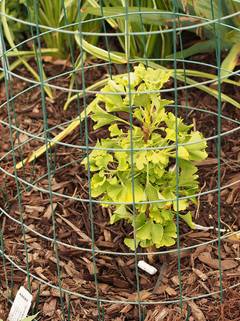
Grows in full sun in well-drained soil. Tolerates a wide range of soil types including clay, sand, and alkaline soils above pH 7.0. Hardy to zone 3 and tolerant of urban conditions including air pollution, compacted soil, salt spray, and summer heat. Growth is slow, with landscape size reached in 15–20 years. Pest and disease problems are rare in mature trees. Young trees transplanted at 6–10 feet (1.8–3 m) establish more reliably than larger specimens.Pruning
Develop a central leader during the first 5–10 years, removing competing co-dominant stems. Remove crossing or poorly placed branches in late winter (February–March) before bud break. Once the symmetrical structure is established, only minimal corrective pruning is needed.Pruning Schedule
Prune: February–March
late spring