Image 1 of 5
1 / 5
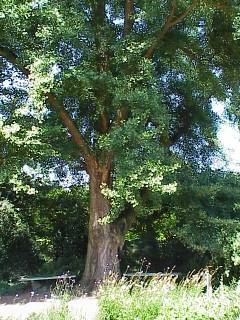
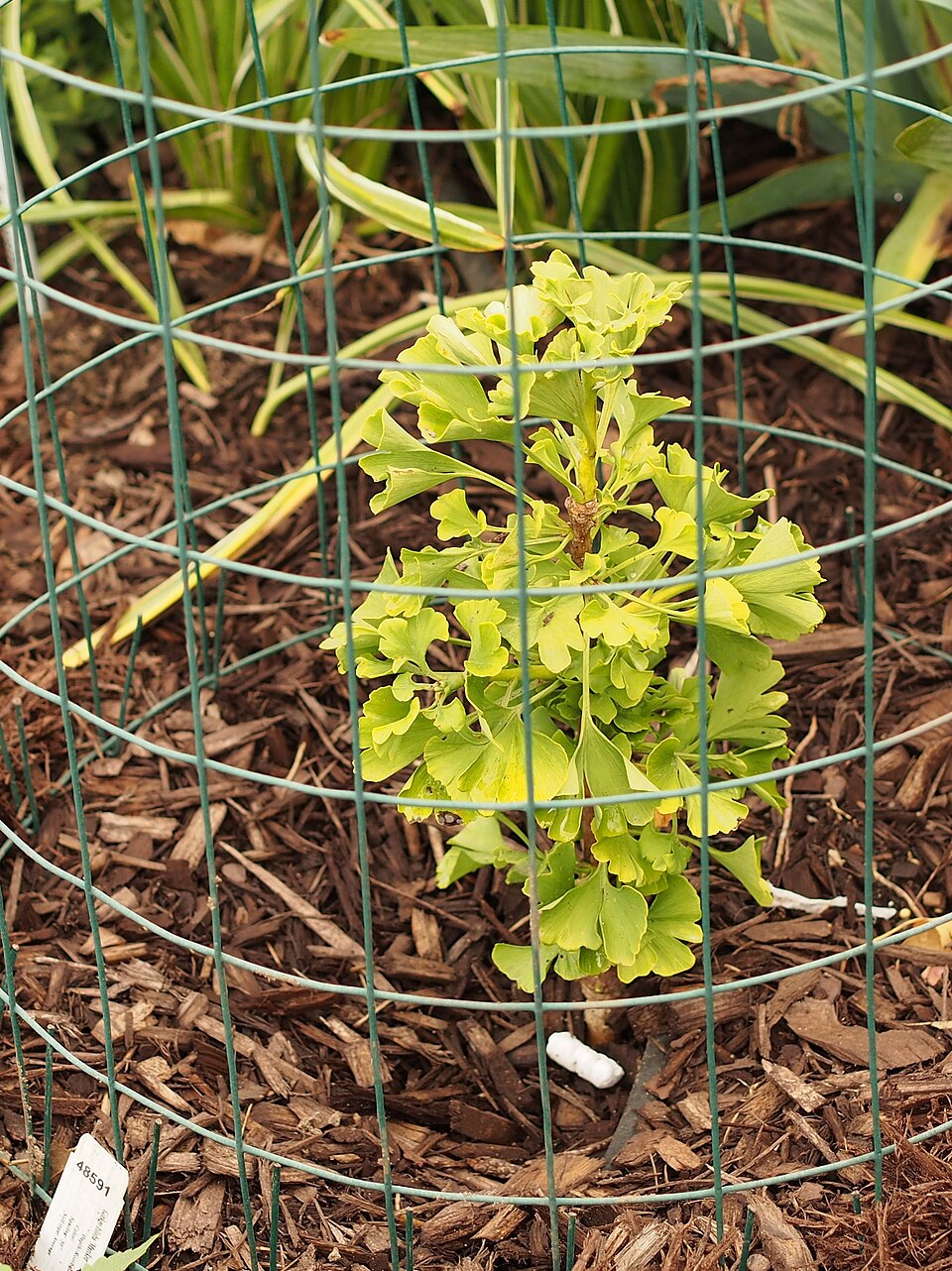
© F. D. Richards from Clinton, MI, some rights reserved (CC-BY-SA) · Wikimedia Commons
Ginkgo, Genus, biloba, Species, 'Mariken', Cultivar,
- Genus & species
- Cultivar
Ginkgo biloba Mariken tree
Overview
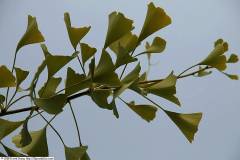
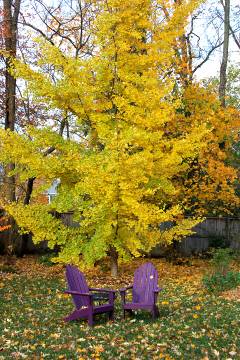
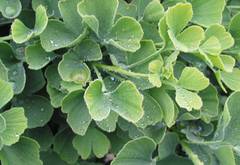
Ginkgo biloba 'Mariken' is a deciduous dwarf tree reaching 3-5 feet (90-150 cm) tall and 4-6 feet (1.2-1.8 m) wide over 25-30 years, originating from a witch's-broom mutation discovered on a cultivated G. biloba in the Netherlands and introduced by Piet Vergeldt. Habit is densely branched and globose to broadly mounded, with annual shoot extension of 1-3 inches (2.5-7.5 cm). Leaves are reduced from species size, fan-shaped, 0.75-1.5 inches (2-4 cm) wide, often with a deeper central notch than the species type, and packed densely along short shoots. Foliage emerges bright green in spring, holds medium green through summer, and turns clear yellow over 7-10 days in October before dropping in a 3-5 day window. Plants produced commercially are typically grafted, often onto a standard 3-5 foot (90-150 cm) trunk to produce a topiary or lollipop form; on grafted plants, watersprouts from rootstock revert to typical G. biloba dimensions if not removed. Reproductive sex is male; pollen-bearing strobili 0.3-0.6 inch (8-15 mm) long appear sparsely in April. Bark is grey, smooth on young growth, finely furrowed on older trunks.
Native Range
The species Ginkgo biloba is native to eastern China in the Tianmu Mountains at 1,000-3,300 feet (300-1,000 m) elevation, where small wild populations persist in mixed broadleaf forest. The cultivar 'Mariken' was selected from a witch's-broom mutation in the Netherlands and is propagated by grafting; it does not occur in wild populations.Suggested Uses
Planted as a specimen in rock gardens, conifer-style mixed beds, Japanese-influenced compositions, and as a topiary or standard lollipop form on a 3-5 foot (90-150 cm) stem, spaced 4-6 feet (1.2-1.8 m) apart. Suitable for permanent container culture in pots of 7-10 gallons (26-38 L) or larger. Used in collections of Ginkgo cultivars to compare leaf morphology and growth rate against full-sized forms.How to Identify
Appearance
Size & Dimensions
Height3' - 5'
Width/Spread4' - 6'
Bloom Information
As a male clone, only pollen-bearing strobili 0.3-0.6 inch (8-15 mm) long appear in April, scattered sparsely along short shoots; pollen release lasts 5-7 days. Reproductive output is sparse compared to full-sized G. biloba. No female structures or fruit are produced.
Detailed Descriptions
Flower Description
Yellow-green male strobiliFoliage Description
Bright green in spring; medium green in summer; clear yellow in fallGrowing Conditions
Sun Requirements
Requires 6-8 hours of direct sunlight daily
• Full Sun: 6+ hours of direct sunlight
• Partial Shade: 3-6 hours of direct sunlight
• Full Shade: Less than 3 hours of direct sunlight
Care & Maintenance
Care Guide
Plants establish well in full sun on soils from sandy loam to clay loam at pH 5.5-8.0; urban tolerance matches typical G. biloba. Watering of 2-4 gallons (7.5-15 L) weekly during the first two growing seasons is typical for plants of this size; established plants tolerate drought once root systems exceed 12 inches (30 cm) in depth. Insect and disease pressure are low in reported plantings. Watersprouts emerging from below the graft union grow at typical G. biloba rates and quickly outpace the dwarf scion, so removal each spring is required to preserve the cultivar form. Container plants require pots of at least 7-10 gallons (26-38 L) and need year-round outdoor exposure in zones 5-8 to satisfy chilling requirements. Cold hardiness drops in container culture compared to in-ground specimens because root zones are exposed.Pruning
Pruning is performed in late winter (February-March) when plants are dormant. Watersprouts from the rootstock below the graft union are removed annually in spring; failure to remove them causes the plant to revert to species dimensions. Dead twigs are removed from the dense interior canopy in summer to maintain air circulation. Heavy structural pruning is rarely required because growth is slow.Pruning Schedule
Prune: February–March
winterearly spring
Container Growing
Suitable for container growing
Minimum container size: 7 gallons