Primula, Genus, florindae, Species,
- Genus & species
giant cowslip
Southeastern Tibet (marshy meadows, streambanks, and wet areas at 10,000-15,000 feet / 3,000-4,600 m in the Tsangpo gorge region); discovered and introduced by Frank Kingdon-Ward in 1924 and named for his first wife, Florinda
Overview
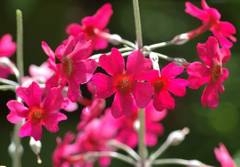
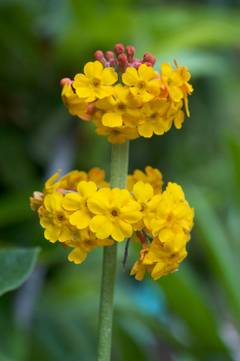
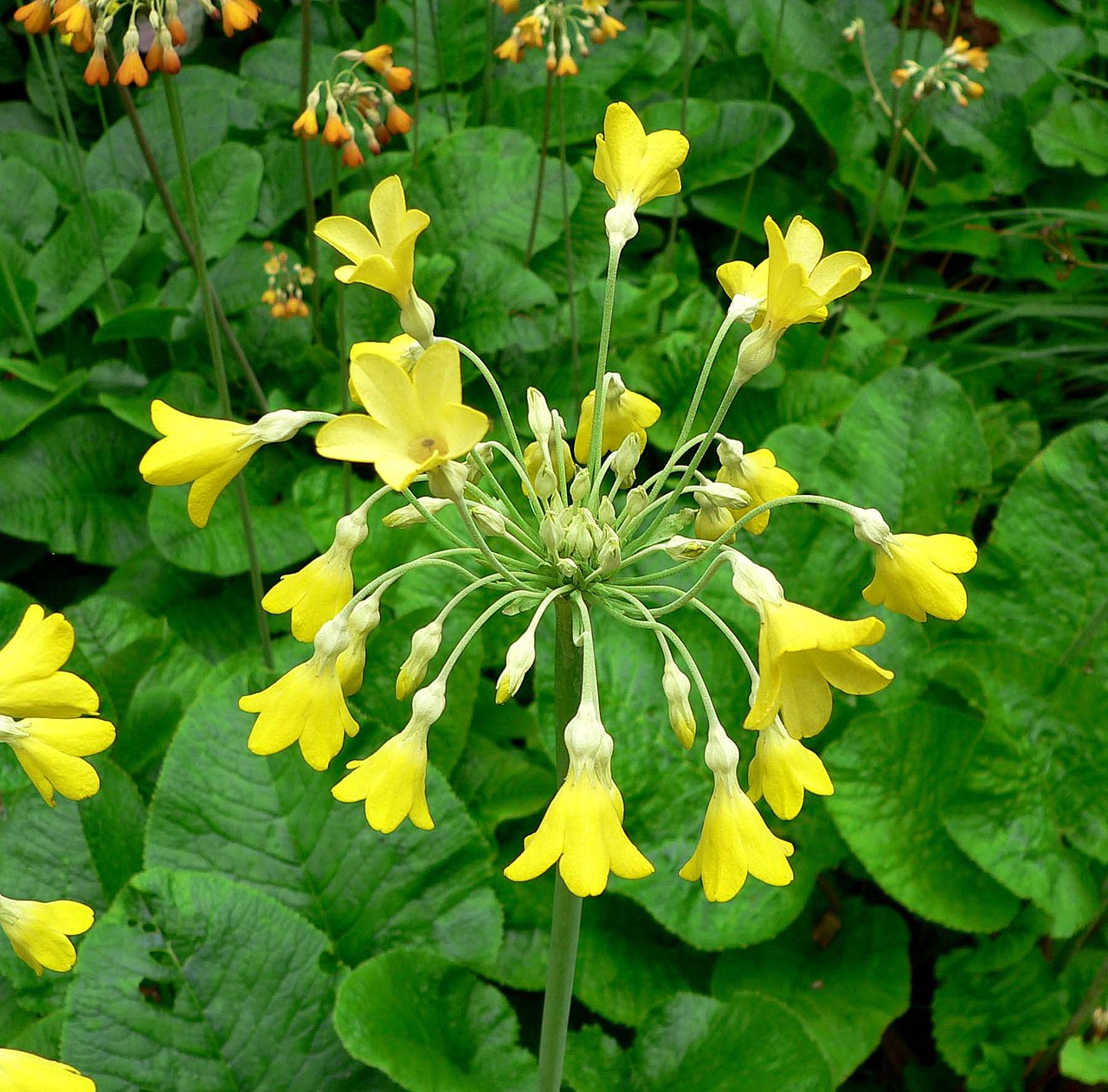
Primula florindae is a deciduous perennial reaching 24-36 inches (60-90 cm) tall with a spread of 18-24 inches (45-60 cm) and an upright habit rising from a broad basal rosette. This is the tallest commonly cultivated primrose and carries large pendant bell-shaped flowers 0.6-0.8 inch (15-20 mm) long in dense nodding umbels of 20-80 flowers at the top of stout, farinose (powdery-coated) stems. Flowers are sulfur-yellow in the typical form, with orange, copper, and red-brown color forms also in cultivation. Strongly fragrant. Blooms June-August, a 6-8 week window that runs later and longer than most other garden primroses — P. bulleyana and P. beesiana finish in 4-5 weeks in June-July and P. auricula finishes in 3-4 weeks in April-May. Broadly ovate to cordate leaves 4-10 inches (10-25 cm) long are medium green with finely toothed margins and form a robust basal rosette. Growth rate is moderate. Hardy to USDA zone 3. Toxic to pets. Standing water or waterlogged soil is the natural habitat; the species thrives in bog conditions where most other primroses fail from waterlogging. Named for Florinda, the first wife of Frank Kingdon-Ward, who discovered and introduced the species in 1924.
Native Range
Primula florindae is native to southeastern Tibet, in marshy meadows, along streambanks, and in wet areas at 10,000-15,000 feet (3,000-4,600 m) in the Tsangpo gorge region. The species was discovered by the plant collector Frank Kingdon-Ward in 1924.Suggested Uses
Used at pond margins, along stream edges, and in deliberate bog plantings in zones 3-8 at 18-24 inch (45-60 cm) spacing. The 24-36 inch (60-90 cm) height is the largest of any commonly cultivated primrose and carries the June-August flower window 3-5 weeks beyond the bloom end of the candelabra primroses and P. auricula. Strong fragrance adds a sensory feature near seating areas at pond and streamside. Tolerance for standing water and waterlogged soil widens the siting range into bog conditions that rule out most other primroses. Self-sows freely in favorable wet conditions to form expanding colonies. Toxic to pets. Not suited to dry sites, well-drained borders, or positions without reliable constant moisture.How to Identify
Appearance
Size & Dimensions
Height2' - 3'
Width/Spread1'6" - 2'
Bloom Information
Dense nodding umbels of 20-80 pendant bell-shaped flowers 0.6-0.8 inch (15-20 mm) long, sulfur-yellow in the typical form (with orange, copper, and red-brown forms also available), strongly fragrant, June-August. Bloom duration is 6-8 weeks — a window that extends the primrose season 3-5 weeks beyond the bloom end of P. bulleyana, P. beesiana, and P. auricula.
Detailed Descriptions
Flower Description
Sulfur-yellow in the typical form, with orange, copper, and red-brown forms also in cultivation; pendant bell-shaped flowers 0.6-0.8 inch (15-20 mm) long in dense nodding umbels of 20-80 on stout farinose stems; strongly fragrant; June-AugustFoliage Description
Medium green; broadly ovate to cordate leaves 4-10 inches (10-25 cm) long with finely toothed margins forming a robust basal rosetteGrowing Conditions
Sun Requirements
Requires 3-5 hours of direct sunlight daily
• Full Sun: 6+ hours of direct sunlight
• Partial Shade: 3-6 hours of direct sunlight
• Full Shade: Less than 3 hours of direct sunlight
Care & Maintenance
Care Guide
Grows in partial shade in consistently wet to boggy, humus-rich soil at pH 5.5-7.5. Hardy to USDA zone 3. Standing moisture or waterlogged soil is the baseline requirement; the species tolerates conditions that would drown most other garden primroses and fails in dry or well-drained soil. Pond margins, stream edges, and true bogs match what the species grows in natively. Self-sows freely in favorable wet conditions, and unattended plantings expand gradually into a colony. Toxic to pets.Pruning
Remove spent flower stems after bloom to tidy the planting, or leave stems in place to allow self-sowing and expand the colony. Allow foliage to die back naturally in autumn without premature cutting.Pruning Schedule
Prune: August–September
summer