Plantago, Genus, coronopus, Species,
- Genus & species
Buck's-horn plantain
Overview
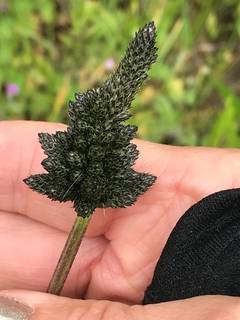
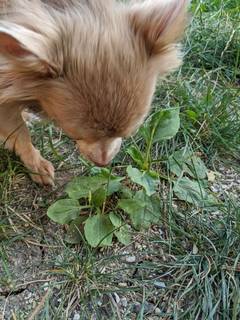
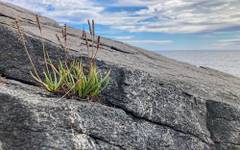
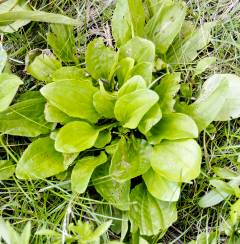
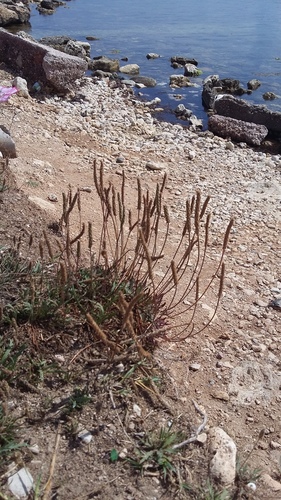
Plantago coronopus is a low, rosette-forming herb native to Europe, North Africa, and western Asia, now naturalized on many coasts worldwide. It grows as a flat rosette 4-10 inches (10-25 cm) across, with narrow leaves 2-6 inches (5-15 cm) long that are deeply and irregularly toothed, resembling the antlers behind the name bucks-horn. The leaves are slightly fleshy and often hairy, lying close to the ground. From late spring into autumn the plant sends up slender, leafless stalks 2-6 inches (5-15 cm) tall topped with narrow spikes of tiny, brownish wind-pollinated flowers with protruding yellow stamens. It is biennial to short-lived perennial, tolerating salt spray, poor sandy soil, trampling, and drought, which suits it to coastal cliffs, paths, and disturbed ground. The young leaves are eaten raw or cooked and are sold as a salad green under the names minutina and erba stella for their mild, slightly salty crunch. It self-seeds freely and can spread into lawns and paving, where the flat rosette resists mowing. Heavy, wet soils and dense shade are the conditions it tolerates least.
Native Range
Native to Europe, North Africa, and western Asia, especially along coasts, and naturalized in North America, southern Africa, and Australia. It grows on sea cliffs, sandy and gravelly shores, salt marsh edges, roadsides, and trodden waste ground.Suggested Uses
Grown as a cut-and-come-again salad leaf in vegetable gardens, containers, and raised beds, and used in coastal and gravel gardens. It suits edible borders, rock gardens, and naturalized plantings on dry, salty, or trodden sites.How to Identify
Appearance
Size & Dimensions
Height2" - 6"
Width/Spread4" - 10"
Bloom Information
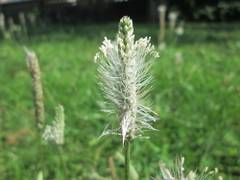
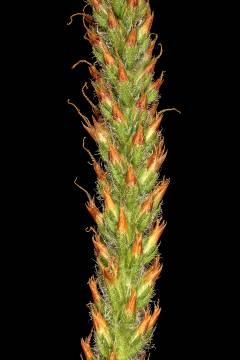
Flowering runs from May to September on slender stalks above the rosette. The narrow spikes hold many tiny, brownish wind-pollinated flowers with prominent yellow stamens. Seed forms in small capsules that ripen through summer and autumn and scatter readily.
Detailed Descriptions
Foliage Description
GreenGrowing Conditions
Sun Requirements
Requires 6-12 hours of direct sunlight daily
• Full Sun: 6+ hours of direct sunlight
• Partial Shade: 3-6 hours of direct sunlight
• Full Shade: Less than 3 hours of direct sunlight
Care & Maintenance
Care Guide
Grows in full sun and light, free-draining sandy or gravelly soil, and tolerates salt, drought, and poor fertility. It is hardy in USDA zones 5-9 and grows readily from seed sown on the surface in spring or autumn. For salad use, repeated cutting of young leaves keeps the rosette producing tender growth before it runs to flower. Steady moisture gives larger, milder leaves, while drought makes them tougher and saltier. It needs no feeding in open ground and declines in rich, wet soil. Self-sown seedlings appear nearby and are easily thinned or moved while small.Pruning
No pruning is needed beyond harvesting or grooming. Removing flower stalks as they appear prolongs leaf production and limits self-seeding. Old or weathered outer leaves can be pulled away to keep the rosette tidy.Container Growing
Suitable for container growing
Minimum container size: 1 gallons
Toxicity
Non-toxicPlanting Guide
Planting Methods & Timing
Planting Method
direct sow
Days to Maturity
50–60 days
Plant Spacing
6 inches