Plantago, Genus, major, Species,
- Genus & species
common plantain
Europe and western Asia; lawns, paths, roadsides, and disturbed ground from sea level to approximately 8,000 feet (2,400 m).
Overview
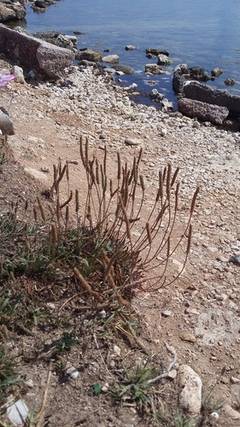
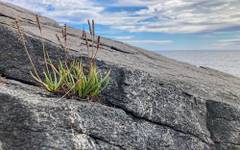
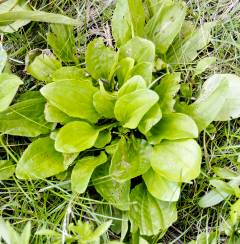
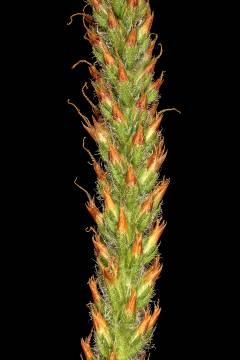
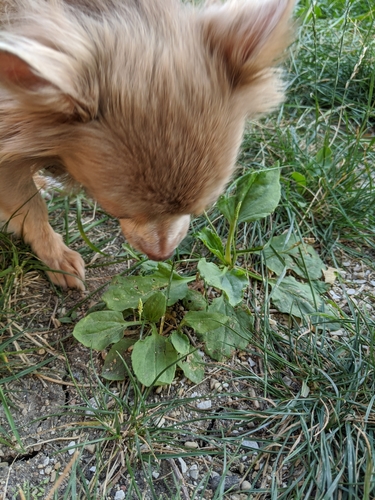
Plantago major is a taprooted perennial reaching 4-18 inches (10-45 cm) tall and 6-12 inches (15-30 cm) wide, forming flat basal rosettes pressed close to the ground. Leaves are all basal, broadly ovate to elliptic, 2-8 inches (5-20 cm) long and 1-4 inches (2.5-10 cm) wide, with 5-7 prominent parallel veins converging at the base and apex, smooth to sparsely hairy, thick-textured and slightly leathery, on a broad petiole. The parallel venation creates strong flexible fibers; pulling a leaf apart reveals the stringy vein remnants as diagnostic tactile evidence. Flower scapes are leafless, smooth, round in cross-section, and 4-18 inches (10-45 cm) tall. Flower spikes are elongated and slender, 2-8 inches (5-20 cm) long, with tiny greenish-brown flowers that bloom from the base upward over 12-16 weeks. Each capsule contains 5-20 tiny seeds with a mucilaginous coating that becomes sticky when wet. A single plant produces 5,000-15,000 seeds. The short taproot combined with a dense fibrous root system anchors the rosette tightly to compacted soil and permits plants to tolerate heavy foot traffic, mowing, and soil compaction. The species accompanied early European colonization of North America and spread along the trails and roads of the advancing colonial frontier, which gave rise to the Indigenous name White Man's Footprint applied to the species in the northeastern woodlands.
Native Range
Plantago major is native to Europe and western Asia, where it grows in lawns, paths, roadsides, and disturbed ground from sea level to approximately 8,000 feet (2,400 m). The species accompanied early European colonization of North America, arriving with the first colonists and spreading along trails and roads as colonization advanced. Populations have naturalized across all 50 U.S. states, all Canadian provinces, and essentially all temperate regions of the world.Suggested Uses
The species is used in Plantaginaceae identification courses alongside P. lanceolata for the narrow-versus-broad leaf comparison, and the parallel venation combined with the stringy leaf fibers are standard teaching features for the family. Dominance in a site is used as a soil-compaction indicator alongside Matricaria discoidea in land-management assessment. Foliage has a long historical record of use in European and Native American folk medicine for wound healing (leaves contain aucubin, allantoin, and mucilage, all active in the wound-healing response). The seed mucilage is chemically related to the psyllium produced by Plantago ovata, which is harvested commercially as a dietary fiber supplement.How to Identify
Appearance
Size & Dimensions
Height4" - 1'6"
Width/Spread6" - 1'
Bloom Information
Elongated slender flower spikes 2-8 inches (5-20 cm) long open from April through September, blooming from the base upward over a total bloom span of 12-16 weeks. Plants are wind-pollinated. Seeds carry a mucilaginous coating that becomes sticky when wet and adheres to shoes, animal paws, and vehicle tires, giving the species a long-distance dispersal mechanism that matches its historical spread along trails and roads. In the Pacific Northwest, scapes are produced continuously from spring through fall, and seeds mature progressively along each spike.
Detailed Descriptions
Flower Description
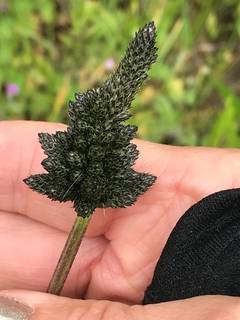
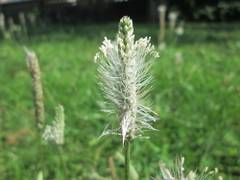
Greenish-brown flowers with yellowish stamens in elongated slender spikes 2-8 inches (5-20 cm) long on smooth round scapesFoliage Description
Dark green; broadly ovate to elliptic, 2-8 inches (5-20 cm) long and 1-4 inches (2.5-10 cm) wide, with 5-7 prominent parallel veins converging at the base and apex, thick-textured and slightly leathery, smooth to sparsely hairy, on a broad petiole; all basal and pressed close to the groundGrowing Conditions
Sun Requirements
Requires 4-10 hours of direct sunlight daily
• Full Sun: 6+ hours of direct sunlight
• Partial Shade: 3-6 hours of direct sunlight
• Full Shade: Less than 3 hours of direct sunlight