Overview
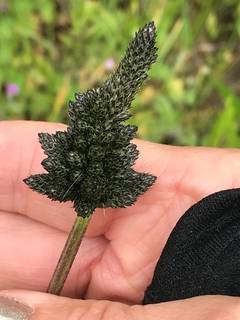
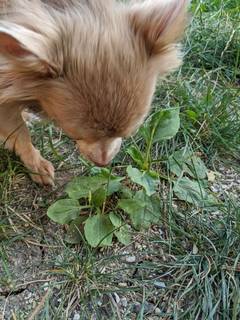
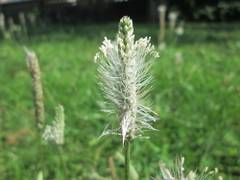
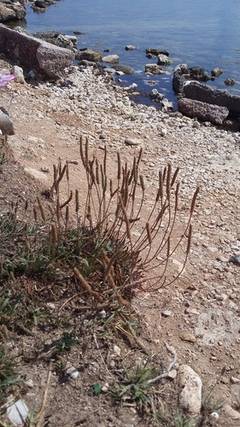
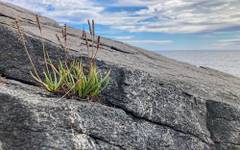
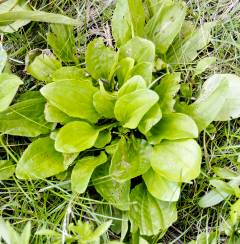
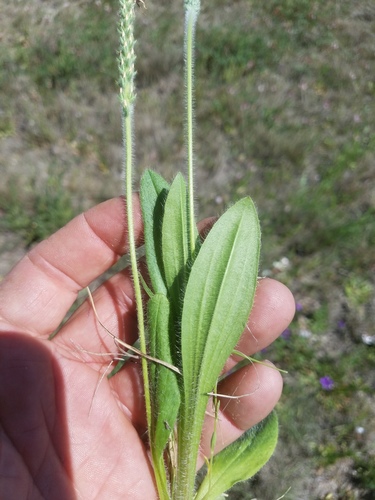
Plantago rhodosperma is a low annual or short-lived perennial in the plantain family, forming a basal rosette of leaves from which leafless flower spikes rise 4-12 inches (10-30 cm) tall. The lance-shaped to oblong leaves are 2-6 inches (5-15 cm) long, soft-hairy, and arranged flat against the ground in a rosette 4-10 inches (10-25 cm) across. In spring, slender spikes carry many small, papery, greenish-white flowers densely packed along the upper half. The flowers are wind-pollinated and inconspicuous, followed by small capsules holding reddish-brown seeds that give the plant its common and scientific name. It grows in dry, sandy, or disturbed open ground, including fields, lawns, roadsides, and overgrazed range. The whole plant completes its cycle in the cool season and dries up by early summer. It serves as a larval host plant for the common buckeye butterfly. In lawns and beds it can appear as a low rosette weed.
Native Range
Plantago rhodosperma is native to the south-central United States and northern Mexico, from Texas and Oklahoma west to Arizona and east to the Gulf states. It grows in dry, sandy, and disturbed open ground such as fields, prairies, and roadsides.Suggested Uses
Plantago rhodosperma is used in native plant and pollinator gardens as a larval host for the common buckeye butterfly, and in seed mixes for dry, disturbed sites. It suits low-water, low-input plantings and naturalized areas. Because it self-sows and resembles a lawn weed, it fits informal or restoration settings more than formal beds.How to Identify
Appearance
Size & Dimensions
Height4" - 1'
Width/Spread4" - 10"
Bloom Information
Flowering occurs in spring, mainly March to May, after cool-season growth. The small wind-pollinated flowers open from the base of the spike upward over a few weeks. There are no showy petals, so the flowering stalks read as slim greenish spikes. Seeds ripen by late spring and the plant dries soon after.
Detailed Descriptions
Foliage Description
greenGrowing Conditions
Sun Requirements
Requires 6-10 hours of direct sunlight daily
• Full Sun: 6+ hours of direct sunlight
• Partial Shade: 3-6 hours of direct sunlight
• Full Shade: Less than 3 hours of direct sunlight
Water & Climate
Water Needs
Drought Tolerance
Drought tolerant when established
Care & Maintenance
Care Guide
Plantago rhodosperma grows in full sun and tolerates poor, dry, sandy, and compacted soils. As a cool-season annual it relies on autumn and winter rainfall, germinating in fall and flowering in spring before summer heat. It needs no supplemental water or fertilizer in its native range. Seeds are sown in autumn on bare soil, since the plant self-sows freely where ground is open. It tolerates mowing and grazing, which lets it persist in lawns and pastures. After seed set in late spring the plant dies, leaving seed for the next season.Pruning
No pruning is needed for this small annual. Spent flower spikes can be removed to limit self-seeding. The dried rosette is easily pulled once the plant has finished.Toxicity
Non-toxicPlanting Guide
Planting Methods & Timing
Planting Method
direct sow
Direct Sow Timing
Autumn, before winter rains
Days to Maturity
150–210 days
Plant Spacing
6 inches
Companion Planting
Good Companions