Overview
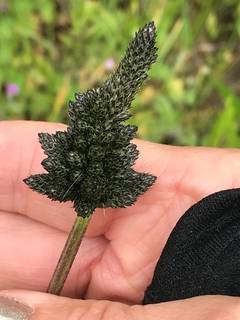
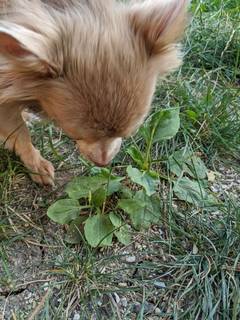
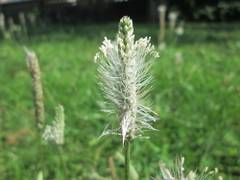
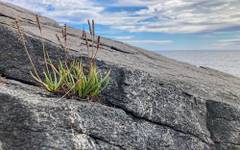
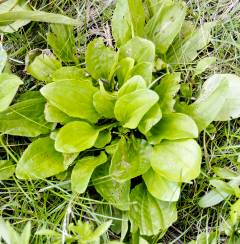
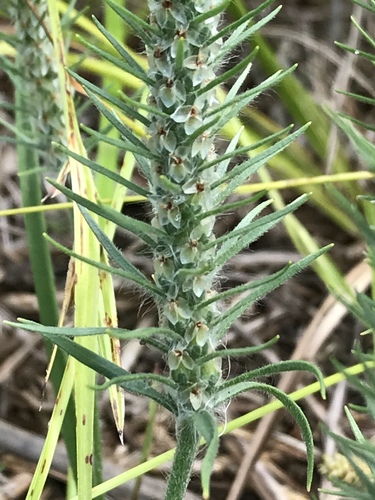
Plantago aristata is an annual or short-lived herb forming a basal rosette and reaching 4-16 inches (10-40 cm) tall in flower. Leaves are narrow and linear, 2-6 inches (5-15 cm) long, gray-green, hairy, and held upright to spreading from the base. Flowering stalks rise above the leaves and end in dense cylindrical spikes 1-4 inches (2.5-10 cm) long; each small flower is backed by a slender green bract 0.25-0.75 inch (6-19 mm) long that projects beyond the spike, giving it a bristly outline. The tiny flowers are wind-pollinated and brownish, opening from late spring through fall. Small capsules each release two seeds that turn sticky when wet. The plant completes its cycle in one season, dying after seeding. It grows on poor, dry, compacted ground and reseeds freely, appearing in lawns, paths, and disturbed sites. Bloom and size are reduced on very dry soil.
Native Range
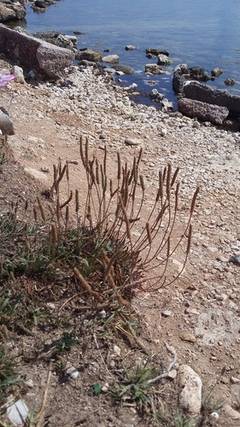
Native to central and eastern North America and now naturalized across much of the continent. Grows in dry, open, disturbed ground such as fields, roadsides, gravel lots, pastures, and sandy or rocky soils of low fertility.Suggested Uses
Used in meadow seed mixes and as forage and seed for birds and small wildlife, broadcast rather than spaced. Grows in restoration of dry, disturbed sites where little else establishes. The self-seeding habit and weedy spread limit its use in tended beds and lawns.How to Identify
Appearance
Size & Dimensions
Height4" - 1'4"
Width/Spread3" - 8"
Colors
Foliage Colors
Bloom Information
Wind-pollinated flower spikes appear from May through October, with peak flowering in early to midsummer. Each spike develops over several weeks as flowering moves up the stalk. In dry seasons plants flower at a smaller size and set fewer seeds.
Detailed Descriptions
Flower Description
Brownish to greenishFoliage Description
Gray-greenGrowing Conditions
Sun Requirements
Requires 6-10 hours of direct sunlight daily
• Full Sun: 6+ hours of direct sunlight
• Partial Shade: 3-6 hours of direct sunlight
• Full Shade: Less than 3 hours of direct sunlight
Water & Climate
Water Needs
Drought Tolerance
Drought tolerant when established
Care & Maintenance
Care Guide
Grow in full sun in dry, sandy, gravelly, or compacted soil of low fertility; the plant tolerates drought and poor ground where many species fail. Little or no irrigation is needed once seedlings establish. Rich, moist soil produces larger plants but is not required. The plant self-seeds heavily and can spread into lawns and beds. No fertilizer is needed. Plants die after setting seed and return from self-sown seed the following year.Pruning
No pruning is needed for this annual. Spent flower stalks can be cut or pulled before seed drops to limit spread. Mowing removes the flower spikes, but the low rosette regrows and can flower again.Toxicity
Non-toxicPlanting Guide
Planting Methods & Timing
Planting Method
direct sow
Direct Sow Timing
Fall or early spring
Days to Maturity
60–100 days
Plant Spacing
6 inches