Pithecellobium, Genus, spp., Multiple species,
- Genus
- Multiple species
Blackbeads
Overview
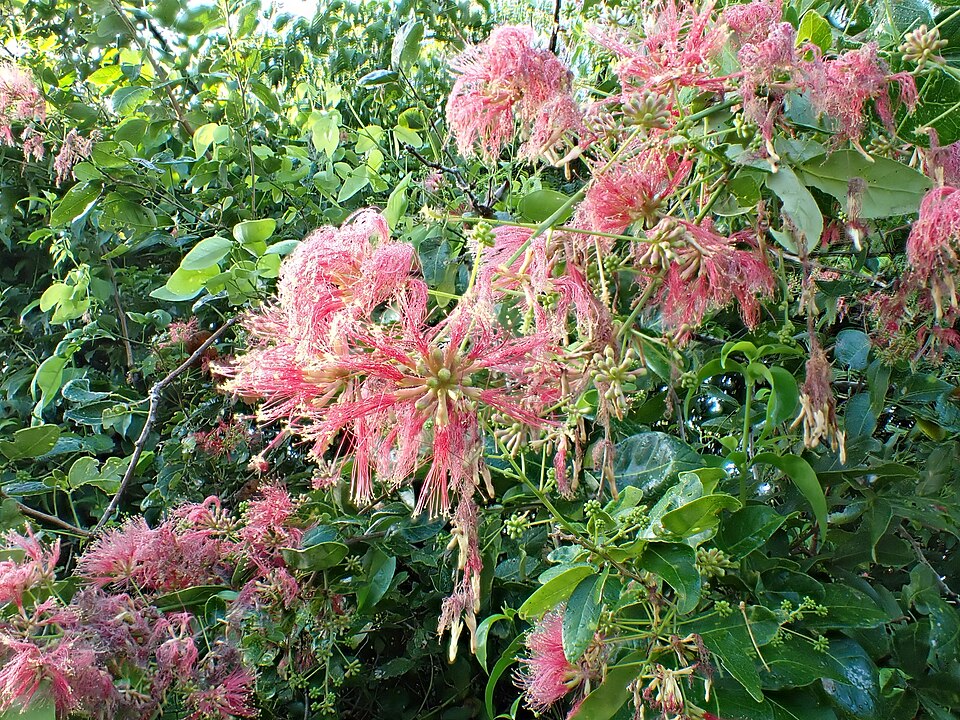
Pithecellobium is a genus of spiny shrubs and small trees in the legume family (Fabaceae), with around 18 species native to the tropical and subtropical Americas. Plants grow 3-15 m (10-49 ft) tall, usually armed with paired spines at the leaf bases, and carry bipinnate leaves with few leaflets. The small flowers are cream to greenish-white and packed into rounded, fluffy heads of long stamens. They are followed by curved or coiled pods that split to reveal black seeds set in a fleshy white, pink, or red aril, the source of the name blackbead. The genus includes P. dulce, the Manila tamarind or guamuchil, whose sweet-sour aril is eaten and which is widely naturalized and weedy outside its range. Plants tolerate heat, drought, poor soils, and coastal salt, and several fix nitrogen through root nodules. They are frost-tender, and the spines and heavy seeding make some species hard to manage near paths and farmland.
Native Range
Pithecellobium is native to the tropical and subtropical Americas, from the southern United States and Mexico through Central America and the Caribbean to northern South America, growing in dry forest, thorn scrub, and coastal woodland; P. dulce is now naturalized across the tropics.Suggested Uses
Grown as a shade, street, and hedge tree in warm climates, as a spiny stock-proof barrier, and for the edible aril of P. dulce. The wood is used for fuel and posts, and the foliage for fodder and green manure. Plants are spaced 3-6 m (10-20 ft) apart as trees, closer in barrier hedges.How to Identify
Appearance
Size & Dimensions
Height10' - 49'
Width/Spread10' - 30'
Bloom Information
Flowering comes mainly in the dry-to-wet transition and into the warm season, and can occur more than once a year in the tropics. The fluffy cream flower heads last a short time and draw bees. Coiled pods follow within a couple of months and persist as they dry and twist open.
Detailed Descriptions
Flower Description
cream to greenish-whiteFoliage Description
greenGrowing Conditions
Sun Requirements
Requires 6-12 hours of direct sunlight daily
• Full Sun: 6+ hours of direct sunlight
• Partial Shade: 3-6 hours of direct sunlight
• Full Shade: Less than 3 hours of direct sunlight
Care & Maintenance
Care Guide
Most species grow in full sun on free-draining soils and tolerate heat, drought, poor fertility, and coastal salt once established. As legumes they fix nitrogen and grow on lean ground at a pH from slightly acidic to alkaline. They are frost-tender and grow as perennials only in frost-free or near-frost-free climates. Growth is fast, and P. dulce in particular self-seeds heavily and can become invasive, so spent pods are cleared where spread is a concern. Pests are few, though seed beetles bore the pods and scale gathers on stems.Pruning
Lower branches are removed to lift the crown of tree forms and to clear the spiny growth from paths. Hedges and shrubs are clipped after flowering, working around the paired spines. Spent pods are cleared from species that self-seed heavily.Pruning Schedule
Prune: July
summer