Plant Reference
Pinus, Genus, thunbergii, Species, 'Thunderhead', Cultivar,
- Genus & species
- Cultivar
thunderhead Japanese black pine
Cultivar of North American origin; species native to coastal Japan and Korea
Overview
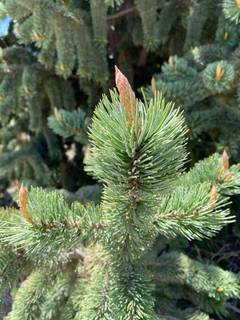
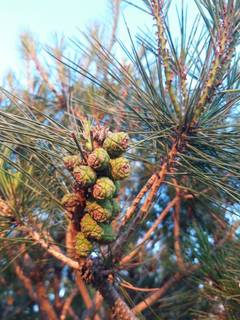
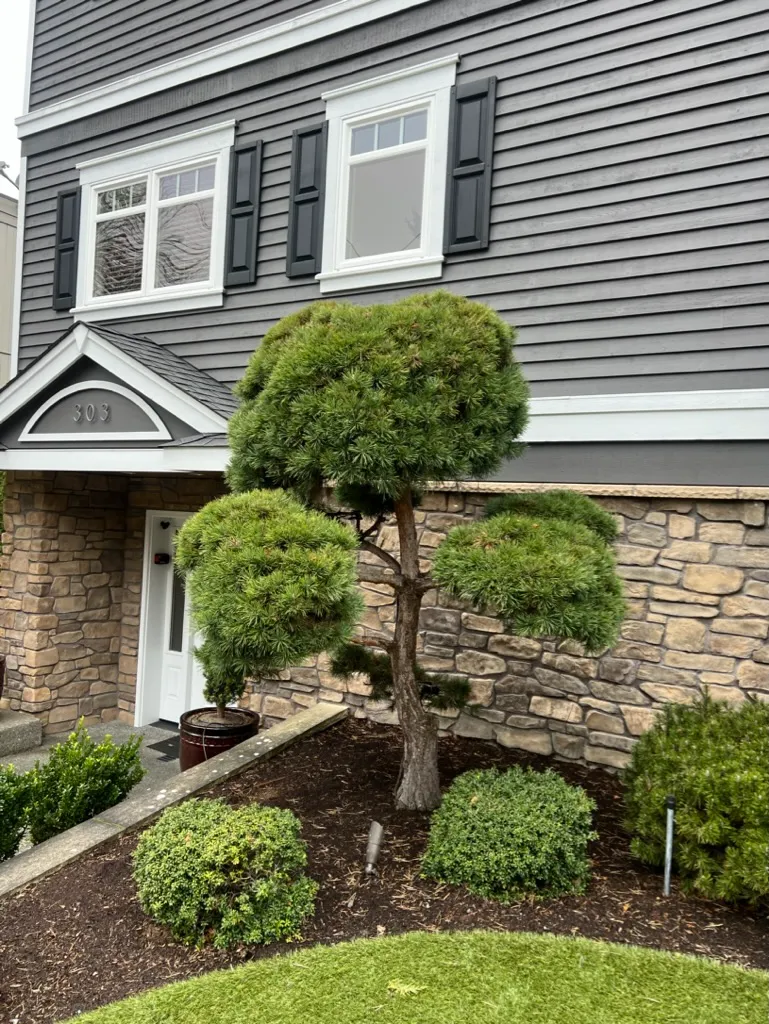
Pinus thunbergii 'Thunderhead' is a compact cultivar of Japanese black pine with a dense, broadly mounding to rounded crown. Plants reach 4–10 feet (1.2–3 m) tall and 5–12 feet (1.5–3.7 m) wide at maturity; growth rate is 6–10 inches (15–25 cm) per year. The crown is broadly mounding to irregular, with layered branching and dense needle tufts at branch tips. Needles are in bundles of two, 3–4.5 inches (7.5–11.5 cm) long, stiff, sharp-pointed, dark green — the same as the species. White winter buds are conspicuous on all new growth. Cones are ovoid, 1.5–2 inches (4–5 cm) long, light brown. Diplodia tip blight and pine wilt nematode affect this cultivar under the same conditions as the species; disease pressure is lower in Pacific Northwest conditions than in Japan and eastern North America.
Native Range
The species Pinus thunbergii is native to the coastal regions of Japan and Korea. The cultivar 'Thunderhead' was selected in North American nursery trade.Suggested Uses
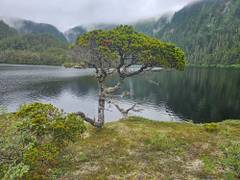
Planted as a specimen shrub or small tree in Japanese-style gardens, mixed borders, and coastal landscapes, spaced 8–10 feet (2.4–3 m) from adjacent plants. The compact mounding form accommodates sites where the full-size species is not appropriate. Candle management can be applied selectively to develop a cloud-pruned form over 5–10 years. Tolerates coastal exposure and salt spray.How to Identify
Appearance
Size & Dimensions
Height4' - 10'
Width/Spread5' - 12'
Colors
Bloom Information
Male strobili are yellow, releasing pollen in April–May. Female cones are ovoid, 1.5–2 inches (4–5 cm) long, light brown, ripening in the second season. Cone production begins at 5–10 years and is distributed across the mounding crown.
Detailed Descriptions
Flower Description
yellow (male strobili)Foliage Description
dark greenGrowing Conditions
Sun Requirements
Requires 6-12 hours of direct sunlight daily
• Full Sun: 6+ hours of direct sunlight
• Partial Shade: 3-6 hours of direct sunlight
• Full Shade: Less than 3 hours of direct sunlight
Care & Maintenance
Care Guide
Water weekly during the first two growing seasons; established plants tolerate extended dry periods. Tolerates sandy, rocky, and alkaline soils; salt tolerant, suitable for coastal sites. Candles can be shortened by half or fully removed in late spring to control size and develop the layered crown form characteristic of Japanese-style garden training. Without candle management, the plant grows more freely into a broader mound. Diplodia tip blight is a secondary disease concern in wet spring conditions. Pine wilt nematode risk is lower in Pacific Northwest conditions than in Japan.Pruning
Candles can be shortened by half or removed entirely in late spring before needles expand to increase branching density and maintain the compact form; this produces the layered, cloud-like crown silhouette associated with Japanese garden aesthetics. Dead branches can be removed at any time. Without candle pruning, the plant maintains a broadly mounding natural form without intervention.Pruning Schedule
Prune: May–June
late springsummer
Container Growing
Suitable for container growing
Minimum container size: 20 gallons