Paeonia, Genus, lactiflora, Species, 'Pillow Talk', Cultivar,
- Genus & species
- Cultivar
pillow talk peony
Central and eastern Asia (species range); cultivar of garden origin
Overview
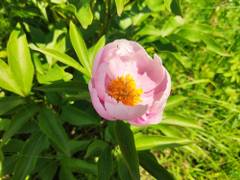
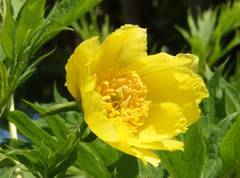
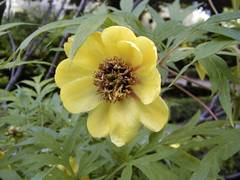
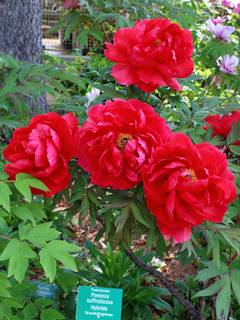
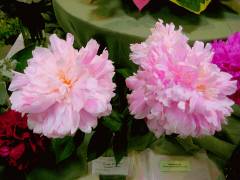
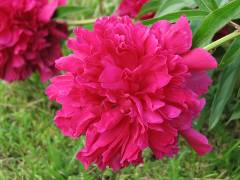
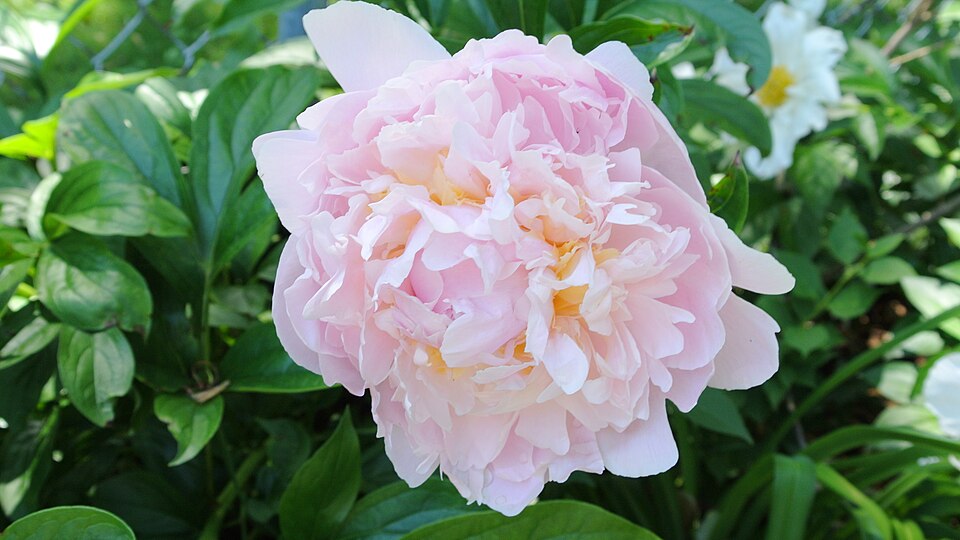
Paeonia lactiflora 'Pillow Talk' is an herbaceous double peony reaching 30-36 inches (76-91 cm) tall and 30-36 inches (76-91 cm) wide at maturity. Compound leaves divide into 9-15 dark green, ovate-lanceolate leaflets each 2-4 inches (5-10 cm) long, emerging bronze-tinted in spring before turning glossy green. Stems are stout and upright, requiring no staking in most years when grown in full sun. Flowers are fully double, 5-6 inches (13-15 cm) across, with light pink outer petals fading toward cream-yellow at the petal centers; flowers are fragrant with a moderate sweet-rose scent detectable at 2-3 feet (60-90 cm) on still days. Each plant produces 8-15 flower stems at peak, with bloom lasting 7-10 days per stem and 14-21 days per clump. Bloom occurs late May through mid June across most zones. Foliage stays green through summer and turns purple-bronze in mid October before dying back. Botrytis blight develops in cool, wet springs and shows as black spots on stems and buds; affected stems are removed at ground level. Plants are long-lived, often persisting 50 or more years in the same site without division when soil drainage is adequate.
Native Range
Paeonia lactiflora is native to central and eastern Asia, including northern China, Mongolia, eastern Siberia, Tibet, and northern Korea. It grows in scrubland, open meadows, and rocky slopes from 1,000 to 8,000 feet (300-2,400 m) elevation. 'Pillow Talk' was introduced by Klehm Nursery, USA, in 1973.Suggested Uses
Used in mid to back of perennial borders at 36 inch (90 cm) spacing, often grouped 3 plants per drift. Cut flowers hold 5-7 days in water; stems are cut at the soft-bud stage with petals showing color but not yet open. Container culture is feasible in 15-gallon (57 L) or larger pots with deep root run, but bloom is typically reduced and division is not practical.How to Identify
Appearance
Size & Dimensions
Height2'6" - 3'
Width/Spread2'6" - 3'
Bloom Information
Late May through mid June in zones 4-7, late April through mid May in zones 8 where winter chill is marginal, and early to mid June in zones 3. Each individual flower lasts 7-10 days, with bloom across the clump extending 14-21 days. Cool, dry weather lengthens individual flower life; daytime temperatures above 80°F (27°C) shorten bloom by 2-4 days. Plants flower reliably from year 2 onward; first-year plants from container stock often produce 0-3 flowers.
Detailed Descriptions
Flower Description
light pink fading to cream-yellow centersFoliage Description
dark green; bronze-tinted in springGrowing Conditions
Sun Requirements
Requires 6-8 hours of direct sunlight daily
• Full Sun: 6+ hours of direct sunlight
• Partial Shade: 3-6 hours of direct sunlight
• Full Shade: Less than 3 hours of direct sunlight
Care & Maintenance
Care Guide
Roots are planted with eyes 1-2 inches (2.5-5 cm) below the soil surface in zones 3-6 and 0.5-1 inch (1.5-2.5 cm) below in zones 7-8; deeper planting reduces flowering. Established plants tolerate 2-3 weeks without rain, though bud size decreases under spring drought. A balanced fertilizer such as 10-10-10 is applied at half rate in early spring as growth resumes; high-nitrogen feeds reduce flowering and increase stem flop. Botrytis blight is the main disease in cool, wet springs and appears as black stem cankers and bud blast; affected tissue is cut to ground level and removed from the site. Plants are long-lived and rarely divided; division of established crowns is performed only in early September with sharp cuts through the woody crown, retaining 3-5 eyes per division. Ant activity on emerging buds in spring is incidental and does no damage.Pruning
Spent flowers are cut just below the bloom in early summer to prevent seed formation; foliage is left intact through autumn for crown bud development. Stems are cut to ground level in late October or early November after frost has blackened the foliage; cuttings are removed from the site to limit overwintering Botrytis spores. Plants are not summer-pruned beyond removal of broken or diseased stems.Pruning Schedule
Prune: October–November
fall
Container Growing
Suitable for container growing
Minimum container size: 15 gallons