Penstemon, Genus, venustus, Species,
- Genus & species
Blue Mt penstemon
Inland Pacific Northwest (Blue Mountains, Hells Canyon)
Overview
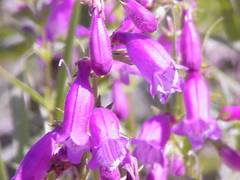
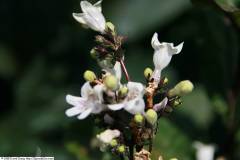
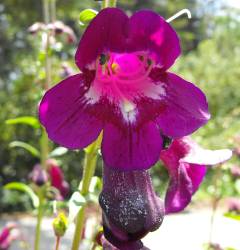
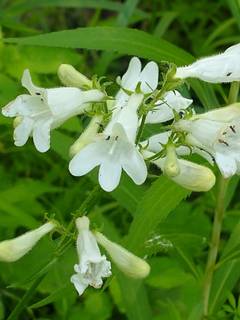
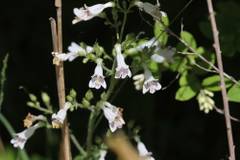
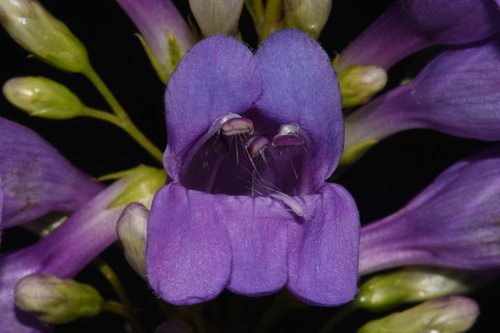
An upright herbaceous perennial reaching 18-36 inches (45-90 cm) tall from a basal cluster with several stout flowering stems. Basal leaves lance-shaped to oblanceolate, 2-5 inches (5-13 cm) long, glossy bright green with serrate margins. Stem leaves smaller, opposite, lance-shaped, clasping the stem with toothed margins. Inflorescences open panicles 6-15 inches (15-40 cm) long bearing 30-80 tubular flowers held at the upper portion of the stem. Each flower 1.25-1.75 inches (3-4.5 cm) long, lavender to rose-purple with a paler throat marked by purple guidelines, two-lipped, with a flared lower lip. Sterile staminode bearded with yellow-orange hairs. Capsules 0.4-0.6 inch (10-15 mm), ripening in summer. Plants form clumps 12-18 inches (30-45 cm) wide after 3-4 years and persist 5-10 years from seed.
Native Range
Native to the inland Pacific Northwest, occurring in eastern Washington, northeastern Oregon, and west-central Idaho. Found on rocky slopes, talus, road cuts, and open ponderosa pine forest at 1,500 to 7,000 feet (460-2,130 m) elevation, often centered in the Blue Mountains and Hells Canyon region.Suggested Uses
Commonly planted in inland Pacific Northwest native plant gardens, xeric pollinator plantings, and dry rock gardens at 18-24 inch (45-60 cm) spacing. Suitable for containers of at least 3 gallons (11 L) with at least 50% mineral grit. Pairs in cultivation with other Blue Mountain natives such as Eriogonum compositum and Calochortus elegans.How to Identify
Appearance
Size & Dimensions
Height1'6" - 3'
Width/Spread1' - 1'6"
Bloom Information
Detailed Descriptions
Flower Description
lavender to rose-purpleFoliage Description
glossy bright greenGrowing Conditions
Sun Requirements
Requires 6-12 hours of direct sunlight daily
• Full Sun: 6+ hours of direct sunlight
• Partial Shade: 3-6 hours of direct sunlight
• Full Shade: Less than 3 hours of direct sunlight
Care & Maintenance
Care Guide
Plant container-grown specimens in autumn or early spring into sharply draining gritty soil. Established plants tolerate periods of 3-4 weeks without rain. Soils that retain moisture at the crown through winter cause root rot. Aphids appear on flower stems in warm springs but disappear with summer heat. Plants establish in year 1-2 and persist 5-10 years; division every 4-5 years extends planting life. Cuttings root in 4-6 weeks in late summer and are useful for propagating selected color forms.Pruning
Cut spent flower stems to the basal rosette after flowering to encourage a possible second flush of bloom in late summer. Cut entire plant to 3-4 inches (7.5-10 cm) above the soil in late autumn after seed has dispersed; new growth emerges from the basal crown in spring. Damaged or yellowing foliage can be removed at the base at any time.Pruning Schedule
Prune: July & October
summerfall
Container Growing
Suitable for container growing
Minimum container size: 3 gallons