Penstemon, Genus, procerus, Species,
- Genus & species
small-flowered penstemon
Overview
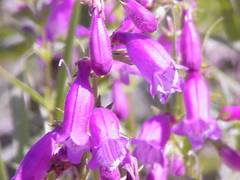
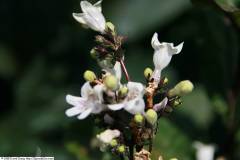
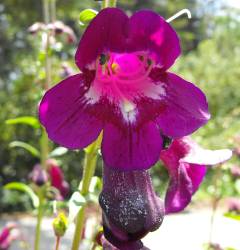
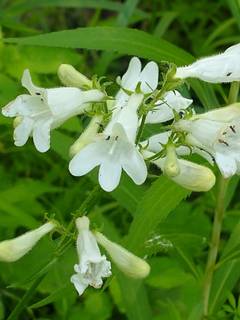
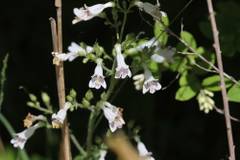
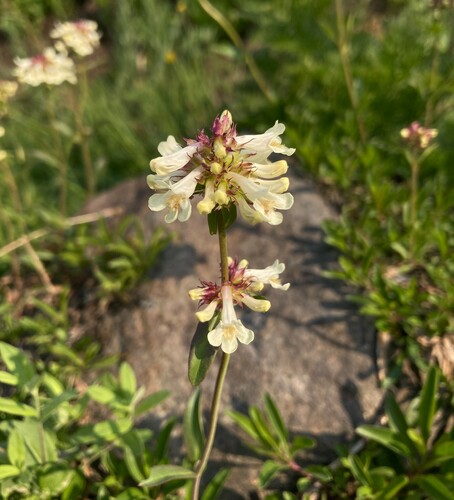
A small herbaceous perennial reaching 4-15 inches (10-40 cm) tall from a basal rosette with one to several flowering stems. Basal leaves lance-shaped to oblanceolate, 1-3 inches (2.5-7.5 cm) long, dark green and smooth-margined. Stem leaves smaller, opposite, lance-shaped to linear. Inflorescences dense terminal whorls (verticillasters) of 5-20 small flowers held in tight clusters, with one or sometimes two whorls per stem. Each flower 0.3-0.5 inch (8-13 mm) long, deep blue-violet to dark purple, two-lipped, with a slightly hairy throat. Sterile staminode bearded with yellow hairs. Capsules 0.15-0.25 inch (4-6 mm), ripening in late summer. Plants form clumps 6-10 inches (15-25 cm) wide after 3-4 years. Stems die back to the basal rosette by autumn; the rosette persists through winter as a tight cluster of basal leaves.
Native Range
Native to western North America from southern Alaska south through British Columbia, Washington, Oregon, and into California, east to the Rocky Mountains of Montana, Wyoming, and Colorado. Found in subalpine and alpine meadows, open forest clearings, gravelly slopes, and trail edges from 3,000 to 12,000 feet (900-3,660 m) elevation.Suggested Uses
Commonly planted in alpine troughs, rock gardens, and native plant restoration projects at 8-12 inch (20-30 cm) spacing. Suitable for containers of at least 1 gallon (3.8 L) with at least 50% mineral grit. Pairs in cultivation with other subalpine natives such as Eriogonum compositum, Phlox diffusa, and Festuca idahoensis.How to Identify
Appearance
Size & Dimensions
Height4" - 1'3"
Width/Spread6" - 10"
Bloom Information
June through August depending on elevation; lower-elevation populations bloom in June, alpine populations into August. Each verticillaster holds open flowers for 2-3 weeks; the full bloom period in a stand extends 4-6 weeks.
Detailed Descriptions
Flower Description
deep blue-violet to dark purpleFoliage Description
dark greenGrowing Conditions
Sun Requirements
Requires 6-12 hours of direct sunlight daily
• Full Sun: 6+ hours of direct sunlight
• Partial Shade: 3-6 hours of direct sunlight
• Full Shade: Less than 3 hours of direct sunlight
Care & Maintenance
Care Guide
Plant container-grown specimens in autumn or early spring into sharply draining gritty soil with at least 50% mineral grit. Water weekly during the first growing season; established plants tolerate periods of 3-4 weeks without rain. Crown rot develops in soils that retain moisture at the basal rosette through winter. Slugs occasionally damage emerging foliage in mild wet springs at lower elevations. Plants persist 5-10 years in suitable montane sites; lifespan is reduced in heavy clay soil to 2-3 years. Self-sown seedlings replace mature plants in stable stands.Pruning
Cut spent flower stems to the basal rosette after seed has dispersed in late summer. The basal rosette persists through winter; cutting it back removes the next year's flowering crown. Damaged or yellowing stems can be removed at the base at any time.Pruning Schedule
Prune: August–September
summerfall
Container Growing
Suitable for container growing
Minimum container size: 1 gallons