Penstemon, Genus, ovatus, Species,
- Genus & species
broad-leafed penstemon
Overview
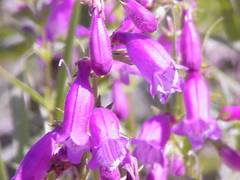
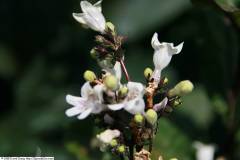
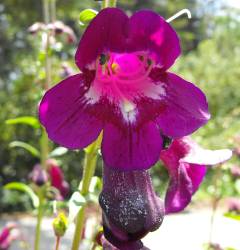
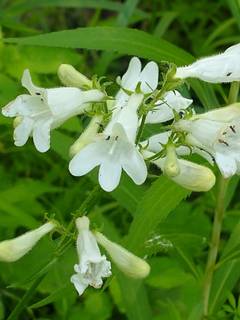
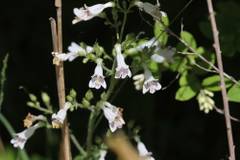
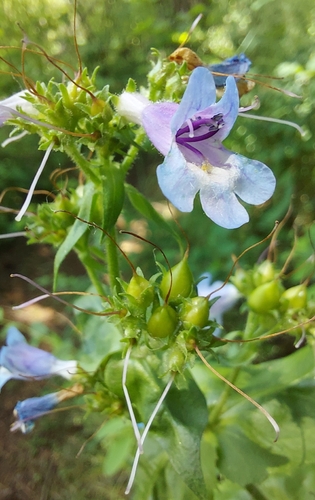
Penstemon ovatus is an herbaceous perennial reaching 18-36 inches (45-90 cm) tall in flower and 12-18 inches (30-45 cm) wide from a basal rosette of broad ovate leaves. Basal leaves ovate to elliptic, 2-4 inches (5-10 cm) long and 1-2 inches (2.5-5 cm) wide, dark green and slightly shiny with toothed margins, persisting as a winter rosette. Stem leaves opposite, smaller and clasping, reduced upward. Flowers tubular-funnelform, deep blue to blue-violet (occasionally lavender), 0.5-0.75 inch (12-19 mm) long, with a white-bearded yellow staminode in the throat, borne in whorled axillary clusters along the upper third of the flowering stem from May through July. Plants live 3-5 years and reseed readily in disturbed soil; volunteer seedlings appear at 5-15 per parent plant per year. Rosettes brown at the leaf tips after first hard frost but generally remain green through winter in zones 7-9.
Native Range
Native to oak woodlands, forest edges, road cuts, and grassy openings in the Pacific Northwest from southwestern British Columbia south through western Washington and the western Cascades to northern Oregon, primarily west of the Cascade crest at elevations from sea level to 4,500 feet (1,370 m).Suggested Uses
Planted in dry meadow gardens, oak woodland understories, and rock garden margins at 18-24 inch (45-60 cm) spacing in zones 6-9. Combines with native bunchgrasses, Camassia species, and other PNW prairie associates in restored meadow plantings. Grows in containers of at least 3 gallons (11 L) with a free-draining gritty mix; container plants are typically shorter-lived (1-3 years) than in-ground plants.How to Identify
Appearance
Size & Dimensions
Height1'6" - 3'
Width/Spread1' - 1'6"
Bloom Information
May through July across the species range, with peak bloom in June. Bloom begins in late April at low elevations in the Willamette Valley and may extend into early August at the upper elevation limits. Individual flower whorls open over 7-10 days; total stand bloom lasts 6-8 weeks. Cool overcast springs extend bloom by 2 weeks.
Detailed Descriptions
Flower Description
Deep blue to blue-violetFoliage Description
Dark green, slightly shinyGrowing Conditions
Sun Requirements
Requires 4-8 hours of direct sunlight daily
• Full Sun: 6+ hours of direct sunlight
• Partial Shade: 3-6 hours of direct sunlight
• Full Shade: Less than 3 hours of direct sunlight
Care & Maintenance
Care Guide
Establishes from container stock or direct-sown seed in 1-2 growing seasons in well-drained loam or sandy loam with weekly water through the first summer. Mature plants tolerate 3-4 weeks without rain once roots reach 12-18 inches (30-45 cm) deep but bloom and longevity decrease in dry conditions. Crown rot occurs in heavy clay soils that stay wet through winter. Plants are short-lived (3-5 years) but reseed reliably in undisturbed soil; some seedlings can be left to mature for replacement plantings. Powdery mildew may affect lower leaves in late summer in still-air sites; affected leaves are removed at the base.Pruning
Cut spent flower stems at the base in late summer after seed has set. Tattered or browned outer rosette leaves are removed in early spring before new growth emerges; the central rosette is left intact. Plants respond poorly to hard cutback during the growing season and may decline if rosettes are damaged.Pruning Schedule
Prune: March & August
early springsummer
Container Growing
Suitable for container growing
Minimum container size: 3 gallons