Penstemon, Genus, eatonii, Species,
- Genus & species
firecracker penstemon
Intermountain West (Great Basin, Mojave, Colorado Plateau)
Overview
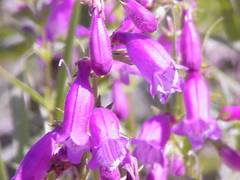
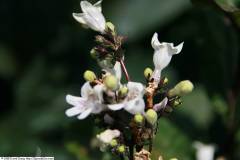
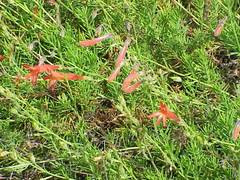
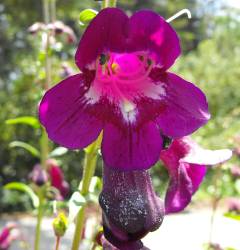
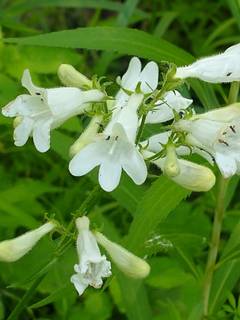
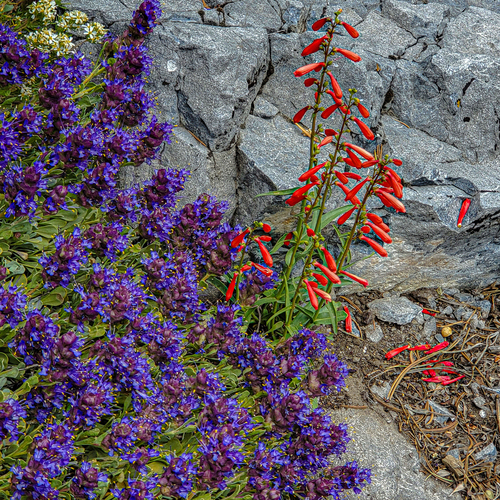
An upright herbaceous perennial reaching 1-3 feet (30-90 cm) tall from a basal rosette with several flowering stems. Basal leaves lance-shaped to elliptic, 2-5 inches (5-13 cm) long, blue-green to gray-green, with smooth margins and a slightly waxy surface. Stem leaves smaller and clasping. Inflorescences narrow erect panicles 8-20 inches (20-50 cm) long bearing 20-60 tubular flowers held in dense one-sided clusters. Each flower 1-1.25 inches (2.5-3 cm) long, scarlet-red to bright red, narrowly tubular with the corolla lobes barely flaring, two-lipped. The narrow tubular form and red color reflect adaptation to hummingbird pollination. Sterile staminode glabrous, separating this species from the bearded staminodes of most other Penstemon. Capsules 0.3-0.4 inch (8-10 mm), ripening in summer. Plants persist 4-8 years from seed; older clumps may be replaced by self-sown seedlings.
Native Range
Native to the western United States and northern Mexico, occurring across the Great Basin, Mojave Desert, Colorado Plateau, and Rocky Mountains of Nevada, Utah, Arizona, New Mexico, and Colorado. Found on dry rocky slopes, sagebrush flats, pinyon-juniper woodlands, and chaparral at 2,000 to 8,000 feet (600-2,440 m) elevation.Suggested Uses
Commonly planted in xeric gardens, native plant gardens of the Intermountain West, and pollinator-supporting plantings at 18-24 inch (45-60 cm) spacing. Suitable for containers of at least 3 gallons (11 L) with at least 50% mineral grit and no winter saturation. Pairs in cultivation with other xeric natives such as Sphaeralcea ambigua and Yucca baccata.How to Identify
Appearance
Size & Dimensions
Height1' - 3'
Width/Spread1' - 1'6"
Colors
Bloom Information
March through June depending on elevation; low desert populations flower in March-April, montane populations into June. Each panicle holds open flowers for 4-6 weeks; the full bloom period in a stand extends 6-8 weeks. Plants in dry years flower over a more compressed period of 3-4 weeks.
Detailed Descriptions
Flower Description
scarlet-red to bright redFoliage Description
blue-green to gray-greenGrowing Conditions
Sun Requirements
Requires 6-12 hours of direct sunlight daily
• Full Sun: 6+ hours of direct sunlight
• Partial Shade: 3-6 hours of direct sunlight
• Full Shade: Less than 3 hours of direct sunlight
Care & Maintenance
Care Guide
Plant container-grown specimens in autumn or early spring into sharply draining gritty soil. Established plants tolerate periods of 6-8 weeks without rain; summer irrigation in clay or compacted soils causes root rot. Soils with at least 30% mineral grit reduce summer rot in zones 6-9 with humid conditions. Powdery mildew develops on stressed plants in humid conditions but does not kill them. Plants establish in year 1-2 and decline after 4-8 years; self-sown seedlings replace mature plants in established stands. Cuttings root with difficulty; seed propagation is more reliable than cuttings.Pruning
Cut spent flower stems to the basal rosette after flowering to encourage a possible second flush of bloom in late summer. Cut entire plant to 3-4 inches (7.5-10 cm) above the soil in late autumn after seed has dispersed; new growth emerges from the basal rosette in spring. Damaged or yellowing stems can be removed at the base at any time.Pruning Schedule
Prune: June–July & October–November
summerfall
Container Growing
Suitable for container growing
Minimum container size: 3 gallons