Penstemon, Genus, spp., Multiple species,
- Genus
- Multiple species
beardtongues
Overview
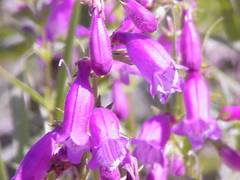
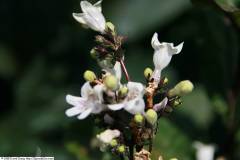
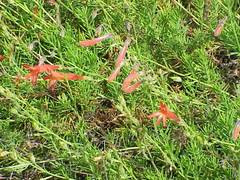
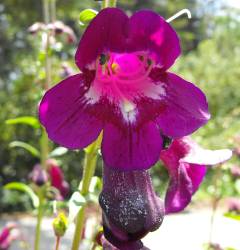
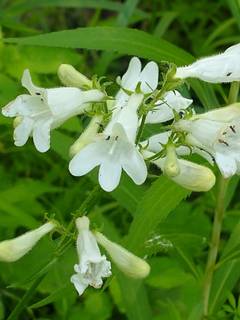
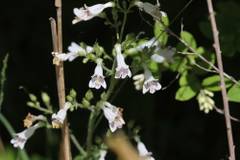
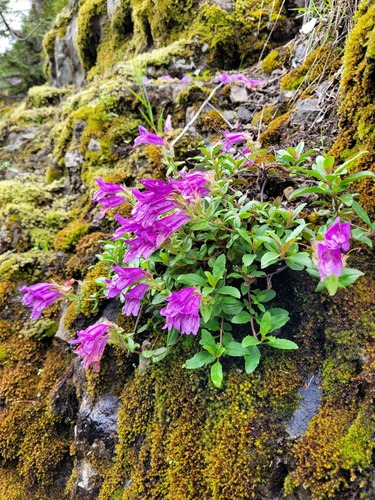
Penstemon is a genus of about 250 species of perennials and subshrubs in the family Plantaginaceae, nearly all native to North America, where it is the largest plant genus endemic to the continent. Plants form clumps of opposite leaves and send up vertical spikes 30–120 cm (12–48 in) tall lined with tubular, two-lipped flowers. The flowers span blue, purple, violet, pink, red, and white, each 2–4 cm (0.8–1.6 in) long, with a flared mouth. The genus is named for a sterile fifth stamen, the staminode, which in many species is tufted with hairs and gives the common name beardtongue. Tubular red-flowered species are visited by hummingbirds, while broader blue and purple flowers draw bees. Western dryland species need sharp drainage and lean soil, while species from the eastern states and prairies tolerate richer ground. Most species are short-lived, persisting three to five years, and rely on self-seeding to maintain a planting. Foliage ranges from narrow and needle-like to broad and glossy across the genus.
Native Range
The genus is overwhelmingly North American, ranging from Alaska and Canada through the United States into Mexico and Guatemala, with the greatest concentration of species in the mountains and deserts of the western United States. One species reaches northeastern Asia.Suggested Uses
Used in borders, rock gardens, gravel plantings, and prairie or meadow schemes, where the vertical flower spikes draw bees and hummingbirds. Dryland species suit xeriscape and wall plantings. The short lifespan and need for drainage limit use in permanent, heavy-soil borders.How to Identify
Appearance
Size & Dimensions
Height1' - 4'
Width/Spread1' - 2'
Bloom Information
Flowering occurs from late spring into midsummer, broadly May to July, with some species reblooming as spent spikes are removed. Each spike opens flowers from the base upward over several weeks. Western species tend to bloom earlier and more briefly than eastern and prairie species.
Detailed Descriptions
Flower Description
blue, purple, pink, red, or whiteFoliage Description
greenGrowing Conditions
Sun Requirements
Requires 6-10 hours of direct sunlight daily
• Full Sun: 6+ hours of direct sunlight
• Partial Shade: 3-6 hours of direct sunlight
• Full Shade: Less than 3 hours of direct sunlight
Care & Maintenance
Care Guide
Western species grow in full sun and gritty, sharply drained soil with a pH of 6.0 to 7.5 and rot in wet or rich ground. Eastern and prairie species tolerate part shade and average garden soil. Established plants are drought-tolerant and need little feeding, as rich soil shortens their already brief lifespan. Hardiness spans USDA zones 3–9 depending on species. Winter wet is more often fatal than winter cold, so a free-draining site matters most in cool climates. Leaving some spikes to set seed allows self-sown plants to replace aging clumps.Pruning
Cutting back flowered spikes prompts a lighter second flush in many species and limits self-seeding. Shearing the whole plant lightly after bloom keeps clumps compact. Leaving the basal foliage intact over winter protects the crown in cold regions.Pruning Schedule
Prune: July
summer
Container Growing
Suitable for container growing
Minimum container size: 2 gallons