Paeonia, Genus, 'Lady Alexandra Duff', Cultivar,
- Genus
- Cultivar
lady alexandra duff peony
Cultivar of garden origin; garden peonies derive from {Paeonia lactiflora}, native to China, Mongolia, and Siberia; {Paeonia 'Lady Alexandra Duff'} is a heritage English peony bred by Kelway in Somerset, England in 1902 and named after Lady Alexandra Duff (1891-1959), a member of the British royal family
Overview
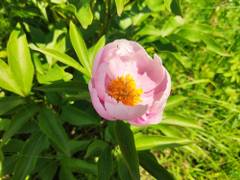
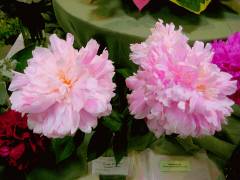
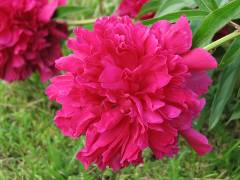
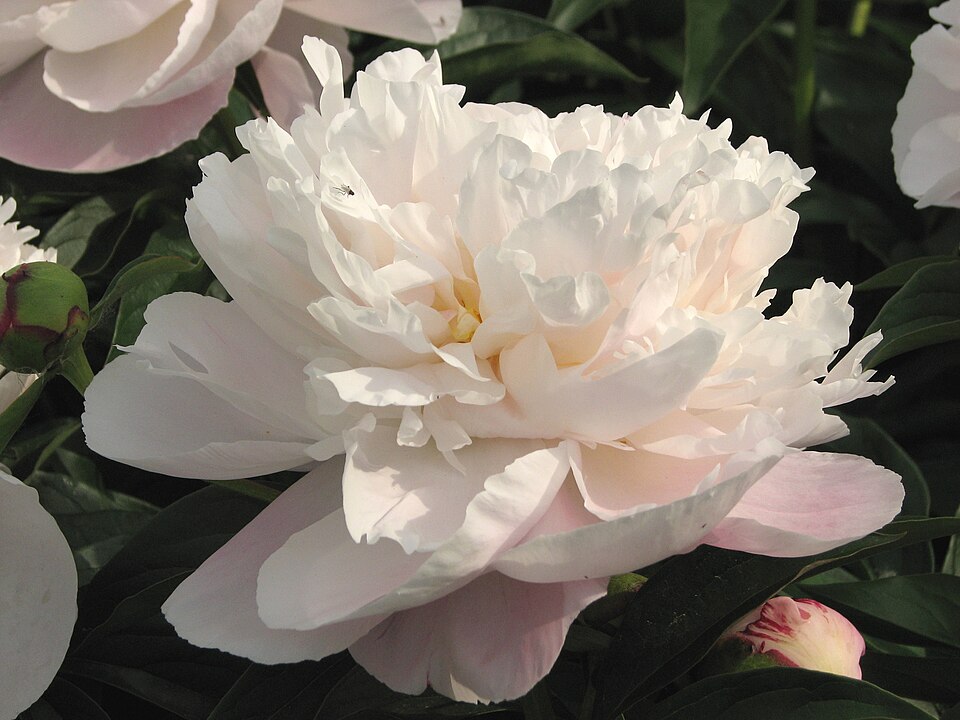
Paeonia 'Lady Alexandra Duff' is a heritage English peony bred by Kelway in 1902, growing 30-36 inches (75-90 cm) tall and wide. Fully double flowers 5-7 inches (13-18 cm) across open blush-pink and gradually fade to creamy-white as they age, creating a two-tone effect when buds at different stages are open simultaneously. A strong sweet fragrance accompanies the bloom. The cultivar produces abundant sidebuds (secondary flower buds flanking the main terminal bud), which open in succession after the central bloom, extending the total display by several days beyond the typical 2-week peony window. For cut-flower use, the sidebuds can be removed ('disbudded') to concentrate energy into one large terminal bloom, or left intact for a multi-flowered spray effect. The blush-to-white color progression gives the flowers a romantic ethereal quality. Named after Lady Alexandra Duff (1891-1959), a member of the British royal family. Midseason bloom timing. Dark green glossy compound foliage. Over 120 years in production. Same care as all herbaceous peonies. Can live 50+ years. Mildly toxic.
Native Range
Garden peonies derive from Paeonia lactiflora. Paeonia 'Lady Alexandra Duff' was bred by Kelway, Somerset, England, 1902.Suggested Uses
Used in heritage gardens, cottage gardens, cutting gardens, and perennial borders. The sidebud habit gives a longer display than single-flowered cultivars. The blush-to-white progression adds romantic character. Over 120 years of proven garden merit.How to Identify
Appearance
Size & Dimensions
Height2'6" - 3'
Width/Spread2'6" - 3'
Bloom Information
Detailed Descriptions
Flower Description
Fully double flowers 5-7 inches (13-18 cm) across that open blush-pink and gradually fade to creamy-white as they age, creating a two-tone effect when buds at different stages are open simultaneously; abundant sidebuds extend the displayFoliage Description
Dark green deeply divided glossy compound foliage forms a substantial mound through summerGrowing Conditions
Sun Requirements
Requires 5-8 hours of direct sunlight daily
• Full Sun: 6+ hours of direct sunlight
• Partial Shade: 3-6 hours of direct sunlight
• Full Shade: Less than 3 hours of direct sunlight
Care & Maintenance
Care Guide
Plant in full sun to partial shade. Well-drained humus-rich soil. Eyes no more than 2 inches (5 cm) deep. Support with peony ring. Leave sidebuds for extended display, or disbud for larger terminal blooms. Remove spent heads. Leave foliage until frost. Mildly toxic.Pruning
Remove spent flower heads. Optional: disbud sidebuds for larger terminal flowers. Cut all stems to ground level in late October-November.Pruning Schedule
Prune: October–November
fall