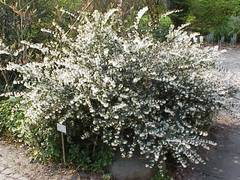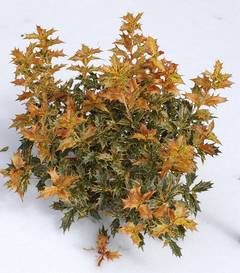
Osmanthus, Genus, fragrans, Species, var., Variety, aurantiacus, Variety,
- Genus & species
- Variety
orange-flowered tea olive
Overview
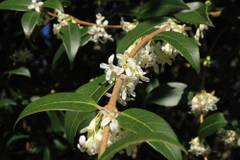
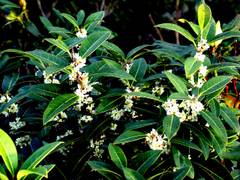
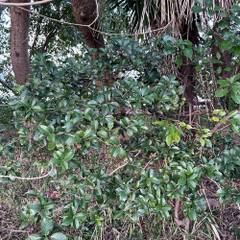
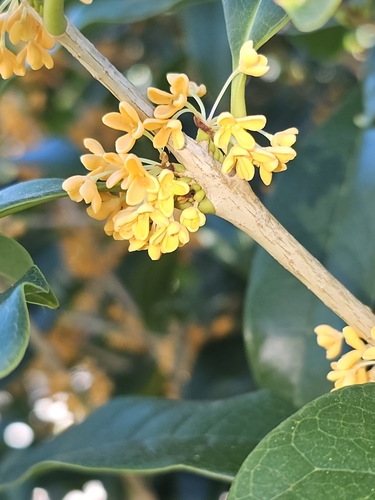
Osmanthus fragrans var. aurantiacus is the orange-flowered tea olive, an upright evergreen shrub or small tree growing 10-20 feet (3-6 m) tall and 6-12 feet (1.8-3.6 m) wide. Tiny orange flowers 0.25 inch (6 mm) across appear in axillary clusters in fall, releasing a sweet fragrance with apricot and peach notes. The orange flower color separates this botanical variety from the white-to-cream flowers of the standard species, and the orange variety carries a more concentrated apricot-peach aroma. Flowers are edible and used in osmanthus tea (guìhuā chá, 桂花茶), pastries, jellies, and rice wine in Chinese cuisine; the orange-flowered form is the traditional grade for tea production. The species name 'fragrans' means 'fragrant' in Latin. Cultivated in China for over 2,500 years. Foliage is glossy dark green, leathery, and finely serrated, 2-5 inches (5-13 cm) long, retained year-round. Hardy in zones 7-10; foliage damage occurs below 10°F (-12°C). Bloom occurs on old wood — pruning after fall flowering preserves next year's flower buds. Native to China and the eastern Himalayas. Growth rate runs slow to moderate at 6-12 inches (15-30 cm) per year. Scale insects are the main pest. Acidic to neutral soil at pH 5.5-7.0 is tolerated. Full sun to partial shade. Non-toxic to humans and pets.
Native Range
Osmanthus fragrans var. aurantiacus is native to China, particularly the southern provinces, with naturalized populations across the eastern Himalayas and parts of Japan.Suggested Uses
Grown as a specimen, hedge, or tall screen in zones 7-10, spaced 6-8 feet (1.8-2.4 m) apart for a continuous hedge. Placement near doorways, windows, and outdoor seating allows the fall fragrance to carry into use spaces. Edible orange flowers can be harvested for tea, pastries, and rice wine. Non-toxic.How to Identify
Appearance
Size & Dimensions
Height10' - 20'
Width/Spread6' - 12'
Bloom Information
Fall flowering runs September through November depending on zone (later in zone 10, earlier in zone 7). Tiny orange flowers appear in axillary clusters and last 2-4 weeks per flush, with two to three flushes through the autumn season. The fragrance carries 30-100 feet (9-30 m) downwind on still mornings. Bloom occurs on old wood.
Detailed Descriptions
Foliage Description
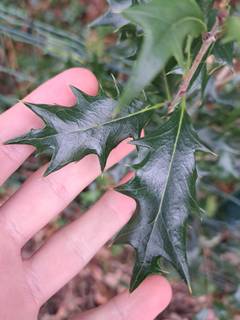
Dark green, glossy, leathery, finely serratedGrowing Conditions
Sun Requirements
Requires 4-8 hours of direct sunlight daily
• Full Sun: 6+ hours of direct sunlight
• Partial Shade: 3-6 hours of direct sunlight
• Full Shade: Less than 3 hours of direct sunlight
Care & Maintenance
Care Guide
Full sun to partial shade in zones 7-10. Acidic to neutral soil at pH 5.5-7.0 is tolerated. Water weekly during the first two growing seasons; established plants tolerate seasonal drought. Mulch 2-3 inches (5-7 cm) deep with pine bark to maintain soil acidity. Scale insects can be treated with horticultural oil applied in late winter. Foliage damage occurs below 10°F (-12°C); placement on the south or east side of structures reduces winter wind exposure in zone 7.Pruning
Prune for shape immediately after fall flowering — typically late November through January depending on zone. Bloom forms on old wood, so spring or summer pruning removes the following year's flower buds. Can be maintained as a formal hedge with annual light trimming after bloom.Pruning Schedule
Prune: November–December
fallwinter
Container Growing
Suitable for container growing
Minimum container size: 15 gallons