Image 1 of 7
1 / 7
Plant Reference
Osmanthus, Genus, delavayi, Species,
- Genus & species
Delavay osmanthus
Southwestern China — primarily Yunnan and Sichuan provinces; mountain forests and scrubland at 5,000-10,000 feet (1,500-3,000 m) elevation
Overview
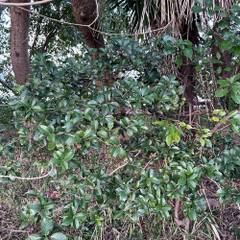
Osmanthus delavayi (Delavay osmanthus, Delavay tea olive) is a mounded evergreen shrub in the family Oleaceae growing 4-8 feet (1.2-2.4 m) tall and 6-10 feet (1.8-3 m) wide, native to the mountain forests of southwestern China and grown in temperate gardens for the intensely fragrant white spring flowers and the small-leaved evergreen foliage on gracefully arching branches. The species was named for Père Jean-Marie Delavay, a 19th-century French missionary and amateur botanist who collected plant specimens in southwestern China during the 1880s and 1890s and introduced many Chinese mountain plants to Western horticulture, with the species reaching European cultivation in 1890 through Delavay's collections sent back from the Yunnan and Sichuan provinces to the Paris Museum and onward to British and French nurseries. The central ornamental feature is the powerful jasmine-like fragrance of the spring flowers: small white tubular 4-lobed flowers 0.5 inch (1.3 cm) long open in clusters of 4-8 along the previous year's wood during March and April and carry a sweet penetrating scent that fills the surrounding garden air during peak bloom — the fragrance carries across considerable distance in still air and the species is identified from across a garden by smell alone before the small white flowers can be seen. The flower size and the muted white color mean that the visual display reads quietly from any distance and the species is grown for the scent rather than for visual flower impact. Foliage is glossy dark green with small ovate finely serrate leaves 0.5-1 inch (1.3-2.5 cm) long arranged in opposite pairs along the slender arching branches, producing a small-leaved evergreen presence that contrasts with the larger holly-type leaves of the related Osmanthus heterophyllus and other holly-leaved evergreen shrubs. The shrub habit is wider than tall: mature plants reach 4-8 feet of height but spread to 6-10 feet of width across the gracefully arching branches, and the lateral spread is the central planting consideration that determines suitable garden placement — narrow planting positions cannot accommodate the mature width and the plant cramped against a neighboring shrub or wall develops asymmetrically and loses the natural mounded form. The species is hardy to about 5°F (-15°C) and survives winters in zones 7-9, with the flower buds being more cold-sensitive than the foliage and a hard freeze during the late-winter bud-development period reducing the spring bloom even when the plant itself comes through the freeze undamaged. Flowering occurs on the previous year's wood, so any pruning is done immediately after the spring bloom finishes (April-May) before the new season's wood develops the buds for the following spring's flowers — pruning later in the year removes the buds that would carry the next year's bloom and is the most common reason for poor flowering in cultivated specimens. After bloom the small white flowers develop into small blue-black drupes 0.3 inch (8 mm) that ripen through July and August and feed birds in the bloom-following months. Drought-tolerant once established because of the mountain native habitat. Deer avoid the foliage. Non-toxic to humans and pets.
Native Range
Osmanthus delavayi is native to southwestern China, with a natural range across the Yunnan and Sichuan provinces where the species grows in mountain forests and scrubland at 5,000-10,000 feet (1,500-3,000 m) elevation. The native habitat is the cool moist mountain understory and the open scrubland margins of the eastern Himalayan and southwest China botanical region, where the high-rainfall summer monsoon climate, the well-drained mountain forest soils, and the moderate elevation cool temperatures match the species' cultural requirements in temperate-garden cultivation. The genus Osmanthus contains about 30 species distributed across east Asia and a few populations in eastern North America (notably the native devilwood Osmanthus americanus of the southeastern coastal plain), and the Asian species are the central ornamental members of the genus including the autumn-flowering O. fragrans (sweet osmanthus, the fragrance source for sweet osmanthus tea and a culturally important plant in Chinese tradition), the holly-leaved O. heterophyllus (false holly, used as a holly substitute in cool-temperate gardens), and the spring-flowering O. delavayi described here. Père Jean-Marie Delavay collected the species in 1890 during his missionary work in Yunnan and sent specimens to the Paris Museum where the species was described and entered Western horticultural cultivation through French and British nursery channels in the early 20th century. The species received the Royal Horticultural Society Award of Garden Merit for its garden performance.Suggested Uses
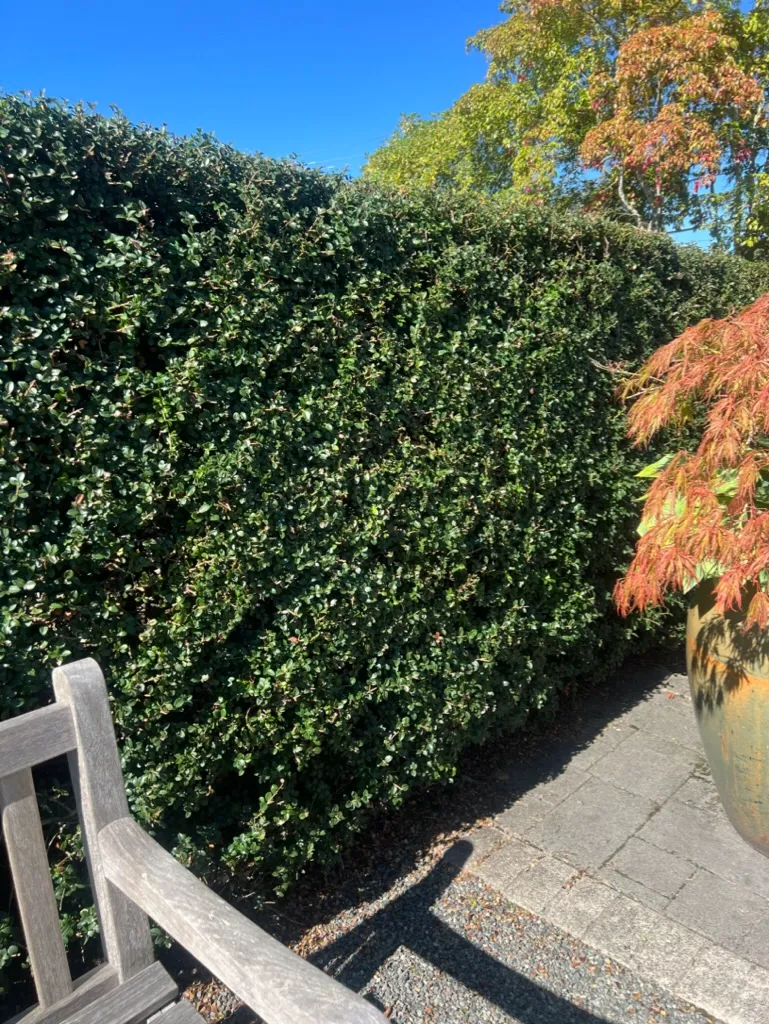
Planted as a fragrant specimen shrub near doorways, paths, seating areas, garden gates, and other close-range scent positions where the spring fragrance can be sensed at near distance; as informal evergreen hedges in zones 7-9 (with post-bloom shearing to maintain shape); as wall-trained espaliers in narrow positions; and in containers of 7 gallons (26 L) or larger at 6-10 foot (1.8-3 m) spacing in zones 7-9. The strong sweet jasmine-like fragrance of the spring flowers gives the species a central role in scent-garden design where the close-range fragrance experience is the central planting purpose, and the placement of the shrub within smell range of frequently used garden paths and doorways is the standard design approach. Combined with other early-spring scent shrubs and bulbs including Daphne odora (winter daphne), Sarcococca (sweet box), Hyacinthus orientalis, and early-spring Narcissus cultivars in fragrance-focused mixed plantings where the sequential late-winter through spring bloom periods extend the fragrance season across several months. Combined also with broadleaf evergreens including Camellia japonica, Pieris japonica, and small-leaved Rhododendron cultivars in mixed evergreen plantings for shaded mild-winter gardens. Not suited to cold-climate gardens below zone 7 where the plant is not reliably hardy, narrow planting positions where the 6-10 foot mature width cannot be accommodated, distance-viewed flower display purposes where the small white flowers and quiet visual presence are not adequate, deep shade positions where flowering is reduced, or wet poorly drained sites where root rot develops.How to Identify
Appearance
Size & Dimensions
Height4' - 8'
Width/Spread6' - 10'
Bloom Information
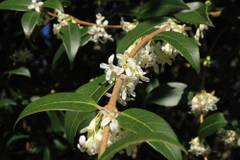
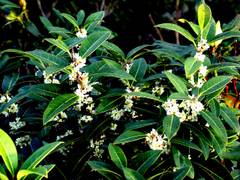
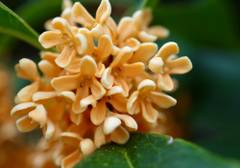
Pure white tubular 4-lobed flowers 0.5 inch (1.3 cm) long open in axillary clusters of 4-8 along the previous year's wood during March and April in zones 7-9, lasting approximately 3 weeks at peak bloom. The flowers carry a strong sweet jasmine-like fragrance that is the central garden value of the species and that fills the surrounding garden air during the peak bloom period — the fragrance carries across considerable distance in still air and the species is identified from across a garden by smell before the small white flowers can be seen. Bees visit the flowers during daylight hours and the species is a useful early-spring nectar resource in mild-winter gardens. After the bloom finishes, pollinated flowers develop into small blue-black drupes 0.3 inch (8 mm) across that ripen through July and August and feed birds during the summer fruit-ripening period. The flower size and the muted white color mean that the visual flower display reads quietly from a distance and the species is planted within the close-range scent zone of a path, doorway, or seating area rather than as a distance-viewed flowering accent.
Detailed Descriptions
Flower Description
pure white; small tubular 4-lobed flowers 0.5 inch (1.3 cm) long carried in axillary clusters of 4-8 flowers along the previous year's wood during early to mid spring; the bloom carries a strong sweet jasmine-like fragrance that is the central garden value of the species and that fills the surrounding garden air during peak bloom — the small individual flower size means that the flowers are easily overlooked from a distance and the species is identified at distance by the fragrance carrying through the air rather than by the visual flower displayFoliage Description
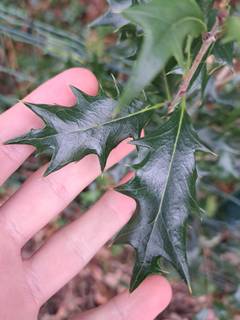
glossy dark green; small ovate leaves 0.5-1 inch (1.3-2.5 cm) long with finely serrate margins arranged in opposite pairs along the slender arching branches; the small leaves combined with the arching branch architecture produce a small-textured year-round evergreen presence that contrasts with the larger-leaved holly-type Osmanthus heterophyllus and other holly-leaved evergreen shrubs in the same familyGrowing Conditions
Sun Requirements
Requires 4-8 hours of direct sunlight daily
• Full Sun: 6+ hours of direct sunlight
• Partial Shade: 3-6 hours of direct sunlight
• Full Shade: Less than 3 hours of direct sunlight
Care & Maintenance
Care Guide
Plant in well-drained soil with a pH of 5.5-7.0 in part sun to full sun (4-8 hours of direct sun); tolerated soil types include loam, clay, and sand, and the species tolerates a wider range of soils than many other Chinese evergreen shrubs. Drought-tolerant once established because of the mountain native habitat adaptation, and supplemental summer watering is needed only during the first establishment season and during prolonged dry periods in subsequent years. Allow lateral space for the mature 6-10 foot (1.8-3 m) width — the species is wider than tall at maturity and a cramped planting position against a wall, fence, or neighboring shrub causes asymmetrical growth and loss of the natural mounded form. The species is hardy to about 5°F (-15°C) and survives winters in zones 7-9, with the flower buds being more cold-sensitive than the foliage and a hard freeze during the late-winter bud-development period reducing the spring bloom even when the plant itself comes through the freeze undamaged. Flowering occurs on the previous year's wood, so any pruning is done immediately after the spring bloom finishes in April or May before the new season's wood develops the buds for the following spring's flowers — pruning later in the summer or fall removes the buds that would carry the next year's bloom and is the most common reason for poor flowering in cultivated specimens. The species tolerates moderate pruning and can be shaped into informal hedges or trained against a wall in espalier fashion if desired, though the natural arching mounded form is the standard cultural shape. Deer avoid the foliage. Non-toxic to humans and pets.Pruning
Pruning is done immediately after the spring bloom finishes in April or May because the species flowers on the previous year's wood and any pruning later in the summer or fall removes the buds that would carry the following spring's flowers — pruning at the wrong season is the most common reason for poor flowering in cultivated specimens. The post-bloom pruning pass shapes the natural arching mounded form, removes crossing or dead branches, and lightly trims back any growth that is overrunning the available space. The species tolerates moderate pruning and can be shaped into informal hedges (with the post-bloom pruning timing) or trained against a wall in espalier fashion for narrow planting positions, though the natural mounded shape is the standard cultural form. Heavy renovation pruning into old wood is tolerated and produces strong regrowth from latent buds, so an overgrown or misshapen plant can be cut back hard in late spring after bloom and recovers within 1-2 seasons.Pruning Schedule
Prune: April–May
late spring
Container Growing
Suitable for container growing
Minimum container size: 7 gallons