Image 1 of 10
1 / 10
Plant Reference
Osmanthus, Genus, heterophyllus, Species, 'Goshiki', Cultivar,
- Genus & species
- Cultivar
Goshiki holly-leaf osmanthus
Species native to Japan and Taiwan; cultivar of Japanese garden origin
Overview
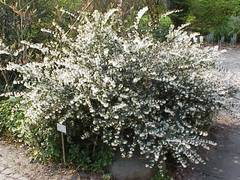
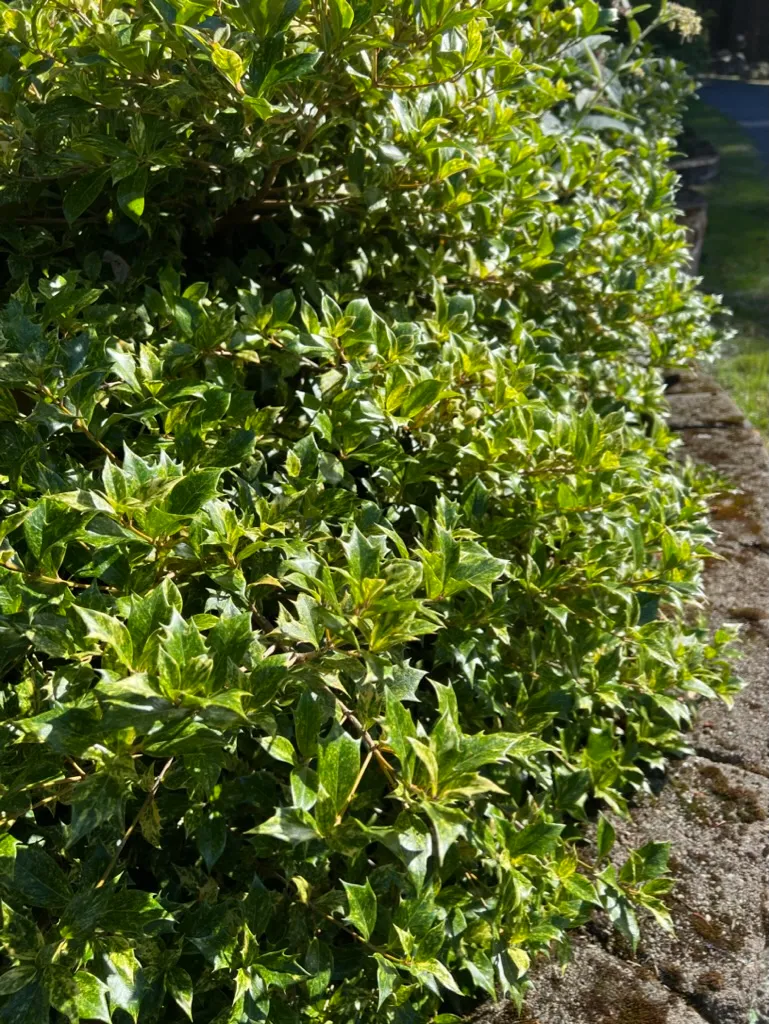
Osmanthus heterophyllus 'Goshiki' is Goshiki holly osmanthus (five-color false holly), a mounding evergreen shrub growing 3-5 feet (0.9-1.5 m) tall and 3-5 feet (0.9-1.5 m) wide. Tiny white fragrant flowers in October-November (2 weeks). Multicolored variegated holly-like leaves — dark green, light green, cream-white, and pink to bronze-pink sectors; new growth emerges vivid pink. In Oleaceae. Goshiki = five colors (Japanese). More compact and slower than the green species (3-5 feet / 0.9-1.5 m vs. 8-15 feet / 2.4-4.5 m). Fewer flowers. The variegation is most vivid in part shade with morning sun — full sun scorches cream/pink sectors, deep shade reduces pink tones. Produces all-green reversion shoots that must be removed promptly. This reversion tendency and the light-sensitivity of the variegation are the primary maintenance limitations. Not drought-tolerant. Deer-resistant. Non-toxic. Zones 7-9. Part shade. Growth rate is slow.
Native Range
Species native to Japan and Taiwan. Cultivar of Japanese garden origin.Suggested Uses
Grown as a variegated specimen, in borders, and in containers of at least 5 gallons (19 L), spaced 3-5 feet (0.9-1.5 m). Five-color variegation. Compact. Monitor for reversion. Non-toxic. Zones 7-9.How to Identify
Appearance
Size & Dimensions
Height3' - 5'
Width/Spread3' - 5'
Bloom Information
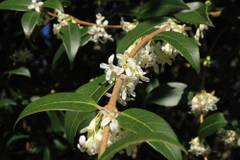
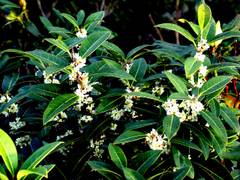
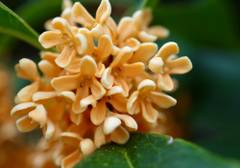
Fall (October-November). White tubular 4-lobed flowers 0.2 inch (5 mm). Fragrant (sweet, apricot-like). 2 weeks. Fewer flowers than the green species. Bee-visited.
Detailed Descriptions
Flower Description
White, tiny, tubular, 0.2 inch (5 mm), 4-lobed, in axillary clusters; October-November; fragrant (sweet, apricot-like — same as the species but fewer flowers on this less vigorous cultivar)Foliage Description
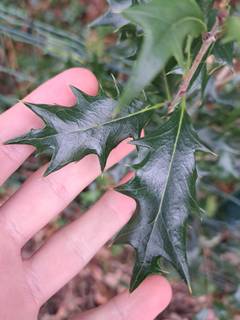
Multicolored variegation — dark green, light green, cream-white, and pink to bronze-pink sectors on each leaf; new growth emerges vivid pink to bronze-pink, maturing through cream to green; holly-like spiny-margined, ovate, 1-2 inches (2.5-5 cm); goshiki = five colors (Japanese); the variegation pattern varies leaf to leafGrowing Conditions
Sun Requirements
Requires 3-6 hours of direct sunlight daily
• Full Sun: 6+ hours of direct sunlight
• Partial Shade: 3-6 hours of direct sunlight
• Full Shade: Less than 3 hours of direct sunlight
Care & Maintenance
Care Guide
Part shade (3-6 hours — morning sun with afternoon shade for vivid variegation). Well-drained soil pH 5.5-7.0. Not drought-tolerant. Remove all-green reversion shoots promptly. Prune in early spring (February-March). Full sun scorches variegation; deep shade reduces pink. Non-toxic. Deer-resistant. Zones 7-9.Pruning
Prune in early spring (February-March) to shape. Remove all-green reversion shoots promptly whenever they appear. The compact mounding form requires minimal shaping.Pruning Schedule
Prune: February–March
early spring
Container Growing
Suitable for container growing
Minimum container size: 5 gallons