Osmanthus, Genus, decorus, Species,
- Genus & species
Decorus osmanthus
Western Caucasus (Georgia and northeastern Turkey)
Overview
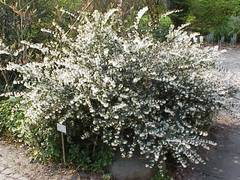
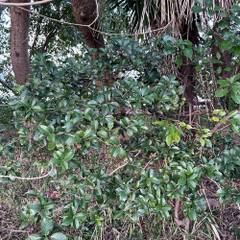
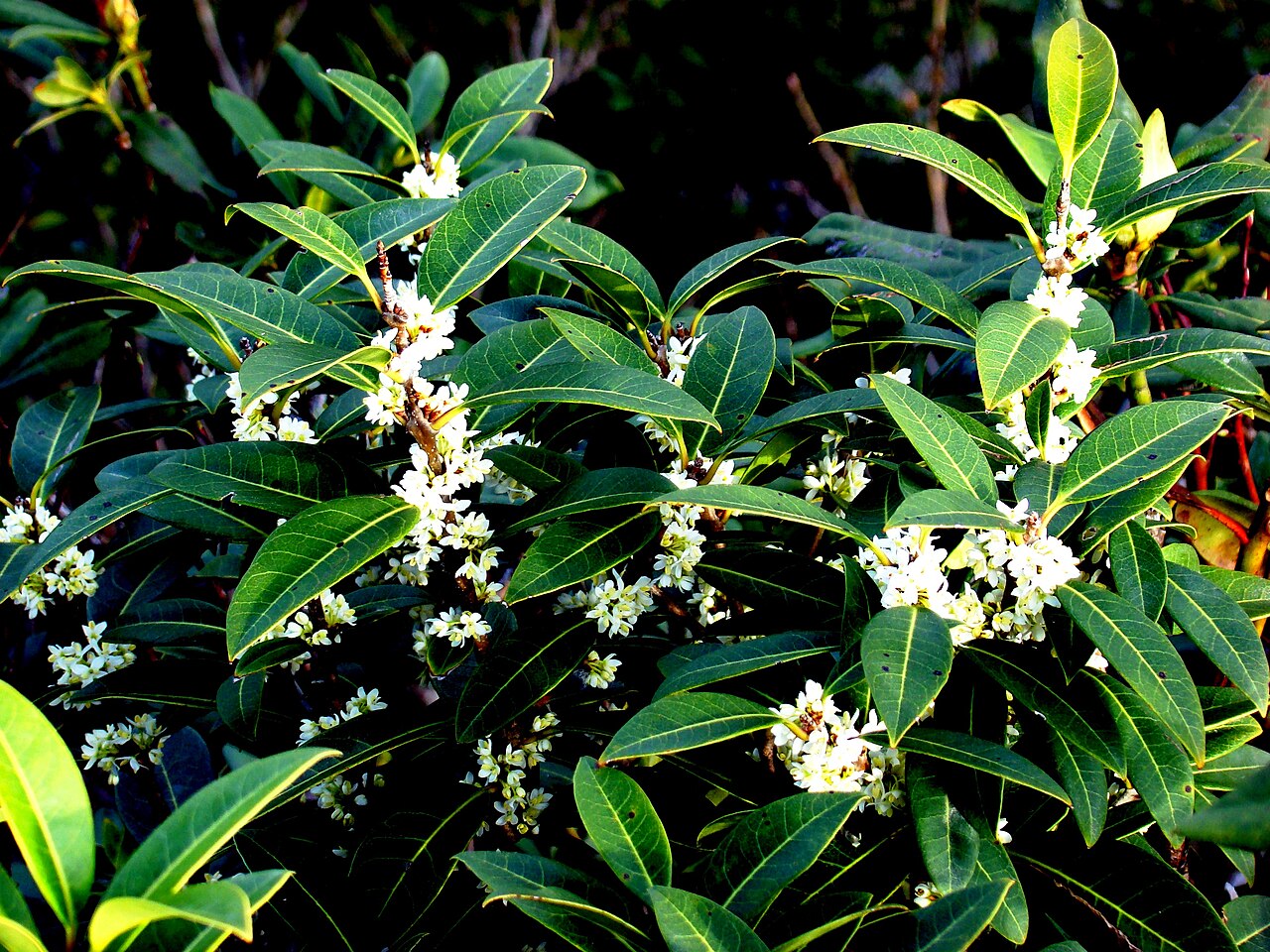
Osmanthus decorus is a large evergreen shrub or small tree reaching 8–15 feet (2.4–4.5 m) tall and 8–12 feet (2.4–3.7 m) wide, with a broadly rounded, dense crown. Leaves are alternate, simple, 2–5 inches (5–13 cm) long, oblong-lanceolate, leathery, glossy dark green, with entire to finely serrate margins — the leaf size sits at the upper end of the range for cultivated Osmanthus, where species such as O. × burkwoodii carry leaves 1–2 inches (2.5–5 cm) and O. heterophyllus carries leaves 1–2.5 inches (2.5–6 cm). Small tubular white flowers appear in axillary clusters of 4–8 along the previous season's wood in April–May, carrying a sweet fragrance that registers at moderate intensity — less pronounced than the stronger fragrance of O. × burkwoodii on the same branch-and-cluster basis. Blue-black oval drupes 0.5–0.6 inch (13–15 mm) ripen in September–October on female plants when a male pollinator is within 50 feet (15 m); the species is functionally dioecious. Growth rate is slow at 6–12 inches (15–30 cm) per year, reaching full mature size in 15 years. Hardy to USDA zone 7. Not known to be toxic to pets or humans. The species is one of the parents of Osmanthus × burkwoodii.
Native Range
Osmanthus decorus is native to the western Caucasus region — Georgia and northeastern Turkey — occurring in the understory of moist montane forests at 1,500–6,000 feet (450–1,800 m) elevation.Suggested Uses
Used as a specimen, evergreen screen, or large-shrub background element in zone 7–9 gardens at 6–8 foot (1.8–2.4 m) spacing. The bold evergreen foliage with 2–5 inch (5–13 cm) leaves carries visual weight at 15–25 foot (4.5–7.5 m) viewing distances that smaller-leaved osmanthus lose. Shade tolerance allows siting on the north or east side of structures where lighter-loving evergreens underperform. Growth rate of 6–12 inches (15–30 cm) per year means a specimen from a 3-gallon pot takes 8–12 years to reach 6–8 feet (1.8–2.4 m) — a long-term rather than fast-fill planting. The species is one of the parents of Osmanthus × burkwoodii. The plant does not grow well in climates below zone 7, exposed wind sites where foliage scorches, or alkaline soils above pH 7.5.How to Identify
Appearance
Size & Dimensions
Height8' - 15'
Width/Spread8' - 12'
Bloom Information
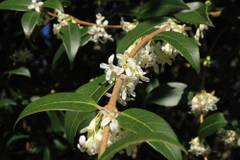
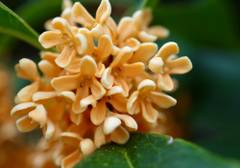
Small tubular white flowers in axillary clusters of 4–8 along the previous season's wood, fragrant, in April–May over a 2–3 week window. Fragrance registers at moderate intensity. Blue-black oval drupes 0.5–0.6 inch (13–15 mm) ripen in September–October on female plants when a male pollinator is within 50 feet (15 m).
Detailed Descriptions
Flower Description
White; small tubular flowers in axillary clusters of 4-8 along previous season's wood; sweet moderate fragrance; April-May; blue-black oval drupes 0.5-0.6 inch September-October on female plantsFoliage Description
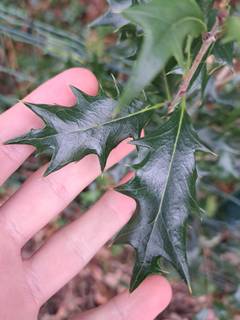
Glossy dark green; alternate, simple, oblong-lanceolate, leathery, 2-5 inches long; margins entire to finely serrateGrowing Conditions
Sun Requirements
Requires 4-8 hours of direct sunlight daily
• Full Sun: 6+ hours of direct sunlight
• Partial Shade: 3-6 hours of direct sunlight
• Full Shade: Less than 3 hours of direct sunlight
Care & Maintenance
Care Guide
Grow in full sun to partial shade with 4–8 hours of direct light in moist, well-drained loam or silt at pH 5.5–7.0. The species tolerates deeper shade than most Osmanthus, producing acceptable canopy density at the lower end of the sun range. A planting position sheltered from cold drying winter winds reduces foliage desiccation in zone 7 cold snaps below 15°F (–9°C). Water deeply once per week during the first two growing seasons, then reduce to supplemental irrigation during extended drought; the plant is drought-tolerant once established. Apply 2–3 inches (5–8 cm) of organic mulch over the root zone in spring. For fruit production, site a male specimen within 50 feet (15 m) of a female plant. Few pest or disease problems have been reported. Hardy to USDA zone 7.Pruning
Prune lightly after flowering in May–June when needed. The naturally dense broadly rounded crown develops without intervention. Remove dead, damaged, or crossing branches only. The species tolerates pruning well and can be trained as a small tree by progressive removal of lower branches over 5–8 years, or maintained as a multi-stemmed shrub.Pruning Schedule
Prune: May–June
late spring