Osmanthus, Genus, ×, Hybrid, fortunei, Species,
- Genus & species
- Hybrid
Fortune's osmanthus
Hybrid of garden origin; parent species from China ({O. fragrans}) and Japan/Taiwan ({O. heterophyllus})
Overview
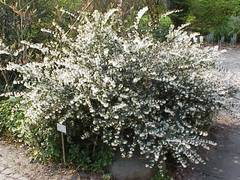
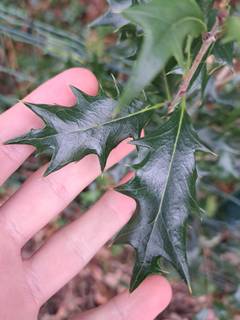
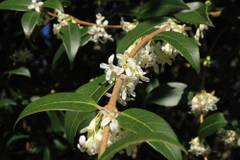
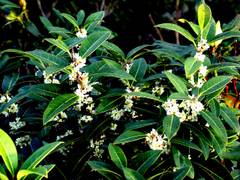
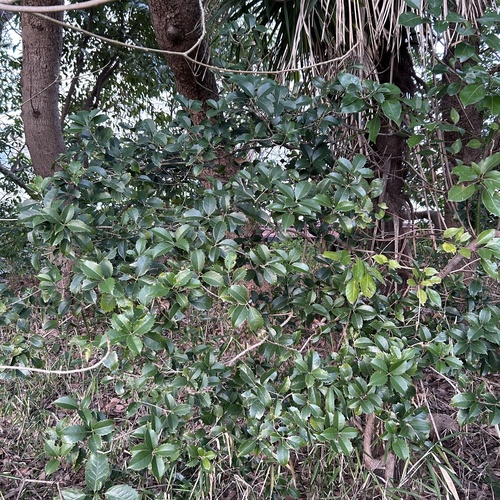
Osmanthus × fortunei is a large evergreen shrub reaching 10–20 feet (3–6 m) tall and 8–15 feet (2.4–4.5 m) wide, with an upright, broadly oval crown. The hybrid (O. fragrans × O. heterophyllus) combines the strong autumn fragrance of O. fragrans with the cold hardiness of O. heterophyllus, producing a plant that flowers on the O. fragrans schedule but survives winters that kill its tender parent. Leaves are opposite, simple, 2–4 inches (5–10 cm) long, elliptic to ovate, leathery, glossy dark green; margins on juvenile growth through the first 5–8 years carry 4–6 coarse spine-like teeth per side that resemble holly, while margins on mature growth become entire — the transition is gradual and both leaf types often appear on the same plant during the intermediate years. Small tubular white flowers in axillary clusters of 8–12 appear in September–October, carrying a sweet fruity-floral fragrance detectable 15–25 feet (4.5–7.5 m) from the plant on still evenings. The autumn flowering timing falls outside the spring bloom window of most cultivated Osmanthus. Growth rate is moderate at 12–18 inches (30–45 cm) per year, reaching full mature size in 15 years. Hardy to USDA zone 7. Not known to be toxic to pets or humans. The hybrid was first described by Carrière in 1856 and is named for the plant collector Robert Fortune.
Native Range
Osmanthus × fortunei is a hybrid of garden origin (O. fragrans × O. heterophyllus), first described by Carrière in 1856. Named after the British plant collector Robert Fortune (1812–1880).Suggested Uses
Used as a specimen, evergreen screen, large hedge, or fragrance-focused planting near outdoor living areas in zone 7–9 gardens at 6–10 foot (1.8–3 m) spacing. The September–October bloom carries sweet fruity-floral fragrance detectable 15–25 feet (4.5–7.5 m) from the plant, which means siting near patios, paths, windows, or driveways places the fragrance within range of regular foot traffic positions at the exact season when most other fragrant shrubs have finished flowering. The mature 10–20 foot (3–6 m) height exceeds O. × burkwoodii at 6–10 feet (1.8–3 m), providing a larger-scale screening option. The plant does not grow well in climates below zone 7, exposed sites with sustained winter wind, or alkaline soils above pH 7.5.How to Identify
Appearance
Size & Dimensions
Height10' - 20'
Width/Spread8' - 15'
Bloom Information
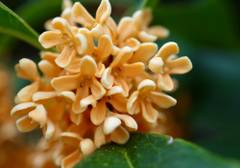
Small tubular white flowers in axillary clusters of 8–12 appear along the previous season's wood in September–October over a 2–3 week window. Fragrance is sweet and fruity-floral, detectable 15–25 feet (4.5–7.5 m) from the plant on still evenings and reduced in daytime heat and wind. The autumn bloom falls outside the spring flowering window of most cultivated Osmanthus.
Detailed Descriptions
Flower Description
White; small tubular flowers in axillary clusters of 8-12 along previous season's wood; sweet fruity-floral fragrance detectable 15-25 feet on still air; September-October (autumn bloom)Foliage Description
Glossy dark green; opposite, simple, elliptic to ovate, leathery, 2-4 inches long; juvenile margins with 4-6 spine-like teeth per side (holly-like); mature margins entireGrowing Conditions
Sun Requirements
Requires 4-10 hours of direct sunlight daily
• Full Sun: 6+ hours of direct sunlight
• Partial Shade: 3-6 hours of direct sunlight
• Full Shade: Less than 3 hours of direct sunlight
Care & Maintenance
Care Guide
Grow in full sun to partial shade with 4–10 hours of direct light in moist, well-drained loam or silt at pH 5.5–7.0. Full sun produces the highest flower count and strongest fragrance; partial shade reduces both by 30–50% but foliage remains healthy. A planting position sheltered from cold drying winter winds reduces foliage desiccation in zone 7 cold snaps below 0°F (–18°C). Water deeply once per week during the first two growing seasons, then reduce to supplemental irrigation during extended drought; the plant is drought-tolerant once established. Apply 2–3 inches (5–8 cm) of organic mulch over the root zone in spring. Few pest or disease problems have been reported. Hardy to USDA zone 7.Pruning
Prune in late winter to early spring (February–March) before new growth begins. Light shaping after flowering in October–November is also tolerated. The plant tolerates pruning well and can be trained as a small tree by progressive removal of lower branches over 5–8 years, maintained as a large shrub, or shaped as a formal evergreen hedge with annual shearing. Avoid pruning in late summer (August–September), which removes the developing flower buds and eliminates the following autumn bloom.Pruning Schedule
Prune: February–March
early spring