Morinda, Genus, citrifolia, Species,
- Genus & species
Noni
Southeast Asia, northern Australia, and the Pacific Islands
Overview
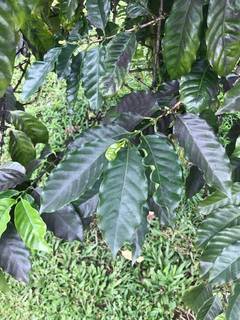
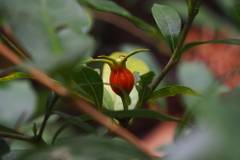
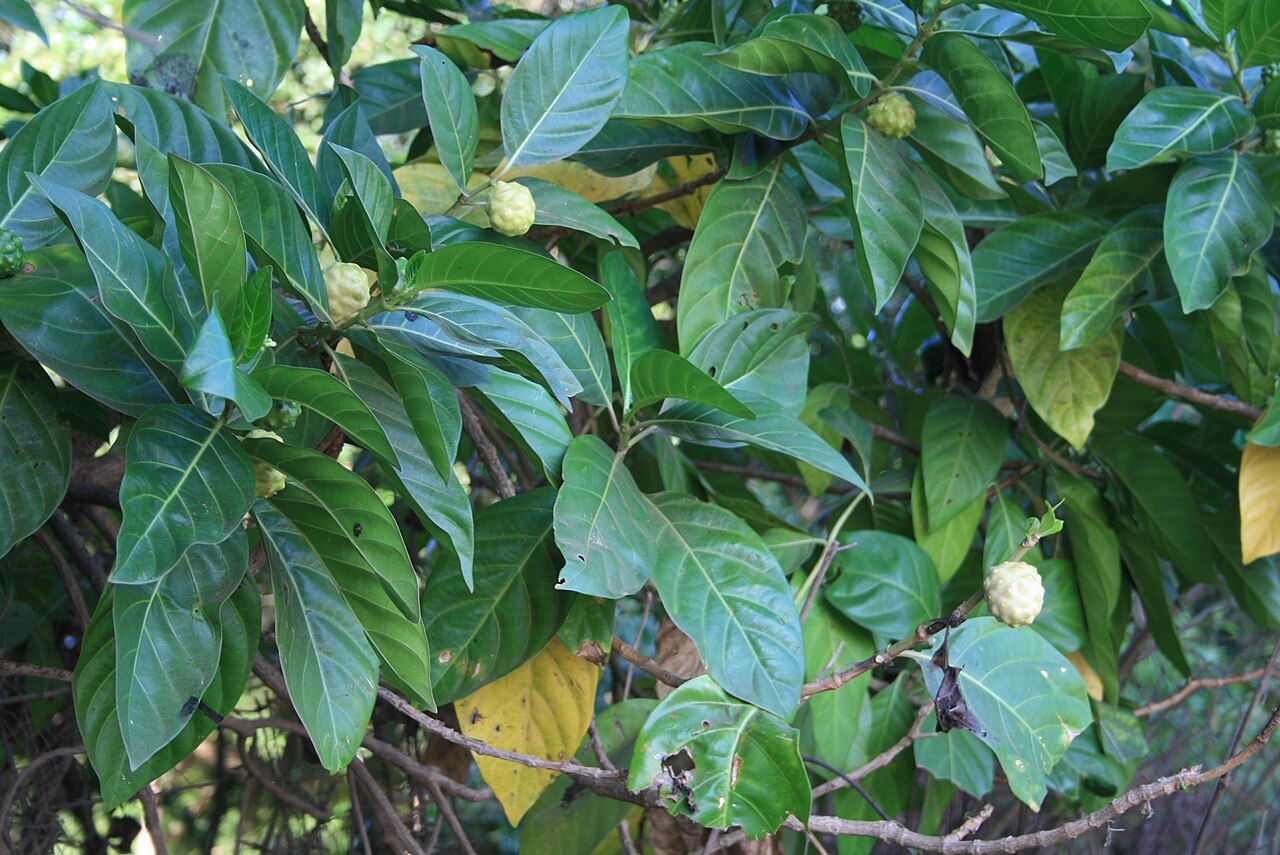
Morinda citrifolia is an evergreen shrub to small tree 10-30 feet (3-9 m) tall and 8-20 feet (2.4-6 m) wide, with squared green stems and a coarse, open branching pattern. Leaves are opposite, elliptic, 8-18 inches (20-45 cm) long and 3-10 inches (7-25 cm) wide, glossy dark green with deeply impressed pinnate veins, and paired interpetiolar stipules mark each node. White tubular flowers 0.4 inch (1 cm) long open a few at a time from a globose head, and the whole head swells into a fleshy syncarp 2-5 inches (5-12 cm) long. The fruit turns from green to translucent white as it ripens and releases butyric acid, producing a rancid-cheese odour detectable several yards away. Seeds carry an air chamber and float, which has spread the species along Pacific shorelines. Flowering and fruiting continue year-round in frost-free climates, so a plant normally holds buds, green fruit, and ripe fruit at the same time. It colonizes fresh lava, coral rubble, and saline coastal sand where most trees fail to establish. Fallen fruit softens within a day and draws flies, and self-sown seedlings come up densely beneath the canopy.
Native Range
Morinda citrifolia is native to Southeast Asia and northern Australia, with a natural range extending through Malesia to the islands of the western Pacific. Sea-dispersed seed and deliberate Polynesian transport carried it across the tropical Pacific, including Hawaii, where it grows on lowland lava flows and coastal strand below 1,500 feet (460 m). It is now naturalized in the Caribbean, Central America, and parts of tropical Africa.Suggested Uses
Grown in home gardens, coastal windbreaks, and commercial juice plantations at spacings of 8-12 feet (2.4-3.7 m). Used to stabilize coral sand and revegetate lava flows where salt and drought limit other species. Ripe fruit is fermented into juice, roots and bark yield yellow and red dyes for kapa and batik, and young leaves are cooked as a vegetable in parts of Southeast Asia.How to Identify
Appearance
Size & Dimensions
Height10' - 30'
Width/Spread8' - 20'
Bloom Information
Flowering continues throughout the year in frost-free climates, rising in output through the warm wet months. Two to six white tubular flowers open per head at any one time, each lasting a single day, and a head keeps producing over 3-5 weeks. Fruit develops over 60-90 days from that same head, so green and white-ripe fruit occur together. Plants begin flowering 9-18 months from seed.
Detailed Descriptions
Foliage Description
Glossy dark greenGrowing Conditions
Sun Requirements
Requires 4-12 hours of direct sunlight daily
• Full Sun: 6+ hours of direct sunlight
• Partial Shade: 3-6 hours of direct sunlight
• Full Shade: Less than 3 hours of direct sunlight
Care & Maintenance
Care Guide
Morinda citrifolia grows in full sun to light shade on free-draining sand, loam, coral rubble, or weathered lava at pH 6.0-8.5. It tolerates salt spray, brackish groundwater, and 3-5 dry months once established, though fruit size drops sharply under drought. Growth stops below 60F (16C) and foliage is killed below 32F (0C), which limits it to USDA zones 10-12. Waterlogged soil brings on root rot within weeks, and container plants need a coarse mix with free drainage at the base. Nitrogen at 2-4 ounces (55-115 g) per plant three times a year sustains fruiting on poor coastal soils. Scale insects, aphids, and black flag disease caused by Phytophthora are the recurring problems, and green scale outbreaks follow ant activity in the canopy.Pruning
Plants are cut back in early spring ahead of the warm-season flush to hold height at 8-12 feet (2.4-3.7 m) for hand harvest. Clearing the lowest 3 feet (0.9 m) of branches opens airflow and lowers fruit rot in humid coastal sites. Cuts on stems over 2 inches (5 cm) in diameter regrow from dormant buds within 6-8 weeks. Dead and scale-infested wood is taken out at any time of year.Pruning Schedule
Prune: March–April
early spring
Container Growing
Suitable for container growing
Minimum container size: 15 gallons