Salvia, Genus, leucantha, Species,
- Genus & species
Mexican bush sage
Overview
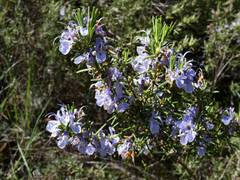
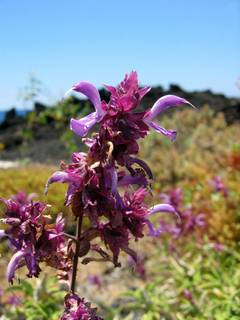
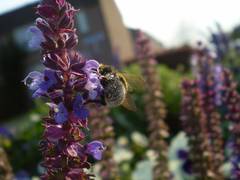
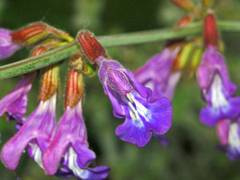
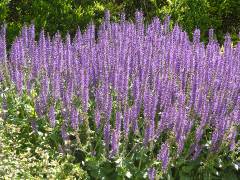
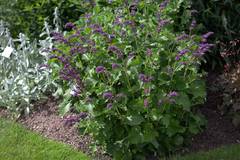
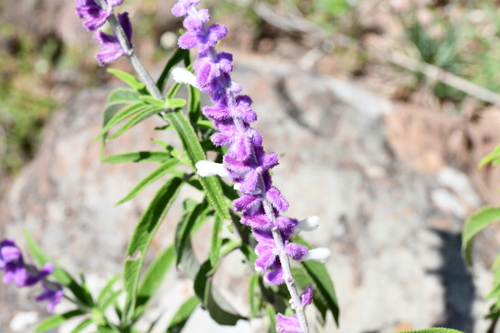
Salvia leucantha is a shrubby herbaceous perennial reaching 3-4 feet (90-120 cm) tall and 4-6 feet (120-180 cm) wide in a single season in zones 8-11. Foliage lance-shaped, gray-green above and densely white-woolly beneath, 3-5 inches (7.5-12.5 cm) long, with a soft texture. Flowers tubular, white, emerging from densely woolly purple calyces, 0.5-0.75 inch (1-2 cm) long, in arching racemes 8-12 inches (20-30 cm) long. The visible color comes mainly from the velvety purple calyces, which persist for 3-4 weeks after the white corollas drop. Bloom occurs from late summer through first hard frost (August-November in zones 8-10), making this a late-season bloomer that picks up color as many summer perennials decline. Hardy to about 18-20°F (-7 to -8°C); root-hardy to zone 8 with mulch. Spreads slowly by rhizomes 6-12 inches (15-30 cm) per season. Lifespan 5-10 years in cultivation.
Native Range
Salvia leucantha is native to central and eastern Mexico and parts of Central America, in pine-oak forests, scrub, and open woodland from 4,000-9,000 feet (1,200-2,700 m) elevation. The species has been in cultivation since the early 19th century and has naturalized in parts of California and the Mediterranean.Suggested Uses
Used in mixed perennial borders, late-season pollinator plantings, and informal mass plantings at 36-48 inch (90-120 cm) spacing. Suited to large containers of 7-10 gallons (26-38 L). Common in Mediterranean and dry-summer landscapes for the fall bloom timing; spent racemes are also cut for fresh and dried arrangements.How to Identify
Appearance
Size & Dimensions
Height3' - 4'
Width/Spread4' - 6'
Bloom Information
Late summer through first hard frost (August-November in zones 8-10; September-November in zones 7-8 with mulch). Individual flowers and calyces hold for 3-4 weeks; the woolly purple calyces persist on the stem after the white corollas drop, extending visible color another 2-3 weeks. Bloom is daylength-triggered, so cool-summer regions still see flowering as days shorten in fall.
Detailed Descriptions
Flower Description
white corollas with velvety purple calycesFoliage Description
gray-green above, white-woolly beneathGrowing Conditions
Sun Requirements
Requires 6-12 hours of direct sunlight daily
• Full Sun: 6+ hours of direct sunlight
• Partial Shade: 3-6 hours of direct sunlight
• Full Shade: Less than 3 hours of direct sunlight
Care & Maintenance
Care Guide
Grown in full sun in well-drained soil; tolerates clay, sand, and rocky soils. Soil pH 6.0-7.5 suits the species. Water weekly during the first growing season; established plants tolerate 3-4 weeks without rain. Hardy to about 18-20°F (-7 to -8°C) tops; rhizomes survive to about 5°F (-15°C) with 4 inches (10 cm) of mulch in zone 7. Root rot occurs in heavy or wet winter sites. Stems may flop after heavy rain or in rich soil; staking with surrounding sturdy perennials supports the late-season weight of bloom spikes.Pruning
Cut all stems to 4-6 inches (10-15 cm) above the ground in late winter or early spring (February-March in zones 8-10; March-April in zones 7-8) before new growth begins. Pinch growing tips at 12-18 inches (30-45 cm) tall in late spring to encourage branching and reduce flopping. Spent flower spikes can be cut back to the next leaf node to tidy after bloom; deadheading does not extend bloom in this species.Pruning Schedule
Prune: February–March
early spring
Container Growing
Suitable for container growing
Minimum container size: 7 gallons