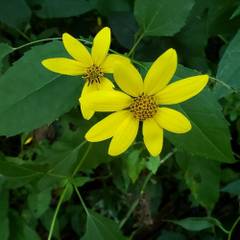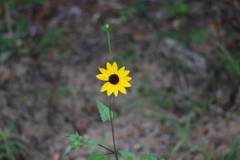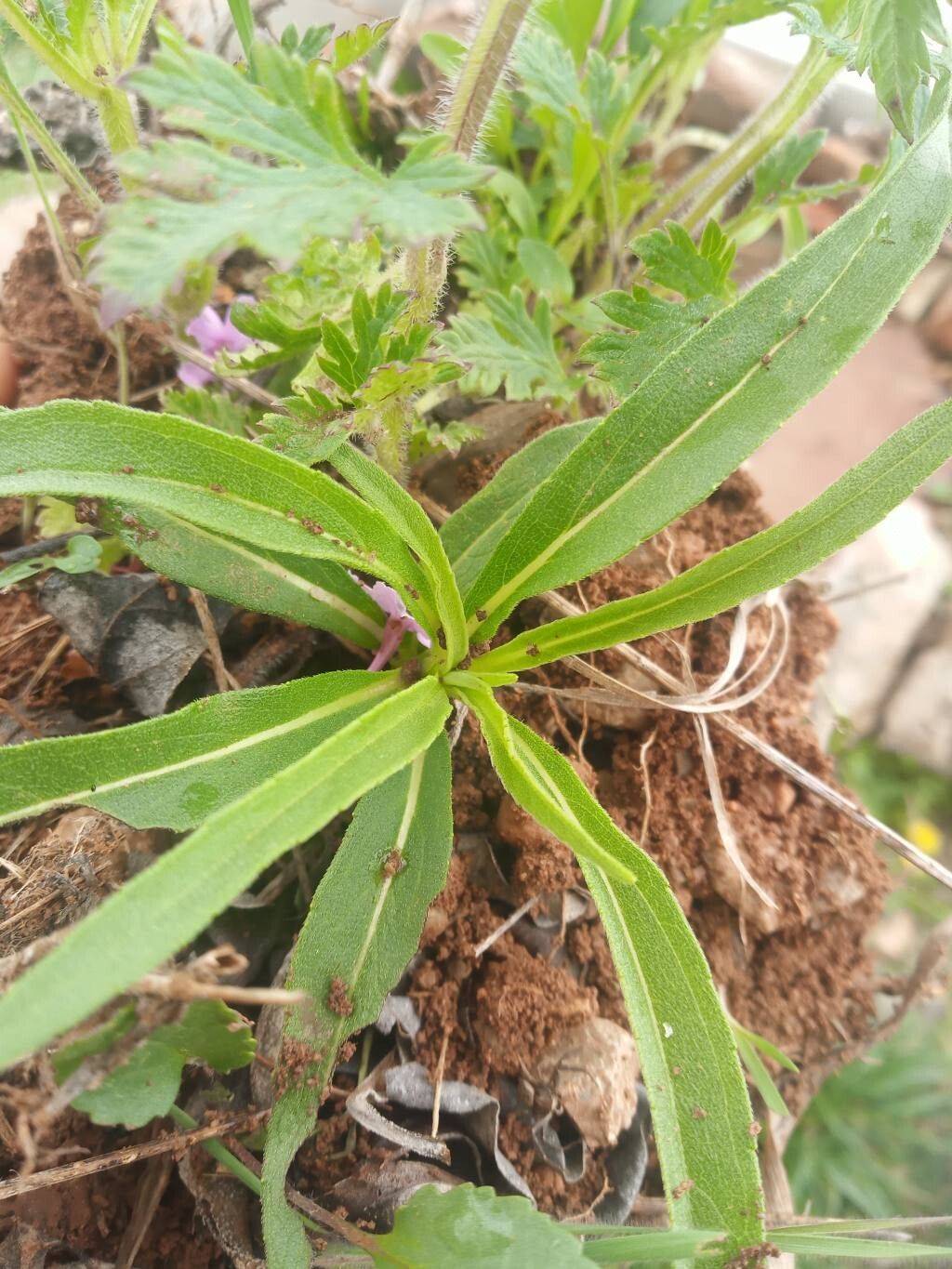
Helianthus, Genus, maximiliani, Species,
- Genus & species
Maximilian perennial sunflower
Native to central North American prairies (Great Plains, southern Canada to Texas)
Overview
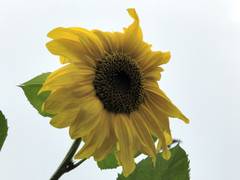
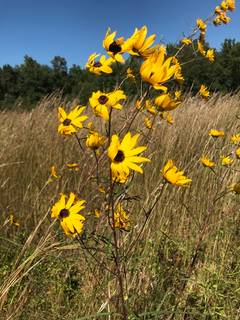
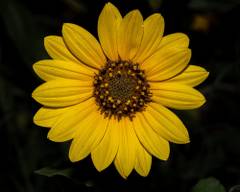
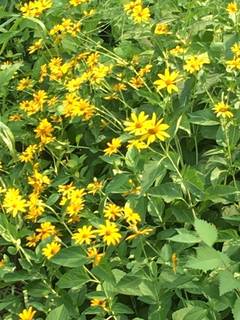
Helianthus maximiliani is a tall clump-forming herbaceous perennial reaching 6-10 feet (1.8-3 m) tall and 3-4 feet (90-120 cm) wide at maturity, spreading by underground rhizomes to form colonies 6-10 feet (1.8-3 m) across within 4-5 years. Stems erect and rough-haired, often unbranched until the upper third where flowering branches develop. Leaves alternate, lance-shaped, 4-10 inches (10-25 cm) long and 0.5-1.5 inches (1.3-4 cm) wide, dark grey-green, rough-textured on both surfaces, and folded along the midrib. Flowers daisy-form, single, 2-4 inches (5-10 cm) across, with golden-yellow ray petals around a darker yellow-brown central disc; flowers borne in the leaf axils along the upper stems and at stem tips. Bloom occurs from late August through October in zones 3-7, with individual plants producing dozens to hundreds of flowers across 6-8 weeks. Plants reach mature height in the second growing season; rhizomatous spread continues steadily and can dominate fertile sites within 3-5 years. Foliage holds grey-green through summer and turns brown after first hard frost. Lower leaves drop in late summer during dry conditions. Seed production is heavy and seedlings establish from dropped seed in disturbed soil.
Native Range
Helianthus maximiliani is native to the tallgrass and mixed-grass prairies, roadside ditches, and disturbed open ground of the central Great Plains, ranging from southern Saskatchewan and Manitoba south to Texas and east to Minnesota and Missouri at 500-4,500 feet (150-1,400 m) elevation. The species was named for Prince Maximilian of Wied, who collected specimens during his 1832-1834 expedition to North America.Suggested Uses
Used at the back of mixed perennial borders at 36-48 inch (90-120 cm) spacing, in prairie and meadow restorations, and in pollinator plantings where late-season seed for songbirds is a priority. The tall stature is suited for screening or as a tall background planting. Containers are not practical due to the mature size and rhizomatous spread.How to Identify
Appearance
Size & Dimensions
Height6' - 10'
Width/Spread3' - 4'
Bloom Information
Late August through October in zones 3-7, after many other prairie species have finished. Bloom may begin in early August in zones 8-9 and extend into November in mild seasons. Individual flowers last 5-7 days; staggered flower opening along the stems extends total bloom for 6-8 weeks per plant. Bloom intensity peaks 2-3 weeks before first hard frost.
Detailed Descriptions
Flower Description
golden yellow with darker yellow-brown discFoliage Description
dark grey-greenGrowing Conditions
Sun Requirements
Requires 6-10 hours of direct sunlight daily
• Full Sun: 6+ hours of direct sunlight
• Partial Shade: 3-6 hours of direct sunlight
• Full Shade: Less than 3 hours of direct sunlight
Care & Maintenance
Care Guide
Water weekly during the first growing season in the absence of rain. Established plants tolerate drought and a wide range of soil conditions including heavy clay; the species is well-adapted to prairie environments with hot dry summers. Powdery mildew and rust occur occasionally on lower leaves but are cosmetic. Rhizomatous spread is steady and can be aggressive in fertile garden soil; the clump is commonly contained by deep edging or annual root pruning at 18-24 inch (45-60 cm) radius. Tall stems may flop in rich soils or windy sites; the species typically self-supports in lean soils and full sun. Divide every 4-5 years in early spring; division is also a common method of containing spread.Pruning
Cut stems to 4-6 inches (10-15 cm) above ground in late autumn after frost or in early spring before new growth emerges. Pinching stems by half in mid-June reduces final height by 12-18 inches (30-45 cm) and promotes branching. Lifting and dividing the rhizomatous clump every 4-5 years controls spread.Pruning Schedule
Prune: March, June & November
fallearly springsummer