Malus × floribunda
Japanese crabapple
Cultivated hybrid; parent species native to East Asia
Overview
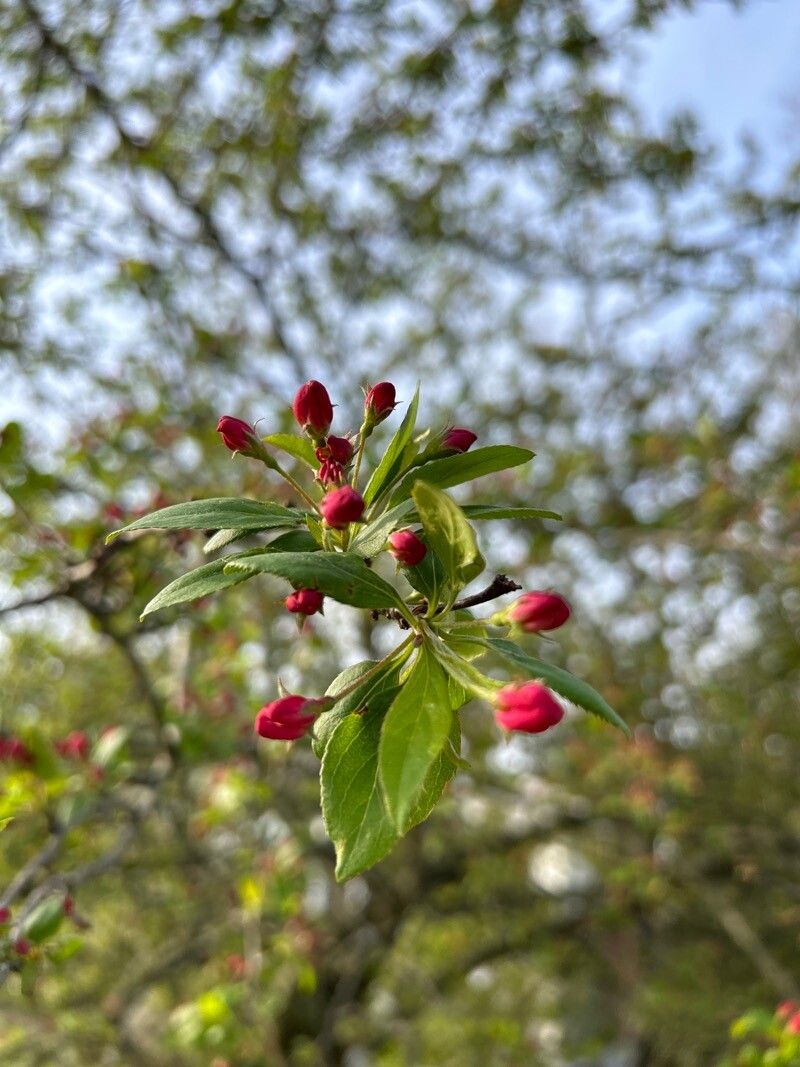
Malus × floribunda is a deciduous flowering crabapple forming a small, broadly rounded tree 15–25 feet (4.5–7.5 m) tall and wide, with dense, slightly arching branches. The oval leaves are 1.5–3 inches (4–8 cm) long, toothed, and dark green, turning yellow before dropping in autumn. In mid spring the tree carries a heavy bloom of flowers that open from deep red to pink buds, fade through pink to near white as they age, and cover the branches for about two weeks. Each flower is around 1 inch (2.5 cm) across, single, and lightly scented. Small fruit follows, about 0.3 inch (8 mm) wide, ripening yellow flushed red and persisting into winter, when birds take it. The two-tone effect of red buds among paler open flowers comes from buds opening over several days. It grows in full sun on most well-drained soils and shows strong resistance to apple scab and other crabapple diseases. Like other crabapples it can sucker from the rootstock and drop fruit that stains paving below.
Native Range
The tree is a long-cultivated hybrid thought to have arisen in Japan, where it has been grown for generations. Its parent species are East Asian crabapples.Suggested Uses
Planted as a spring-flowering specimen or lawn tree and in mixed borders, spaced 15–20 feet (4.5–6 m) apart. Also used in small gardens and along streets where its compact rounded crown suits small spaces.How to Identify
Appearance
Size & Dimensions
Height15' - 25'
Width/Spread15' - 25'
Bloom Information
Flowers open in mid spring, usually late April into May depending on climate, from deep red to pink buds that pale as they age. The bloom lasts about two weeks, with buds opening over several days to give a mix of colours at once. A light fragrance accompanies the flowers.
Detailed Descriptions
Flower Description
Red buds opening pink to whiteFoliage Description
Dark green, yellow in autumnGrowing Conditions
Sun Requirements
Requires 6-12 hours of direct sunlight daily
• Full Sun: 6+ hours of direct sunlight
• Partial Shade: 3-6 hours of direct sunlight
• Full Shade: Less than 3 hours of direct sunlight
Care & Maintenance
Care Guide
Grows in full sun on deep, well-drained, slightly acidic to neutral soil, tolerating clay and brief dry spells once established. Needs full sun for the heaviest bloom and fruit, flowering less in shade. Shows strong resistance to apple scab, cedar-apple rust, and fireblight compared with many crabapples. Annual dormant pruning removes suckers, water sprouts, and crossing branches. Hardy through USDA zones 4–8. Dropped fruit can stain paving and draw wasps in late summer.Pruning
Pruning in late winter while dormant removes water sprouts, root suckers, and crossing or dead branches and keeps an open crown. Light shaping is done after flowering if needed. Heavy cutting is limited, as it triggers dense water-sprout regrowth.Pruning Schedule
J
F
M
A
M
J
J
A
S
O
N
D
winterearly spring