Image 1 of 10
1 / 10
© No machine-readable author provided. Per Palmkvist Knudsen assumed (based on copyright claims)., some rights reserved (CC-BY-SA) · Wikimedia Commons
Malus, Genus, coronaria, Species,
- Genus & species
Sweet crabapple
Overview
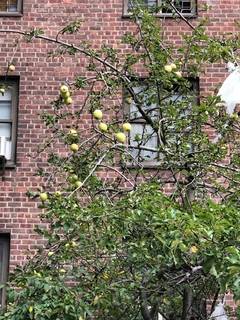
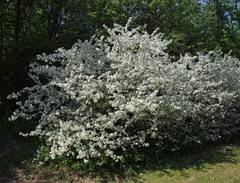
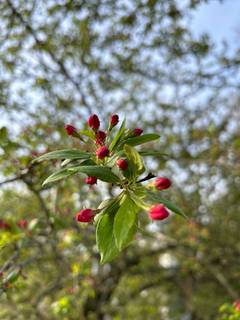
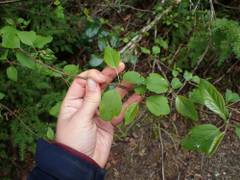
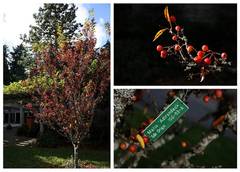
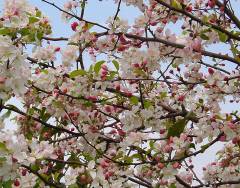
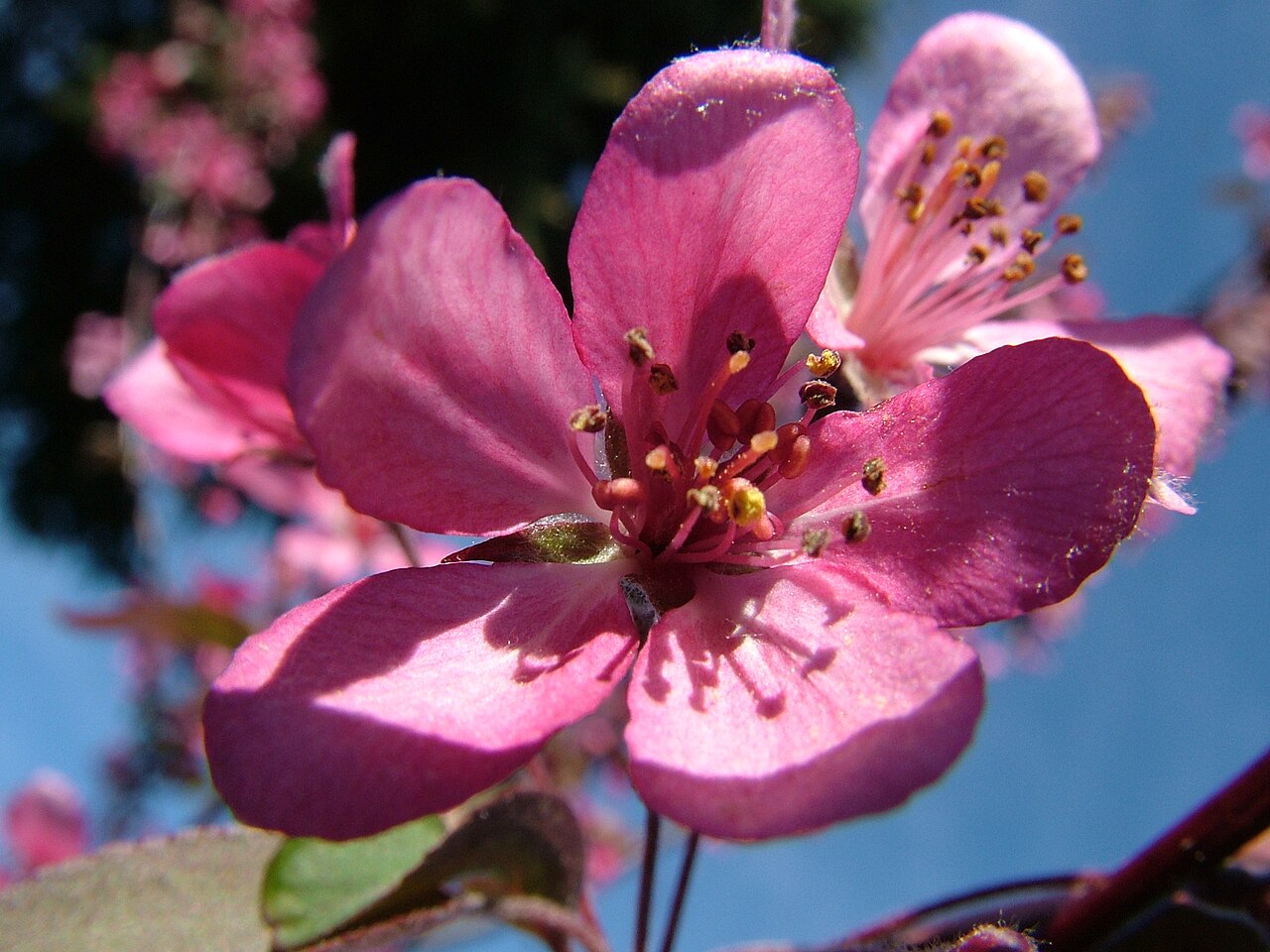
Malus coronaria is a small deciduous tree in the rose family (Rosaceae), growing 20–30 feet (6–9 m) tall and 15–25 feet (4.5–7.5 m) wide with a rounded, open crown on a short trunk. Twigs are reddish-brown and often end in thorn-like spur shoots 0.5–2 inches (1.3–5 cm) long, and bark becomes scaly and gray-brown with age. Leaves are ovate to broadly oval, 2–4 inches (5–10 cm) long, with irregular, coarsely toothed margins that are sometimes shallowly lobed on vigorous shoots. Pink buds open to white or pale pink flowers 1–1.5 inches (2.5–4 cm) across, borne in clusters of 3–6 in May, with a strong, sweet fragrance. Fruits are rounded, yellow-green, waxy apples 1–1.5 inches (2.5–4 cm) across, ripening in September–October with a tart, aromatic flesh. Fall foliage is yellow to orange. Plants form thickets from root suckers in open sites. Trees are susceptible to cedar-apple rust, apple scab, and fire blight, and fruit drop creates litter beneath the canopy in autumn.
Native Range
Malus coronaria is native to eastern North America, from southern Ontario and New York south to Georgia and Alabama and west to Missouri. It grows in thickets, woodland margins, old fields, and stream banks, typically in moist, well-drained soils on limestone-derived substrates.Suggested Uses
Used in naturalistic gardens, wildlife plantings, and woodland margins, spaced 15–20 feet (4.5–6 m) apart. Flowers are visited by bees in May, and fruits are eaten by deer, foxes, and birds, and used to make jelly, cider, and preserves.How to Identify
Appearance
Size & Dimensions
Height20' - 30'
Width/Spread15' - 25'
Bloom Information
Detailed Descriptions
Flower Description
Pale pink to whiteFoliage Description
Medium green, yellow to orange in autumnGrowing Conditions
Sun Requirements
Requires 6-10 hours of direct sunlight daily
• Full Sun: 6+ hours of direct sunlight
• Partial Shade: 3-6 hours of direct sunlight
• Full Shade: Less than 3 hours of direct sunlight
Care & Maintenance
Care Guide
Grows in full sun in moist, well-drained soil with a pH of 5.5–7.5. Hardy in USDA zones 4–8. Young trees receive 1 inch (2.5 cm) of water per week, and established trees tolerate short dry periods. Cedar-apple rust spreads from nearby Juniperus virginiana and causes orange leaf spots in May and June. Apple scab, fire blight, and powdery mildew occur in humid or wet years. Fruit drops from September to November and requires collection from beneath the tree. Suckers form around the base and are removed to keep a single-trunk form.Pruning
Pruning takes place in late winter, February–March, before buds swell. Young trees are trained to a central leader with 4–5 scaffold branches, and crossing or inward-growing branches are removed. Suckers and water sprouts are cut at the base, and cuts made on fire blight-infected branches are made 8–12 inches (20–30 cm) below visible damage.Pruning Schedule
Prune: February–March
winterearly spring