Ligustrum, Genus, quihoui, Species,
- Genus & species
Quihoui privet
Overview
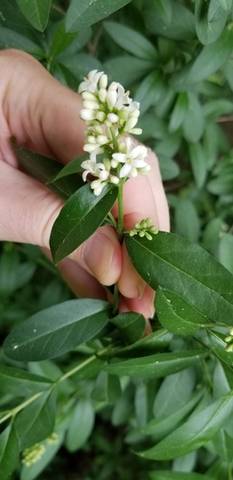
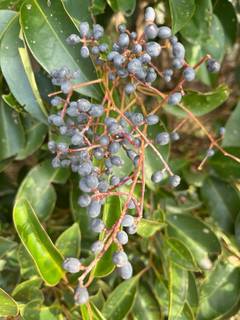
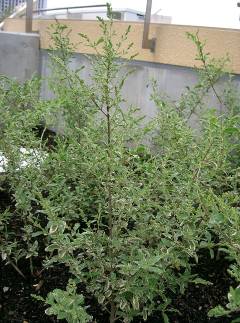
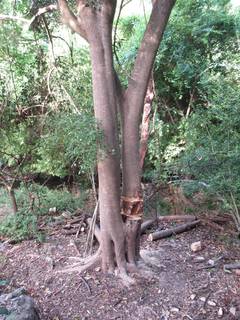
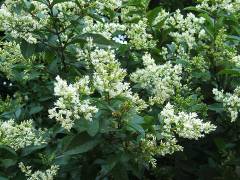
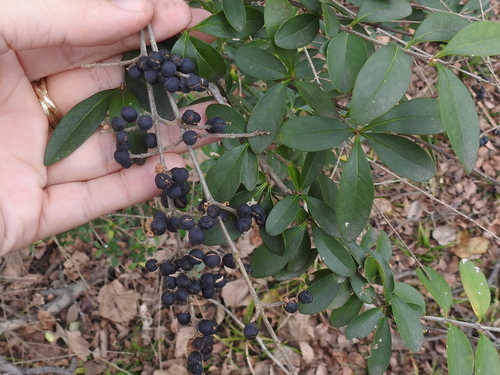
Ligustrum quihoui is a deciduous to semi-evergreen shrub growing 6-10 ft (1.8-3 m) tall and 6-8 ft (1.8-2.4 m) wide, with slender, arching branches forming a dense, rounded outline. The small leaves are oblong to elliptic, 0.5-1.5 in (1.5-4 cm) long, dark green, and arranged in opposite pairs. From late summer into early fall it produces narrow, branched panicles of small white tubular flowers up to 8 in (20 cm) long, later than most other privets. The flowers are followed by clusters of small blue-black berries about 0.25 in (6 mm) across that persist into winter. Native to China, Ligustrum quihoui has naturalized in the southeastern United States, where it forms dense thickets in floodplains, fence rows, and disturbed woodlands and is listed as invasive in several states. It grows in USDA zones 6 to 9, tolerates a wide range of soils, and resprouts vigorously after cutting. The berries are mildly toxic if eaten, and bird dispersal of seed contributes to its spread.
Native Range
Ligustrum quihoui is native to central and northern China. It has naturalized in the southeastern United States, where it spreads in floodplains, woodland edges, fence rows, and disturbed ground, and is listed as invasive in states including Texas, Georgia, and Alabama.Suggested Uses
Used as an informal screen, hedge, or barrier planting, spaced 4-6 ft (1.2-1.8 m) apart for a continuous row. Where it is regulated as invasive, non-spreading shrubs are planted instead.How to Identify
Appearance
Size & Dimensions
Height6' - 10'
Width/Spread6' - 8'
Bloom Information
Detailed Descriptions
Foliage Description
dark greenGrowing Conditions
Sun Requirements
Requires 4-8 hours of direct sunlight daily
• Full Sun: 6+ hours of direct sunlight
• Partial Shade: 3-6 hours of direct sunlight
• Full Shade: Less than 3 hours of direct sunlight
Care & Maintenance
Care Guide
Ligustrum quihoui grows in full sun to part shade and adapts to most soils, including clay, loam, and alkaline ground, with pH from 5.5 to 8.0. It tolerates drought, heat, and periodic wet soils once established and is hardy in USDA zones 6 through 9. Water needs are low to moderate. It resprouts readily from the base after cutting, which contributes to its persistence where naturalized. Because it self-seeds and spreads through bird-dispersed berries, it escapes cultivation in mild climates.Pruning
Prune after flowering to shape the shrub or maintain a hedge, since flowers form on the current season's growth. Shearing several times during the growing season keeps a formal outline but reduces bloom and fruit. Cut stems resprout quickly from the base.Pruning Schedule
Prune: September–October
fall