Ligustrum, Genus, japonicum, Species,
- Genus & species
waxleaf privet
Overview
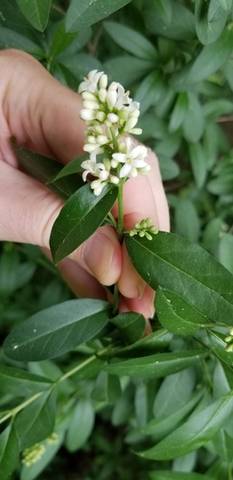
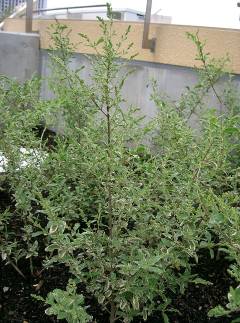
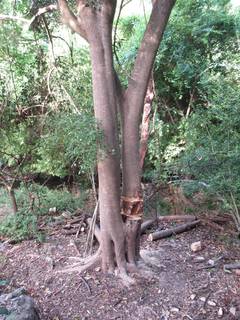
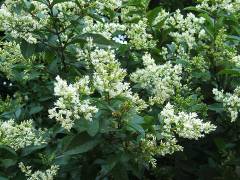
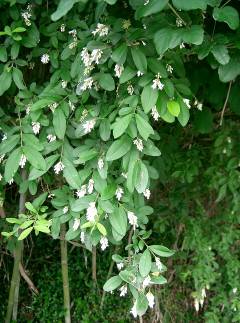
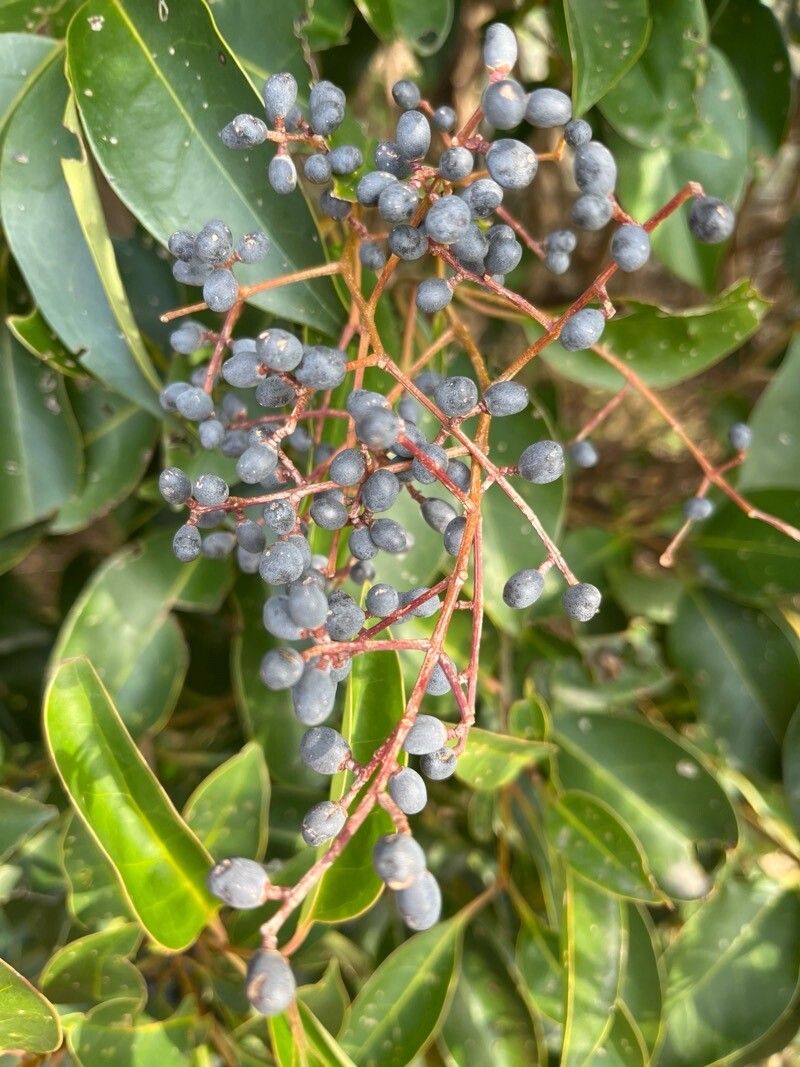
Ligustrum japonicum is an evergreen shrub or small tree reaching 6-12 feet (1.8-3.7 m) tall and 6-8 feet (1.8-2.4 m) wide as a maintained shrub, or 15-20 feet (4.6-6 m) tall when grown as a multi-stemmed tree. Leaves are leathery, dark glossy green on the upper surface and pale green beneath, ovate to elliptic, 2-4 inches (5-10 cm) long, opposite along stems with smooth margins. Pyramidal panicles 4-8 inches (10-20 cm) long of small white tubular flowers appear in late May and June, producing a strong sweet-musky fragrance that is unpleasant to some observers at close range. Black to blue-black ovoid drupes 0.25-0.4 inch (6-10 mm) long develop in October and persist through winter; bird consumption disperses seed across landscape and natural areas. Stems are slender, light grey-brown with smooth bark that becomes fissured on trunks older than 10 years. Growth rate is moderate to fast at 12-24 inches (30-60 cm) per year. L. japonicum is listed as invasive or restricted in Florida, Georgia, North Carolina, South Carolina, Tennessee, and Texas under state nursery and exotic species regulations, with bird-dispersed seed establishing populations in forest understories, fence rows, and disturbed sites across zones 7-10.
Native Range
Native to Japan and Korea, found in coastal forests, secondary woodlands, and disturbed sites from sea level to 2,500 feet (760 m) elevation. Naturalized populations occur throughout the southeastern United States from Virginia to Texas, in central and southern Florida, and along the Pacific coast in zones 7-10.Suggested Uses
Used in formal hedges, screening plantings, and as topiary or standards in zones 7-10. Planted in mass groupings at 4-6 foot (1.2-1.8 m) centers along property lines and as windbreaks where the dense evergreen foliage maintains year-round screening. Restricted use in invasive-listed states limits commercial availability across the southeastern United States. Grows in containers of at least 10 gallons (38 L) for 4-6 years before pot-binding reduces vigor.How to Identify
Appearance
Size & Dimensions
Height6' - 12'
Width/Spread6' - 8'
Bloom Information
Pyramidal panicles of small white tubular flowers appear in late May and June in zones 7-10, with peak bloom lasting 10-14 days. Flowers produce a strong sweet-musky fragrance that some observers find unpleasant at close range, particularly in still air. Black to blue-black drupes develop in October and persist on the stems through winter, with bird consumption driving seed dispersal across landscape and natural areas.
Detailed Descriptions
Foliage Description
dark glossy greenGrowing Conditions
Sun Requirements
Requires 4-10 hours of direct sunlight daily
• Full Sun: 6+ hours of direct sunlight
• Partial Shade: 3-6 hours of direct sunlight
• Full Shade: Less than 3 hours of direct sunlight
Care & Maintenance
Care Guide
Spacing of 6-8 feet (1.8-2.4 m) accommodates mature width as a maintained shrub. Established plants tolerate 3-4 weeks without rain in zones 7-10 and accept salt spray in coastal sites. Anthracnose (Glomerella cingulata) and Cercospora leaf spot can develop in humid wet conditions causing leaf spotting and premature defoliation; defoliation does not affect plant survival. Whitefly and scale insects cause black sooty mold on leaves and stems in zones 8-10, particularly in protected sites with poor air circulation. Cold injury occurs at temperatures below 5°F (-15°C), with stem dieback to ground level common in zone 6; regrowth from the base produces 4-6 feet (1.2-1.8 m) of growth by mid-summer. Bird-dispersed seed establishes seedlings throughout adjacent natural areas in zones 7-10, contributing to the species' invasive status.Pruning
Annual shearing in late spring (May-June in zones 7-10) maintains the dense formal hedge form on second-year and current-season wood. Hard rejuvenation cutback to 12-18 inches (30-45 cm) above ground level in late winter produces dense regrowth from the base within one growing season. Removal of inflorescences before fruit set in late June or early July reduces seed production and limits bird-mediated spread to natural areas in zones where the species is regulated as invasive.Pruning Schedule
Prune: May–June
late spring
Container Growing
Suitable for container growing
Minimum container size: 10 gallons