Ligustrum, Genus, lucidum, Species,
- Genus & species
tree privet
Overview
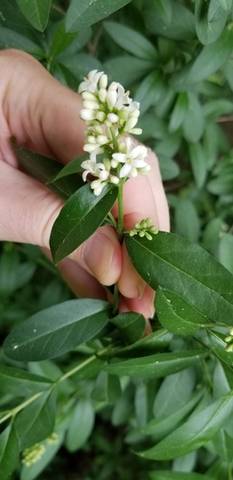
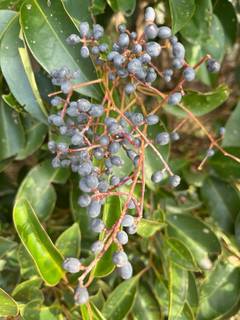
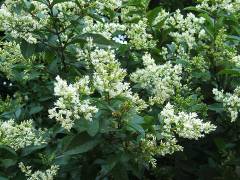
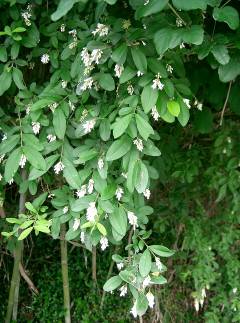
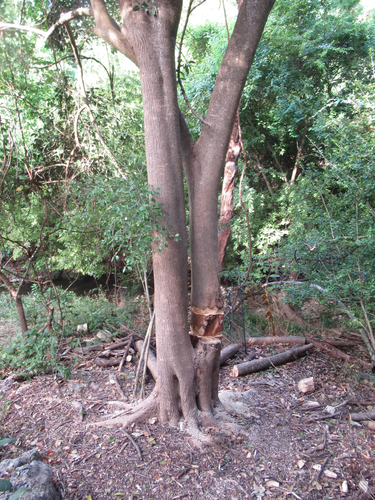
Ligustrum lucidum is a broadleaf evergreen tree in the olive family, reaching 30-50 feet (9-15 m) tall with a rounded crown 25-35 feet (8-11 m) wide. The bark is grey-brown and smooth, marked with pale lenticels. Leaves are opposite, leathery, and glossy dark green, 3-6 inches (8-15 cm) long, with a tapered tip and paler underside, held year-round. In early to mid summer the tree carries large pyramidal panicles of small creamy-white flowers up to 8 inches (20 cm) long, with a heavy scent that some people find disagreeable. The flowers are followed by dense clusters of oval drupes 0.3-0.4 inch (8-10 mm) long that ripen blue-black and persist through winter. Birds eat the fruit and spread the seed widely, and the tree has naturalized as an invasive species in the southeastern United States, California, Australia, and elsewhere. The berries and leaves are poisonous to people, dogs, and cats if eaten. Plants grow rapidly, tolerate hard pruning, and resprout from the base. Seedlings appear in large numbers near mature trees.
Native Range
Ligustrum lucidum is native to southern and central China and naturalized in Korea and Japan. In its native range it grows in mixed woodland and valley forests. It has become invasive in warm-temperate regions worldwide.Suggested Uses
Used as a street tree, screen, and clipped hedge in mild climates, spaced 10-15 feet (3-4.5 m) apart for screening. Because it self-seeds into wild areas, planting is restricted in some regions. The dense evergreen canopy gives year-round screening.How to Identify
Appearance
Size & Dimensions
Height30' - 50'
Width/Spread25' - 35'
Bloom Information
Creamy-white flowers open in large terminal panicles from June to July. The blooms carry a strong, sometimes unpleasant fragrance. Berries form by autumn and ripen blue-black, persisting on the tree into the following spring.
Detailed Descriptions
Foliage Description
glossy dark greenGrowing Conditions
Sun Requirements
Requires 4-10 hours of direct sunlight daily
• Full Sun: 6+ hours of direct sunlight
• Partial Shade: 3-6 hours of direct sunlight
• Full Shade: Less than 3 hours of direct sunlight
Care & Maintenance
Care Guide
Plants grow in full sun to part shade and tolerate a wide range of soils, including clay, sand, and alkaline ground, provided drainage is reasonable. Established trees withstand drought, heat, and urban conditions, and grow rapidly. The species seeds heavily and is regulated or listed as invasive in several states and countries, so spread into natural areas is a concern. Berries and foliage are poisonous to people and pets if ingested. The tree resprouts strongly after cutting, which can make removal slow. Hardy in USDA zones 8 to 10.Pruning
The tree tolerates hard pruning and shearing and is often kept as a clipped hedge or small standard. Pruning is done in late winter or after flowering. Removing spent flower panicles before berries set reduces unwanted seedlings.Pruning Schedule
Prune: February & August
wintersummer