Lablab, Genus, purpureus, Species,
- Genus & species
Hyacinth bean
Overview
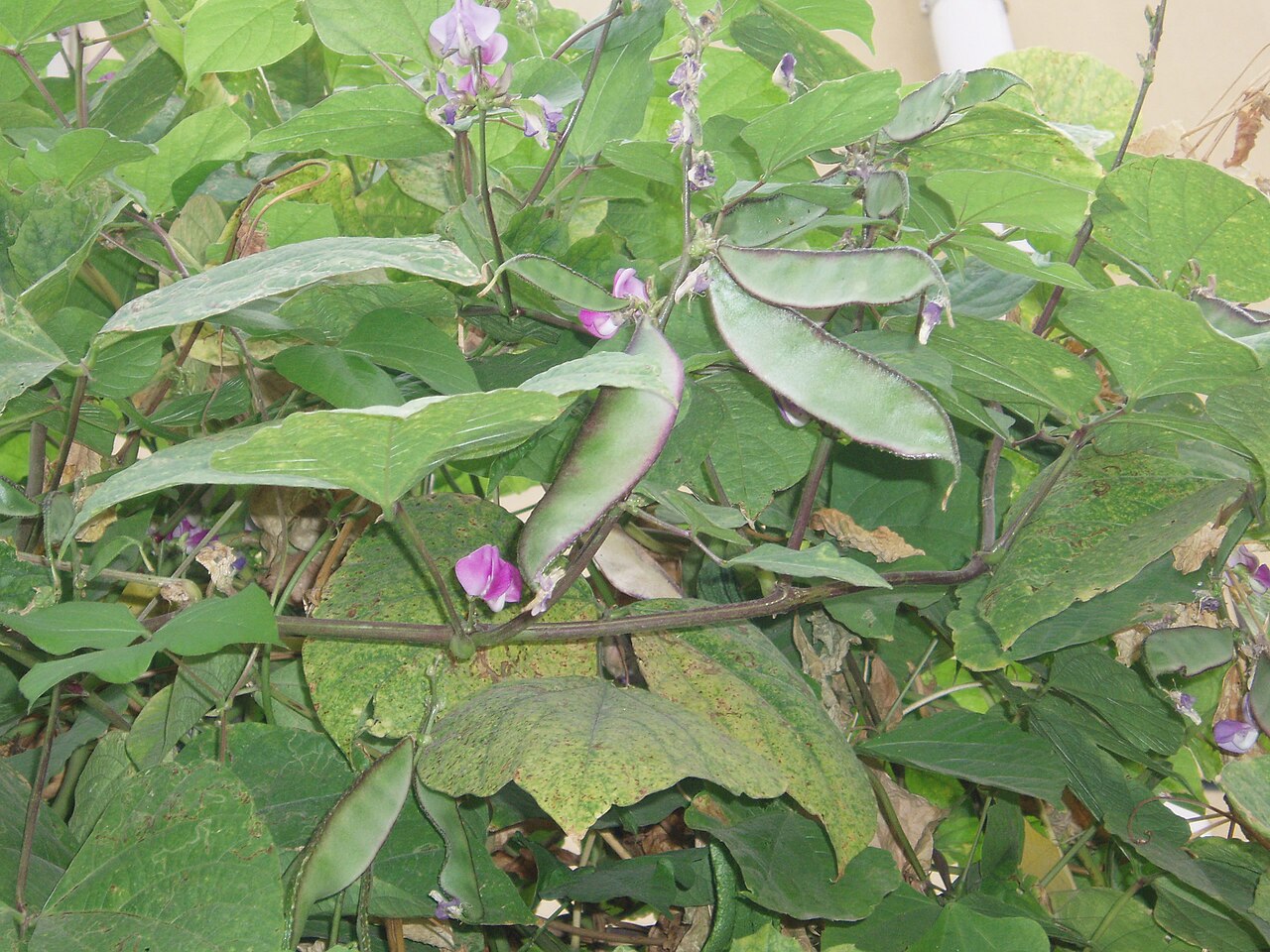
Lablab purpureus is a twining, short-lived perennial vine grown as an annual in most climates, climbing 6–20 feet (1.8–6 m) on supports. Leaves are trifoliate, with broadly ovate leaflets 3–6 inches (7.5–15 cm) long that are green or purple-tinged. Pea-like flowers 0.75–1 inch (2–2.5 cm) across, in purple, pink, or white, are borne in upright racemes 4–16 inches (10–40 cm) long from midsummer until frost. Pods are flattened and curved, 2–5 inches (5–13 cm) long, purple or green, and hold 3–5 seeds that are black, brown, or white with a white hilum. Plants flower 70–120 days after sowing. Growth slows below 60°F (16°C) and frost kills the foliage. Raw seeds and pods contain cyanogenic glycosides and lectins and are poisonous. Plants tolerate drought once established, though flowering decreases in heavy shade, and vines can reach the full height only with a trellis or fence.
Native Range
Native to tropical Africa. Cultivated for several millennia in India, Southeast Asia, and East Africa as a food and forage legume, and naturalized in tropical regions of Asia and the Americas.Suggested Uses
Grown on trellises, fences, and arbors at 12-inch (30 cm) spacing, and in containers of at least 5 gallons (19 L) with a support. Young pods and seeds are eaten cooked in South Asia and Africa, and the species is also grown as forage. Annual growth in cool climates limits plant size.How to Identify
Appearance
Size & Dimensions
Height6' - 20'
Width/Spread3' - 6'
Bloom Information
Detailed Descriptions
Flower Description
Purple, pink, or whiteFoliage Description
Green, sometimes purple-tingedGrowing Conditions
Sun Requirements
Requires 6-10 hours of direct sunlight daily
• Full Sun: 6+ hours of direct sunlight
• Partial Shade: 3-6 hours of direct sunlight
• Full Shade: Less than 3 hours of direct sunlight
Water & Climate
Water Needs
Drought Tolerance
Drought tolerant when established
Care & Maintenance
Care Guide
Seeds are sown 1 inch (2.5 cm) deep after the last frost, when soil reaches 65°F (18°C), and germinate in 7–14 days. Plants grow in full sun in well-drained soil at pH 5.0–7.5 and need a trellis or fence 6 feet (1.8 m) or more in height. Water weekly in the absence of rain; established vines tolerate dry spells of 2–3 weeks. Excess nitrogen produces foliage at the expense of flowers. Aphids, spider mites, and Japanese beetles feed on foliage, and root rot develops in waterlogged soil. Seed pods mature 4–6 weeks after flowering.Pruning
No routine pruning is needed. Stems can be cut back by one third in midsummer to limit vine length. Spent racemes are removed to prolong flowering if seed is not needed.Pruning Schedule
Prune: July
summer
Container Growing
Suitable for container growing
Minimum container size: 5 gallons
Toxicity Warning
Toxic to pets and humansPlanting Guide
Planting Methods & Timing
Planting Method
direct sow
Direct Sow Timing
After the last frost, when soil reaches 65°F (18°C)
Days to Maturity
70–120 days
Plant Spacing
12 inches