Image 1 of 10
1 / 10
© Charles T. Bryson, USDA Agricultural Research Service, Bugwood.org, some rights reserved (CC-BY) · Wikimedia Commons
Iris, Genus, cristata, Species,
- Genus & species
Dwarf crested iris
Eastern United States, centred on the southern Appalachian and Ozark highlands
Overview
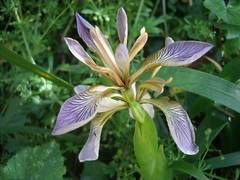
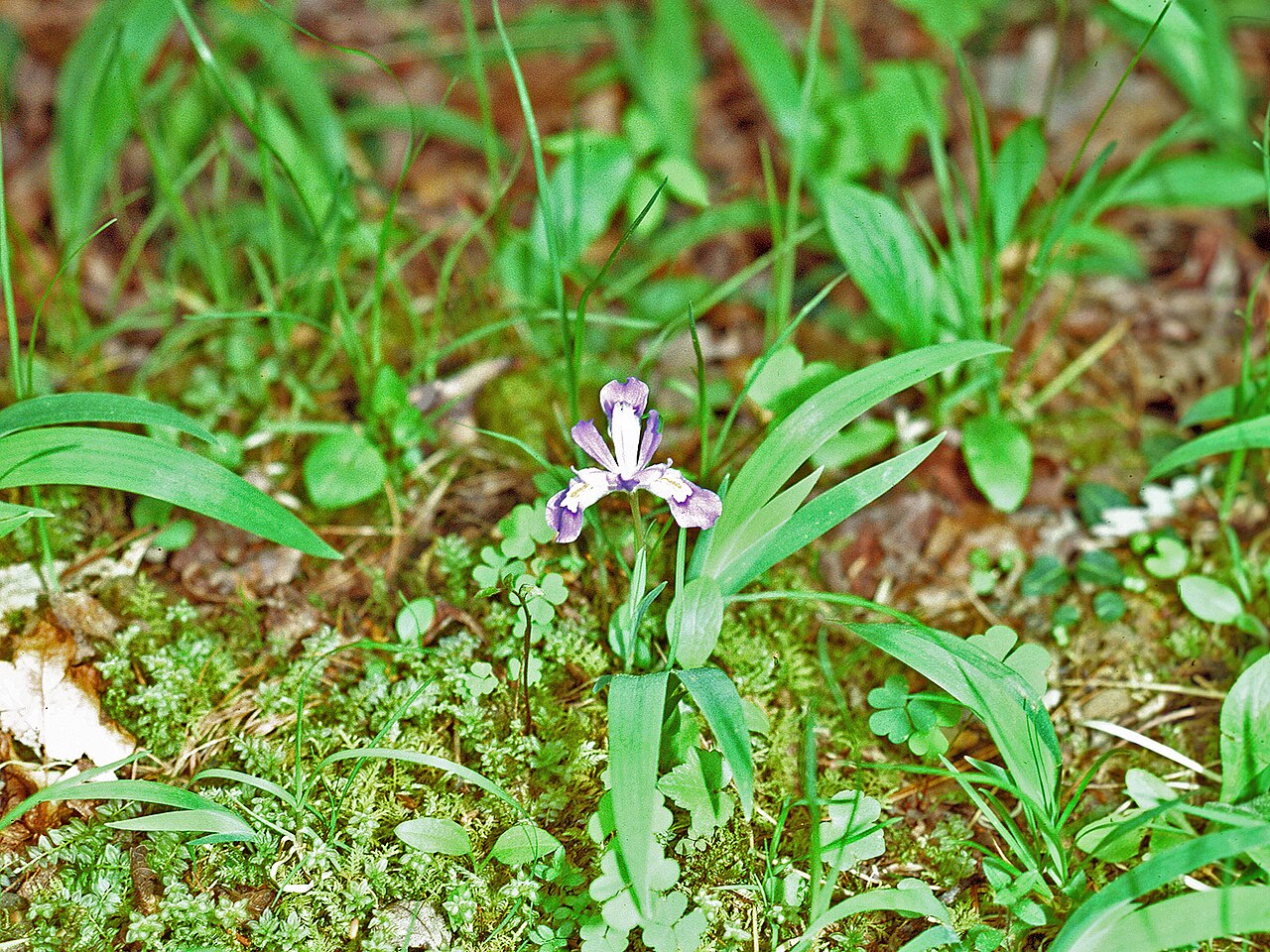
Iris cristata is a rhizomatous perennial forming flat mats 4-8 inches (10-20 cm) tall that widen 4-6 inches (10-15 cm) a year from branching surface rhizomes. Leaves are sword-shaped, 4-9 inches (10-23 cm) long and 0.5-1 inch (13-25 mm) wide, pale to mid green, and held in flattened fans that arch outward after flowering. Flowers measure 2.5-3 inches (6-8 cm) across, pale blue to lilac-blue, and sit almost on the ground because a perianth tube rather than a stem carries them; each of the three falls holds a white signal patch marked with purple veins and topped by three raised yellow to orange ridges. Flowering runs two to three weeks in April and May, with each flower lasting two or three days. The rhizomes creep across the soil surface rather than under it, so mulch or soil drawn over them brings rot within a season. Slugs shred the young leaf fans in wet springs, and mats in full afternoon sun brown at the leaf tips. All parts, and the rhizomes in particular, contain irritant compounds that cause vomiting if eaten and skin reactions on contact with cut tissue. Hardy in USDA zones 3-9.
Native Range
Iris cristata is native to the eastern United States, from Maryland and southern Pennsylvania south to Georgia and west through Kentucky and Tennessee into Missouri, Arkansas, and Oklahoma. It grows on rich wooded slopes, shaded rocky bluffs, ravine sides, and stream banks, on soils ranging from limestone-derived loam to acidic sandstone grit. Colonies are concentrated in the southern Appalachians and the Ozark highlands.Suggested Uses
Used as groundcover under deciduous trees, along shaded path edges, in rock garden pockets, and on the tops of shaded retaining walls, spaced 6-8 inches (15-20 cm) apart for closed cover within two seasons. The mats interplant with spring ephemerals and later-emerging ferns, which fill the space as the iris foliage flattens in summer. Container culture works in wide, shallow pans of 2 gallons (7.5 L) or larger with the rhizomes set on a gritty surface mix.How to Identify
Appearance
Size & Dimensions
Height4" - 8"
Width/Spread1' - 2'
Colors
Bloom Information
Flowers open in early April in zones 7-8 and in early to mid-May in zones 4-5, running two to three weeks in total. A single rhizome carries one or two flowers, so mat density sets the scale of flowering; a three-year-old colony produces 30-60 flowers per square foot (320-650 per square metre). Individual flowers last two to three days and shatter cleanly. Bumblebees and long-tongued solitary bees reach the nectar at the base of the perianth tube, and ants carry seeds away from split capsules in July.
Detailed Descriptions
Flower Description
Pale blue to lilac-blue with a white signal patch and raised yellow-orange crestsFoliage Description
Pale to mid green, sword-shaped, held in flat fansGrowing Conditions
Sun Requirements
Requires 2-6 hours of direct sunlight daily
• Full Sun: 6+ hours of direct sunlight
• Partial Shade: 3-6 hours of direct sunlight
• Full Shade: Less than 3 hours of direct sunlight
Care & Maintenance
Care Guide
Part shade with two to six hours of morning sun matches the wooded slope conditions of wild colonies; deep shade cuts flowering by roughly half, while full afternoon sun browns the leaf tips. The species roots in humus-rich, gritty, free-draining soil at pH 5.5-7.0 that stays damp in spring and dries somewhat by late summer. Rhizomes sit on the soil surface with their roots pressed into the ground beneath, and covering them with soil or mulch leads to rot, so a light scatter of leaf litter between the fans is the usual treatment. Roughly 1 inch (2.5 cm) of water per week through spring supports flowering and leaf extension. Mats are lifted and divided immediately after flowering in June, with the rhizome cut into 2-3 inch (5-8 cm) pieces carrying one fan each and replanted 6-8 inches (15-20 cm) apart. Fertility needs are low, and a spring scatter of leaf mould around the mat covers the season.Pruning
Flowering stems call for no removal, since the flowers sit at ground level and shatter on their own. Seed capsules are cut at the base in July where self-sowing into surrounding beds is unwanted. Leaves are left to yellow and die down in late autumn, then raked clear in November so the surface rhizomes are not buried by leaf fall.Pruning Schedule
Prune: June–July & November
summerfall
Container Growing
Suitable for container growing
Minimum container size: 2 gallons