Ilex, Genus, vomitoria, Species,
- Genus & species
Yaupon holly
Southeastern United States coastal plain
Overview
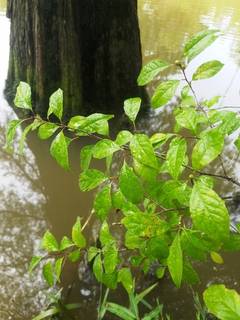
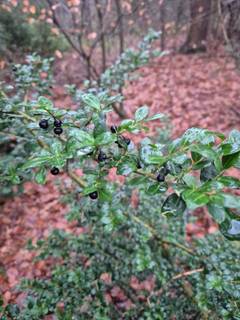
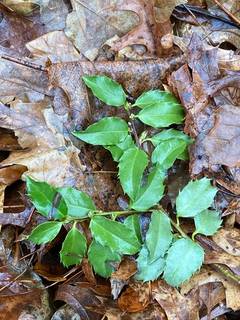
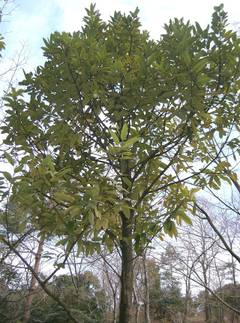
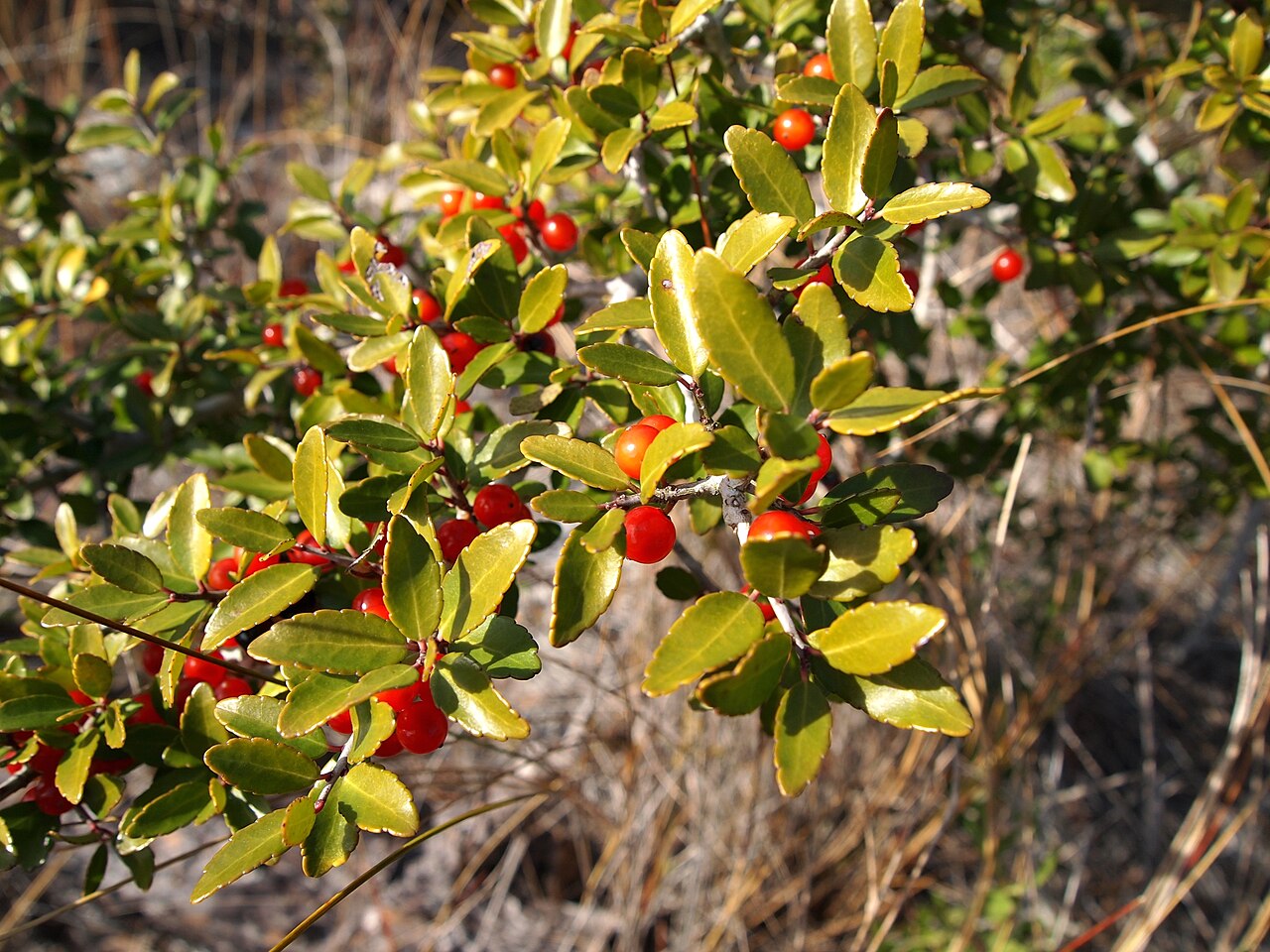
Ilex vomitoria is an evergreen shrub or small tree in the holly family (Aquifoliaceae), growing 12–20 feet (3.6–6 m) tall and 8–15 feet (2.4–4.6 m) wide, occasionally reaching 25 feet (7.6 m). Stems are upright and multi-trunked, with smooth, light gray bark and a rounded to irregular crown. Leaves are alternate, elliptic to ovate, 0.75–1.5 inches (2–4 cm) long, with rounded teeth along the margins and a glossy, dark green upper surface. The species is dioecious, and small white to greenish-white flowers 0.2 inch (5 mm) across open in clusters along the previous year's stems in April–May. Female plants that are pollinated by a nearby male produce round, red berries 0.25 inch (6 mm) across, which ripen in October and persist through winter. Plants spread by root suckers and form thickets 10–15 feet (3–4.6 m) wide in open sites. Growth rate is 12–24 inches (30–60 cm) per year. Leaves and berries contain caffeine and saponins, and the berries are toxic if eaten in quantity by humans and pets. Plants are not cold hardy north of USDA zone 7, and leaves drop at 5°F (−15°C).
Native Range
Ilex vomitoria is native to the southeastern United States, from southeastern Virginia south to central Florida and west to eastern Texas and southeastern Oklahoma. It grows on the coastal plain in maritime forests, barrier island dunes, and the edges of swamps and marshes.Suggested Uses
Used as hedges, screens, foundation plantings, and informal thickets in coastal and urban landscapes, with plants spaced 4–6 feet (1.2–1.8 m) apart for hedges. Berries are eaten by birds including robins and cedar waxwings. Leaves were brewed as a caffeinated beverage by Native peoples of the southeastern United States.How to Identify
Appearance
Size & Dimensions
Height12' - 20'
Width/Spread8' - 15'
Bloom Information
Flowers open from April to May, with clusters of 2–5 small white to greenish-white flowers on the previous season's growth. Flowers are 0.2 inch (5 mm) across and open for 2–3 weeks. Berries ripen from October and remain on female plants until late winter when eaten by birds.
Detailed Descriptions
Flower Description
White to greenish-whiteFoliage Description
Glossy dark greenGrowing Conditions
Sun Requirements
Requires 4-10 hours of direct sunlight daily
• Full Sun: 6+ hours of direct sunlight
• Partial Shade: 3-6 hours of direct sunlight
• Full Shade: Less than 3 hours of direct sunlight
Care & Maintenance
Care Guide
Grows in full sun to part shade in nearly any soil with a pH of 5.0–7.5, including sandy, clay, and periodically wet sites. Hardy in USDA zones 7–10, with leaf drop and stem dieback at 5°F (−15°C). Established plants tolerate drought, salt spray, and flooding for several weeks. Young plants receive 1 inch (2.5 cm) of water per week during the first 1–2 growing seasons. Berry production requires both a male and a female plant within 50–100 feet (15–30 m). Scale insects, leaf spot, and spider mites occur occasionally, and root suckers appear around the base of mature plants.Pruning
Pruning takes place in late winter before new growth in February–March, or after flowering in May. Plants tolerate shearing to 2–3 feet (60–90 cm) for hedges, and tree forms are shaped by removing lower stems and suckers. Overgrown plants are cut to 12–24 inches (30–60 cm) above ground and regrow within 1–2 growing seasons.Pruning Schedule
Prune: February–March & May
winterearly springlate spring
Container Growing
Suitable for container growing
Minimum container size: 5 gallons