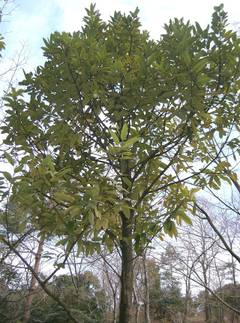
Ilex, Genus, ×, Hybrid, 'Nellie R. Stevens', Cultivar,
- Genus
- Hybrid
- Cultivar
nellie R. stevens holly
Garden hybrid — {Ilex aquifolium} (English holly) × {I. cornuta} (Chinese holly); originated in Mississippi
Overview
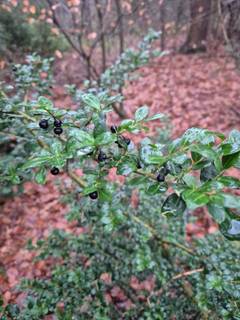
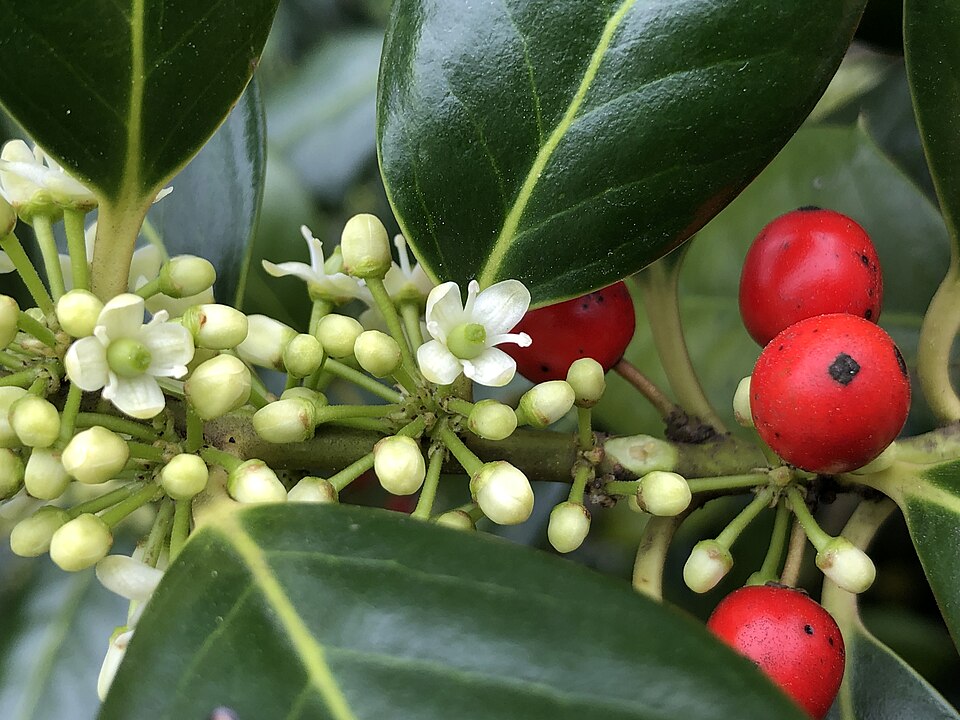
Ilex × 'Nellie R. Stevens' is a hybrid holly, growing 180–360 inches (450–900 cm) tall and 120–180 inches (300–450 cm) wide. Dark green glossy spiny evergreen foliage with abundant red berries in fall and winter. A hybrid of I. aquifolium × I. cornuta. Named after Nellie R. Stevens of Mississippi, who discovered the original seedling. The cultivar produces berries with minimal or no pollination (parthenocarpic tendency) — most hollies are dioecious and require a nearby male pollinator for berry production on female plants. A nearby male holly increases berry set but is not strictly required. Fast-growing for a holly at 12–24 inches (30–60 cm) per year. Deer-resistant (the spiny leaves deter browsing). The red berries are toxic to humans (gastrointestinal irritation: nausea, vomiting) but are consumed safely by birds, which are the primary seed dispersal agents. Zones 6–9. Full sun to partial shade. Tolerates a range of soil types. Scale insects and holly leaf miner are the primary pests. The spiny leaves can scratch skin during pruning; gloves and long sleeves help reduce exposure. Responds well to hedging and formal shearing.
Native Range
'Nellie R. Stevens' originated in Mississippi. A hybrid of English × Chinese holly.Suggested Uses
Grown as a screen, specimen, or formal hedge spaced 72–96 inches (180–240 cm) apart. Full sun to partial shade. The red winter berries and glossy evergreen foliage suit formal and estate landscapes. Zones 6–9. Berries are toxic if ingested — siting away from areas accessible to small children reduces risk.How to Identify
Appearance
Size & Dimensions
Height15' - 30'
Width/Spread8' - 15'
Colors
Bloom Information
Inconspicuous white flowers in spring. Red berries develop in fall and persist through winter. Berry production occurs without a required male pollinator, though a nearby male increases set.
Detailed Descriptions
Flower Description
White, small, inconspicuousFoliage Description
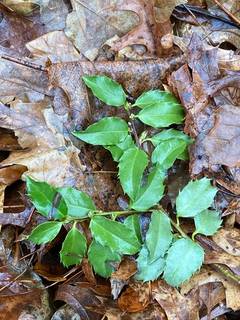
Dark green, glossy, spiny, ovate with serrated margins, evergreenGrowing Conditions
Sun Requirements
Requires 4-10 hours of direct sunlight daily
• Full Sun: 6+ hours of direct sunlight
• Partial Shade: 3-6 hours of direct sunlight
• Full Shade: Less than 3 hours of direct sunlight
Care & Maintenance
Care Guide
Full sun to partial shade. Tolerates a range of soils. Fast-growing for holly (12–24 inches / 30–60 cm per year). Berry production occurs without a required male pollinator. Deer-resistant. Berries are toxic to humans. Scale insects and holly leaf miner. Zones 6–9.Pruning
Pruning for shape in late winter or early spring. Responds well to formal hedging and shearing. The spiny leaves scratch skin; gloves help during any pruning work.Pruning Schedule
Prune: March–April
spring