Image 1 of 5
1 / 5
© Photograph by Mike Peel (www.mikepeel.net)., some rights reserved (CC-BY-SA) · Wikimedia Commons
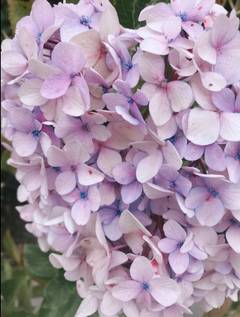
Hydrangea, Genus, macrophylla, Species, 'Blaumeise', Cultivar,
- Genus & species
- Cultivar
blue tit hydrangea
Japan (coastal and mountain woodland habitats); cultivar bred in Germany as part of the Teller Series lacecap group
Overview
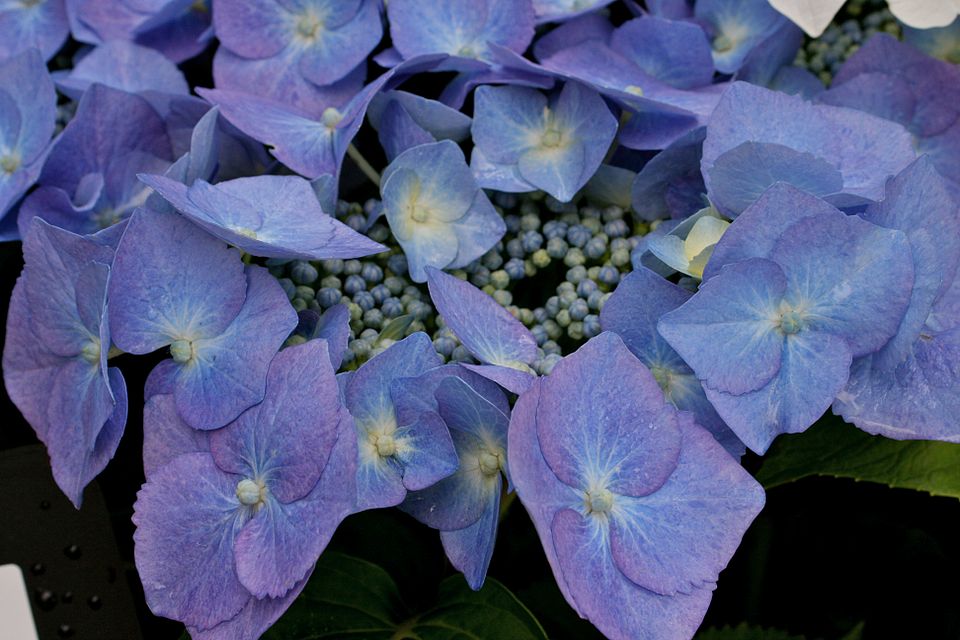
Hydrangea macrophylla 'Blaumeise' (also sold as 'Blue Tit', a member of the German Teller Series) is a rounded mounding deciduous shrub in the hydrangea family (Hydrangeaceae) reaching 3–5 feet (0.9–1.5 m) tall with a spread of 3–5 feet (0.9–1.5 m). This lacecap cultivar produces flat-topped flower heads 6–8 inches (15–20 cm) across, with large single sterile ray florets in vivid blue tones in acidic soil, shifting to pink-mauve tones in alkaline soil, arranged as an outer ring surrounding a dense center of small fertile florets. Individual sterile ray florets measure 2–2.5 inches (5–6 cm) across — a size that sits at the large end of the lacecap range among cultivars in the trade. The florets overlap as they open to form a prominent outer ring around the fertile-flower center. 'Blaumeise' is part of the German Teller Series ('Teller' meaning 'plate' in German), a group of lacecap selections developed for large-rayed lacecap flower form. Glossy dark green broadly ovate leaves run 4–8 inches (10–20 cm) long. The cultivar blooms on old wood. Growth rate runs moderate. Hardy to zone 6.
Native Range
Hydrangea macrophylla is native to Japan, where wild populations grow in coastal and mountain woodland habitats. 'Blaumeise' was bred in Germany as part of the Teller Series of lacecap cultivars, released through the German hydrangea breeding program that produced the entire Teller group.Suggested Uses
Grown in borders and container culture in 7 gallon (26 L) or larger pots at 3–5 foot (0.9–1.5 m) spacing. The large-rayed lacecap flower form carries a different visual character than mophead cultivars provide in the same planting context, which gives 'Blaumeise' a complementary role alongside mophead hydrangeas rather than an interchangeable one. The vivid blue color expression in acidic soil sits at the saturated end of the hydrangea blue-color range and produces a strong color read across the garden when the pH conditions support it. Late spring frost can eliminate the flower display in some years. Full sun positions, dry soils, and zones below 6 are all unsuitable given the cultural profile.How to Identify
Appearance
Size & Dimensions
Height3' - 5'
Width/Spread3' - 5'
Bloom Information
Flat-topped lacecap flower heads 6–8 inches (15–20 cm) across, with large sterile ray florets 2–2.5 inches (5–6 cm) each in vivid blue (acid) to pink-mauve (alkaline) surrounding small fertile florets at the center, open from June through August across a 6–8-week bloom window. The cultivar blooms on old wood — flower buds set the previous summer produce the current year's display.
Detailed Descriptions
Flower Description
Lacecap: vivid blue (acid) to pink-mauve (alkaline) sterile rays 2-2.5 inches each surrounding fertile center; 6-8 inchesFoliage Description
Glossy dark green broadly ovate coarsely serrated 4-8 inches longGrowing Conditions
Sun Requirements
Requires 3-5 hours of direct sunlight daily
• Full Sun: 6+ hours of direct sunlight
• Partial Shade: 3-6 hours of direct sunlight
• Full Shade: Less than 3 hours of direct sunlight
Care & Maintenance
Care Guide
Grows in partial shade in moist humus-rich well-drained soil at pH 5.0–7.0, tolerating loam and clay. Hardy to zone 6. For vivid blue color expression, maintaining soil pH below 5.5 with available aluminum in the root zone is required — aluminum sulfate applications lower pH and supply the aluminum ion that combines with the floral pigment to produce the blue color. Neutral to alkaline soil produces pink-mauve tones without the saturated blue. The cultivar blooms on old wood — late spring frost damages the overwintering flower buds and causes flower loss in some years.Pruning
Pruning is done immediately after the August flowering window closes, before next year's flower buds set in late summer and fall. Spent flower heads and dead wood are removed, and hard pruning is avoided because it removes the flower buds that would produce next year's display. Thinning congested stems by removing one-quarter of the oldest stems at the base every few years renews the clump structure.Pruning Schedule
Prune: August
summer
Container Growing
Suitable for container growing
Minimum container size: 7 gallons