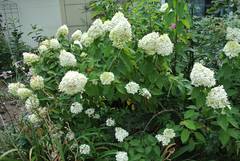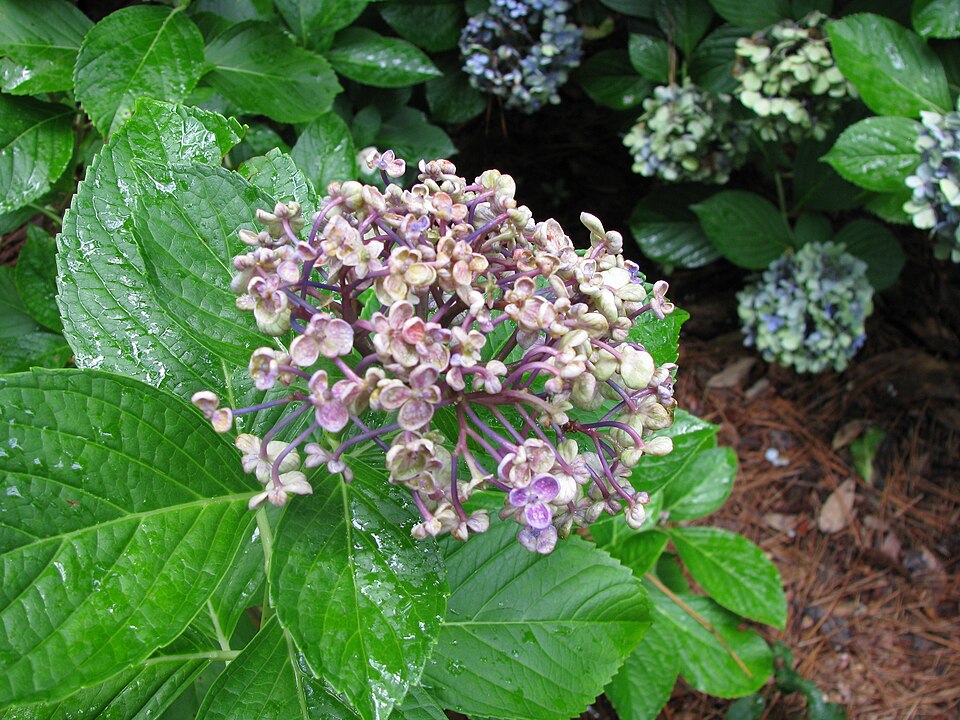
Hydrangea, Genus, macrophylla, Species, 'Ayesha', Cultivar,
- Genus & species
- Cultivar
Ayesha hydrangea
Japan (coastal and mountain woodland habitats); cultivar possibly a Japanese garden selection of uncertain specific origin
Overview
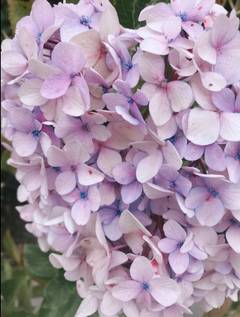
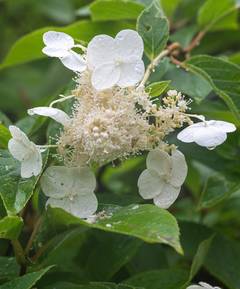
Hydrangea macrophylla 'Ayesha' (also known by the synonym 'Silver Slipper') is a rounded mounding deciduous shrub in the hydrangea family (Hydrangeaceae) reaching 3–5 feet (0.9–1.5 m) tall with a spread of 3–5 feet (0.9–1.5 m). This cultivar carries an atypical floret form among mophead hydrangeas: cupped spoon-shaped florets that resemble lilac (Syringa) flowers rather than the flat-petaled flower form that defines the rest of the H. macrophylla cultivar group. Rounded flower clusters run 4–6 inches (10–15 cm) across, with thick waxy cupped florets in soft lilac-blue tones in acidic soil, shifting to mauve-pink tones in neutral to alkaline soil. The florets carry a light sweet fragrance — atypical among hydrangeas, most of which carry no noticeable scent in the flowers. Glossy dark green broadly ovate leaves run 4–8 inches (10–20 cm) long. The cultivar blooms on old wood. Growth rate runs moderate. Hardy to zone 6.
Native Range
Hydrangea macrophylla is native to Japan, where wild populations grow in coastal and mountain woodland habitats. 'Ayesha' carries uncertain origin — the cultivar is possibly a Japanese garden selection introduced to the western trade through later propagation.Suggested Uses
Grown in borders and container culture in 7 gallon (26 L) or larger pots at 3–5 foot (0.9–1.5 m) spacing. The cupped lilac-like florets and the light fragrance separate this cultivar from every other mophead hydrangea in the trade, which makes it a collector's selection where the atypical flower form and the scent together build the ornamental value. Siting in a location where the flower form can be viewed at close range lets gardeners see the cupped shape of each floret — the effect reads weakly from distance. The cupped florets collect rainwater, which causes spotting in wet climates, and sheltered positions under overhangs or tree canopies reduce this rain-collection issue. Full sun positions, dry soils, and zones below 6 are all unsuitable given the cultural profile.How to Identify
Appearance
Size & Dimensions
Height3' - 5'
Width/Spread3' - 5'
Bloom Information
Rounded mophead flower clusters 4–6 inches (10–15 cm) across, composed of thick cupped spoon-shaped florets in soft lilac-blue (acid) to mauve-pink (alkaline), lightly fragrant, open from June through August across a 6–8-week bloom window. The cultivar blooms on old wood — flower buds that formed the previous summer produce the current year's display.
Detailed Descriptions
Flower Description
Soft lilac-blue (acid) to mauve-pink (alkaline); thick waxy cupped spoon-shaped florets; lightly fragrant; 4-6 inchesFoliage Description
Glossy dark green broadly ovate coarsely serrated 4-8 inches longGrowing Conditions
Sun Requirements
Requires 3-5 hours of direct sunlight daily
• Full Sun: 6+ hours of direct sunlight
• Partial Shade: 3-6 hours of direct sunlight
• Full Shade: Less than 3 hours of direct sunlight
Care & Maintenance
Care Guide
Grows in partial shade in moist humus-rich well-drained soil at pH 5.0–7.0, tolerating loam and clay. Hardy to zone 6. Soil pH controls flower color across the cultivar's range: acidic soil below 5.5 produces lilac-blue, alkaline soil above 6.5 produces mauve-pink. The cultivar blooms on old wood, which makes it vulnerable to late spring frost that damages the overwintering flower buds. The cupped floret shape holds rainwater in the bowl of each floret, which can cause floret spotting in wet climates where rain events are frequent during the bloom window.Pruning
Pruning is done immediately after the August flowering window closes, before next year's flower buds set in late summer and fall. Spent flower heads and dead wood are removed during pruning, and hard pruning is avoided because it removes the flower buds that would produce next year's display.Pruning Schedule
Prune: August
summer
Container Growing
Suitable for container growing
Minimum container size: 7 gallons