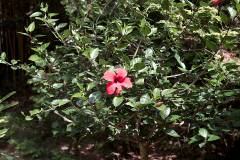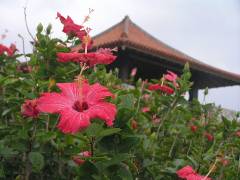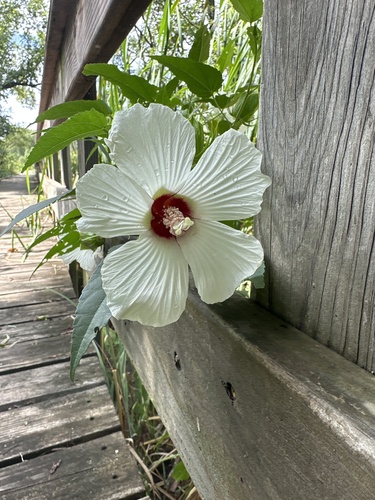
Hibiscus, Genus, laevis, Species,
- Genus & species
halberd-leaf rosemallow
Overview
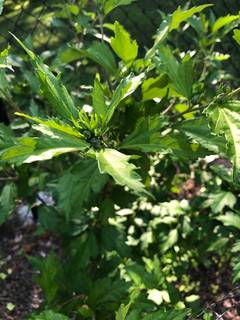
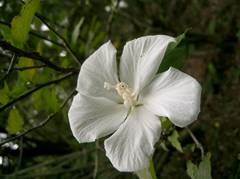
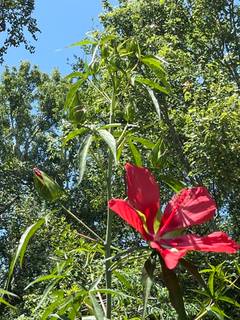
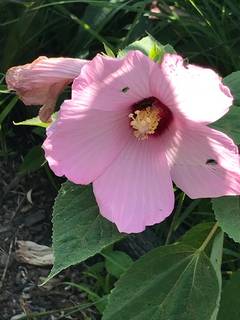
Hibiscus laevis is a tall, clump-forming herbaceous perennial in the mallow family, native to wet ground along rivers, marshes, and ditches in the central and eastern United States. Erect, mostly unbranched stems rise 36-72 inches (90-180 cm) from a stout rootstock. The smooth, hairless leaves are 3-6 inches (7.5-15 cm) long and shaped like a halberd, with a long central lobe and two spreading basal lobes, giving the plant its common name. From midsummer into early fall it opens broad funnel-shaped flowers 4-6 inches (10-15 cm) across, pale pink to nearly white with a deep crimson throat and a central column of fused stamens typical of the mallows. Each flower lasts a single day, but new buds open in succession over many weeks. Rounded seed capsules follow and dry to release flat seeds. The plant needs constant soil moisture and wilts quickly in dry spells, limiting its use to wet or irrigated sites. It dies back to the ground each winter and is slow to reappear in spring.
Native Range
Native to the central and eastern United States, from Minnesota and Pennsylvania south to Florida and Texas, along riverbanks, marshes, wet meadows, and ditches.Suggested Uses
Used in rain gardens, pond and stream margins, and wet borders where its height gives a strong vertical accent. The large flowers draw bees, butterflies, and hummingbirds through late summer. It naturalizes in damp meadows and tolerates the heavy, wet clay that defeats many perennials.How to Identify
Appearance
Size & Dimensions
Height3' - 6'
Width/Spread2' - 3'
Bloom Information
Detailed Descriptions
Flower Description
pale pink to white with crimson throatFoliage Description
medium greenGrowing Conditions
Sun Requirements
Requires 6-8 hours of direct sunlight daily
• Full Sun: 6+ hours of direct sunlight
• Partial Shade: 3-6 hours of direct sunlight
• Full Shade: Less than 3 hours of direct sunlight
Care & Maintenance
Care Guide
Grows in full sun to light shade on consistently moist to wet, fertile soils, including heavy clay and seasonally flooded ground. It needs steady moisture and wilts fast where soils dry, so streamsides, pond edges, and irrigated beds are the typical sites. A soil pH of 5.5 to 7.0 suits it. Cut old stems to the ground in late winter before new shoots emerge. Japanese beetles and sawfly larvae may chew the foliage but rarely threaten established clumps. Propagation is by seed or by division of the crown in spring.Pruning
Cut the dead stems to the ground in late winter or early spring as new growth begins. Removing spent flowers is optional and does not extend the long bloom. The clump regrows fully from the base each year.Container Growing
Suitable for container growing
Minimum container size: 5 gallons