Hamamelis, Genus, spp., Multiple species,
- Genus
- Multiple species
Witch-hazels
Eastern North America and temperate East Asia
Overview
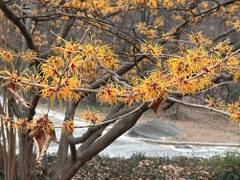
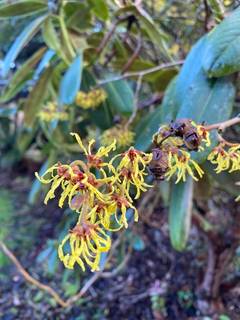
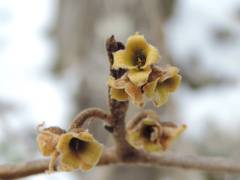
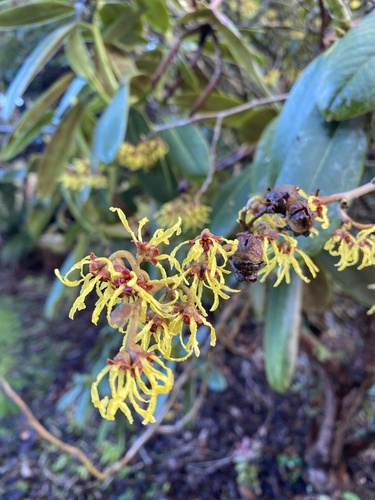
Hamamelis is a genus of three to six species of deciduous shrubs and small trees in the family Hamamelidaceae, native to deciduous woodland in eastern North America and temperate East Asia. Plants form vase-shaped, multi-stemmed shrubs 10-25 ft (3-7.5 m) tall and as wide, with spreading, often zig-zag branches. The oval to rounded leaves are 2-6 in (5-15 cm) long with wavy or scalloped margins, mid- to deep green in summer, turning yellow, orange, and red before falling. The flowers are the genus signature: clusters of four narrow, strap-shaped, crinkled petals in yellow, orange, or red-bronze, opening on bare stems and carrying a spicy fragrance. Most species and the H. × intermedia hybrids bloom in the cold months from December to March, while the North American H. virginiana flowers in autumn as its leaves drop. Woody capsules ripen the following year and split to fling seed several feet. Witch-hazels grow in full sun to part shade in moist, acid to neutral, humus-rich, freely draining soil, and grow poorly on dry, chalky, or waterlogged ground. They are slow-growing and largely free of serious pests, though grafted plants may throw suckers from the rootstock.
Native Range
The genus is native to temperate deciduous forests of eastern North America and East Asia. The common witch-hazel H. virginiana and the Ozark witch-hazel H. vernalis grow in the eastern United States, while H. mollis and H. japonica come from China and Japan.Suggested Uses
Witch-hazels are grown as winter- and autumn-flowering specimens, in shrub borders, woodland edges, and near paths and doorways where the cold-season fragrance is noticed. They combine with evergreens and underplanting of early bulbs. The autumn leaf colour adds a second season of interest.How to Identify
Appearance
Size & Dimensions
Height10' - 25'
Width/Spread10' - 20'
Bloom Information
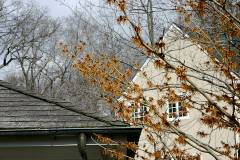
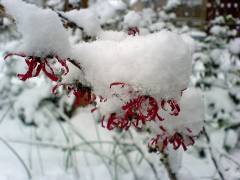
Flowering comes in the cold season, with most species and hybrids opening from December to March and the North American H. virginiana blooming in October and November as its leaves fall. The strap-shaped petals curl shut in hard freezes and reopen in milder spells, stretching the display over many weeks. A spicy fragrance carries from the flowers on still, mild days.
Detailed Descriptions
Flower Description
yellow, orange, red-bronzeFoliage Description
mid to deep greenGrowing Conditions
Sun Requirements
Requires 4-8 hours of direct sunlight daily
• Full Sun: 6+ hours of direct sunlight
• Partial Shade: 3-6 hours of direct sunlight
• Full Shade: Less than 3 hours of direct sunlight
Care & Maintenance
Care Guide
Hamamelis grows in full sun to part shade in moist, humus-rich, freely draining soil that is acid to neutral, around pH 5.0-6.5. Plants need steady moisture, particularly when young, and grow poorly in dry, shallow, chalky, or waterlogged ground. A mulch of leaf mould conserves moisture and feeds the shallow roots. Witch-hazels are slow-growing and need little once established, but grafted plants send up vigorous suckers from the rootstock that should be removed. Few pests or diseases are serious, though Japanese beetle and powdery mildew can mark the foliage. Full sun yields the heaviest bloom and the strongest autumn leaf colour.Pruning
Prune Hamamelis sparingly after flowering, removing dead, crossing, or crowded stems to keep an open, vase-shaped framework. Suckers and any growth below the graft union are cut out as they appear, since rootstock shoots overtake the named plant. The natural form needs little shaping, and hard cutting spoils the spreading habit.Pruning Schedule
Prune: March–April
early spring