Hamamelis, Genus, japonica, Species,
- Genus & species
Japanese witch hazel
Overview
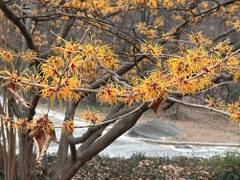
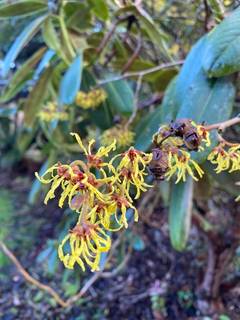
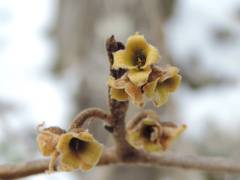
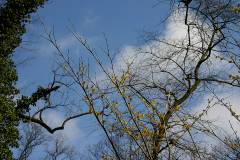
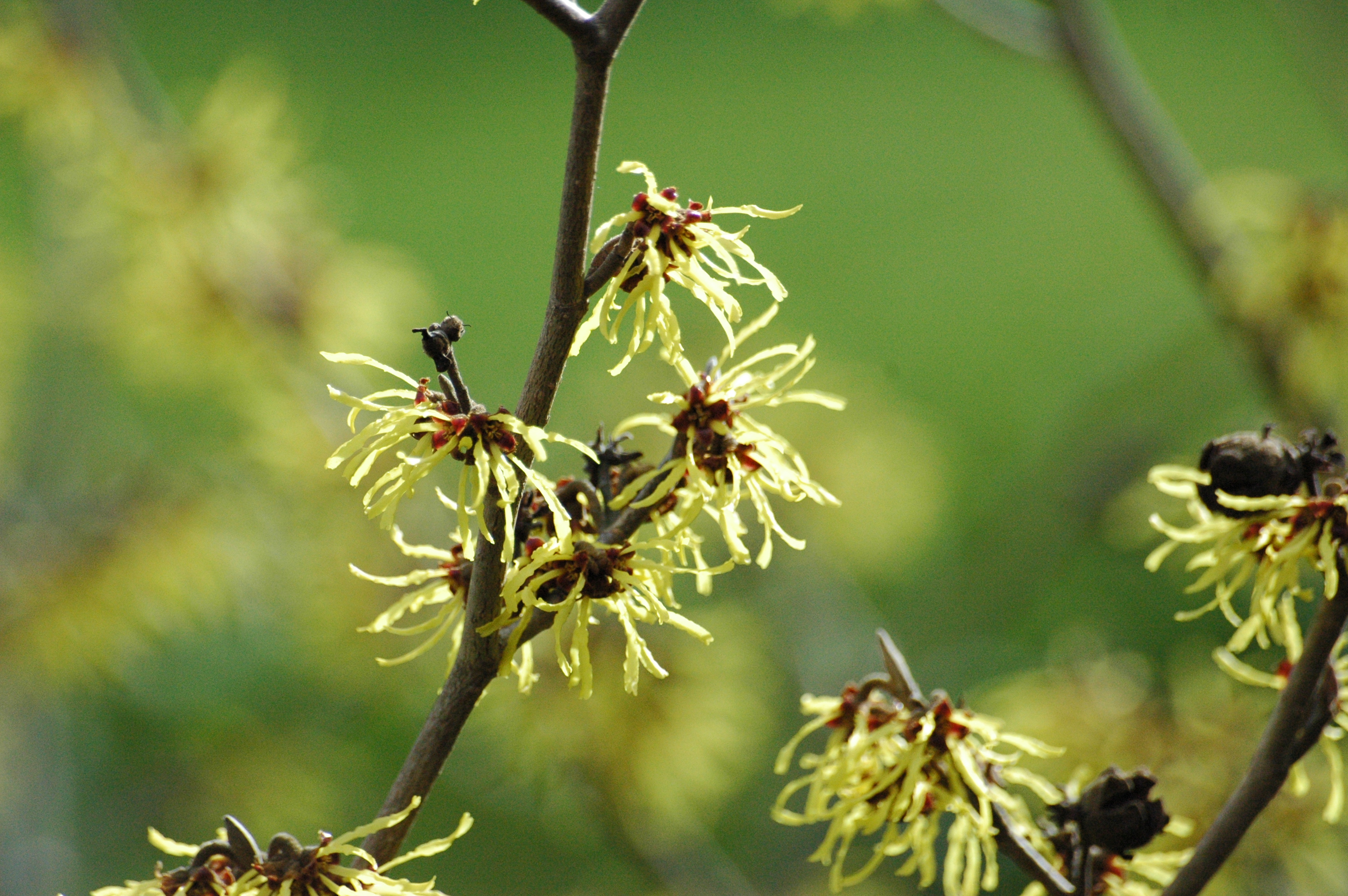
Hamamelis japonica is a deciduous shrub or small tree reaching 10-15 feet (3-4.5 m) tall and as wide or wider, with branches held in near-horizontal tiers. Flowers open from January to March on bare wood, each carrying four narrow, crimped yellow straps 0.5-0.8 inch (12-20 mm) long above a cup of red to purple sepals. Petals roll inward as temperatures drop below about 25 F (-4 C) and unroll again within hours of a thaw, so one flower can pass through six weeks of alternating freeze and mild weather. Scent is light and carries a few feet in still air. Leaves follow in April: obovate, 2-4 inches (5-10 cm) long, with a wavy margin and an asymmetric base, nearly hairless above, turning yellow to red in late October. Woody capsules 0.4-0.5 inch (10-13 mm) long split in autumn and eject two black seeds up to 30 feet (9 m). Most nursery plants are grafted onto H. virginiana rootstock, whose suckers overtake the top growth where they are left in place. Annual extension is 6-12 inches (15-30 cm). Hardy in USDA zones 5-8.
Native Range
Hamamelis japonica is native to Japan, on Honshu, Shikoku, and Kyushu. It grows on mountain slopes and in open woodland between 650 and 4,900 feet (200-1,500 m), often at the margins of deciduous forest. Garden plants sold as H. × intermedia are crosses between this species and H. mollis from central China.Suggested Uses
Planted at the back of shrub borders, along woodland walks, and beside entrances and paths where the January to March flowering sits within a few feet of foot traffic. Grown in mixed screens with evergreen shrubs behind, at 10-12 foot (3-3.6 m) spacing. Cut stems taken in bud open indoors over several days in a cool room.How to Identify
Appearance
Size & Dimensions
Height10' - 15'
Width/Spread10' - 15'
Bloom Information
Flowering runs from mid-January to mid-March in USDA zone 6, and from late December in zone 8. A single shrub holds colour six to eight weeks because individual flowers open in sequence along the shoot and tolerate freezing. Petals roll into tight coils below 25 F (-4 C), so the plant reads as bare during cold snaps and refills within a day of a thaw. Flower buds set on wood produced the previous summer.
Detailed Descriptions
Flower Description
yellow straps above a red to purple calyx cupFoliage Description
medium green, turning yellow to red before leaf dropGrowing Conditions
Sun Requirements
Requires 4-8 hours of direct sunlight daily
• Full Sun: 6+ hours of direct sunlight
• Partial Shade: 3-6 hours of direct sunlight
• Full Shade: Less than 3 hours of direct sunlight
Care & Maintenance
Care Guide
Four to eight hours of direct sun daily carries the heaviest flower set; plants in deeper shade flower along the outer branches only. Soil is moisture-retentive loam at pH 5.0-7.0, and leaves turn chlorotic on chalk or where pH passes 7.5. Water use is about 1 inch (2.5 cm) per week through the first three seasons, under 2-3 inches (5-8 cm) of leaf mould spread over the root zone. Fertiliser is limited to a spring application of a balanced formulation at 0.5 pound per 100 square feet (250 g per 9 sq m). Suckers rising from below the graft union are cut at their point of origin two or three times a year, since H. virginiana rootstock grows faster than the scion. Powdery mildew and Japanese beetle occur in cultivated plantings.Pruning
Cutting is done in March and April, within six weeks of flowering, because buds for the next season form on shoots grown that summer. Work is limited to dead wood, crossing branches, and shoots that break the tiered outline. Stems cut hard regrow at only 6-12 inches (15-30 cm) a year, so a reduced shrub takes several seasons to refill. Rootstock suckers are cut out at their base rather than shortened.Pruning Schedule
Prune: March–April
early spring