Image 1 of 16
1 / 16
Plant Reference
Hamamelis, Genus, ×, Hybrid, intermedia, Species,
- Genus & species
- Hybrid
hybrid witch hazel
Hybrid of garden origin — {H. japonica} (Japan) × {H. mollis} (China); first raised at the Arnold Arboretum, USA
Overview
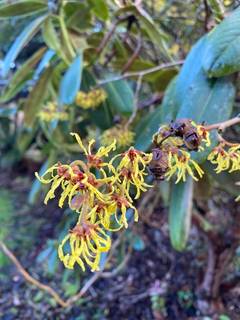
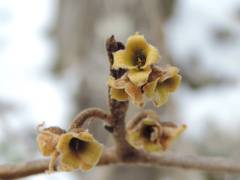
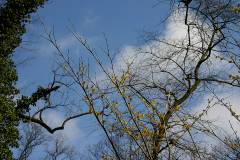
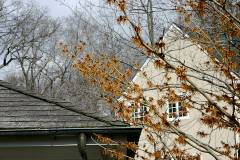
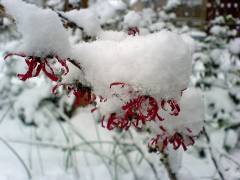
Hamamelis × intermedia is hybrid witch hazel (winterbloom), a spreading deciduous shrub growing 10-20 feet (3-6 m) tall and 10-15 feet (3-4.5 m) wide. Strap-shaped (ribbon-like) fragrant flowers with crinkled petals 0.5-0.75 inch (1.3-2 cm) in clusters along bare stems in January-March — color ranges from yellow through orange, copper, and red depending on cultivar. The petals curl inward during freezing temperatures and unfurl when temperatures rise. Medium to dark green oval leaves 3-5 inches (7-13 cm). Turns yellow, orange, and red in fall. In Hamamelidaceae. Hybrid of H. japonica × H. mollis. Popular cultivars: 'Arnold Promise' (clear yellow), 'Diane' (dark red), 'Jelena' (copper-orange), 'Pallida' (pale sulfur-yellow, strong fragrance). Requires acidic well-drained soil (pH 5.5-6.5) — iron chlorosis in alkaline conditions. This acid-soil requirement is the primary limitation. Not drought-tolerant. Grafted on H. virginiana rootstock — remove rootstock suckers promptly. Slow-growing. Deer-resistant. Non-toxic. Zones 5-8. Full sun to partial shade. Growth rate is slow.
Native Range
Hybrid of garden origin — H. japonica (Japan) × H. mollis (China). First raised at the Arnold Arboretum, USA.Suggested Uses
Grown as a specimen shrub near entryways, paths, and windows where the late winter bloom and fragrance can be experienced, spaced 10-15 feet (3-4.5 m). Winter bloom on bare stems. Fragrant. Multicolor fall foliage. Requires acidic soil. Deer-resistant. Non-toxic. Zones 5-8.How to Identify
Appearance
Size & Dimensions
Height10' - 20'
Width/Spread10' - 15'
Bloom Information
Late winter to early spring (January-March). Strap-shaped (ribbon-like) fragrant flowers with crinkled petals 0.5-0.75 inch (1.3-2 cm) in clusters along bare stems. Yellow, orange, copper, or red depending on cultivar. Moderately fragrant. 4 weeks of bloom. Petals curl in freezes and unfurl when warm. Bee-pollinated on mild winter days.
Detailed Descriptions
Flower Description
Yellow, orange, copper, or red depending on cultivar; strap-shaped (ribbon-like) petals 0.5-0.75 inch (1.3-2 cm) long, crinkled, in clusters along bare stems; fragrantFoliage Description
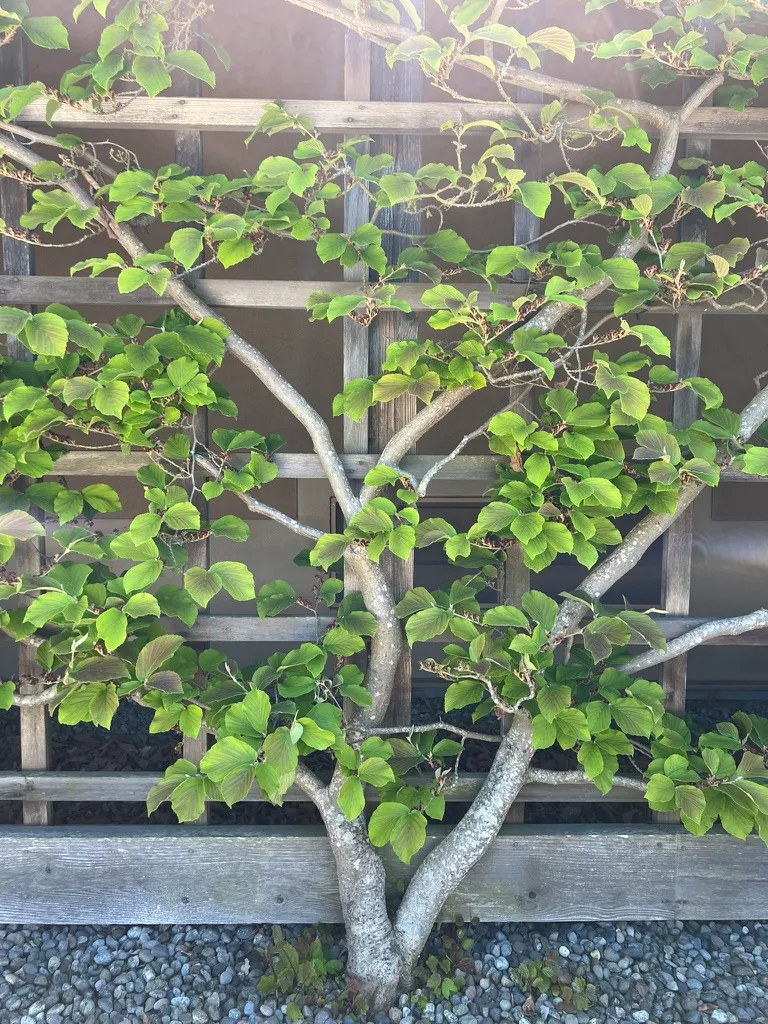
Medium to dark green, oval, 3-5 inches (7-13 cm) long, coarsely toothed; turns yellow, orange, and red in fallGrowing Conditions
Sun Requirements
Requires 4-8 hours of direct sunlight daily
• Full Sun: 6+ hours of direct sunlight
• Partial Shade: 3-6 hours of direct sunlight
• Full Shade: Less than 3 hours of direct sunlight
Care & Maintenance
Care Guide
Full sun to partial shade (4-8 hours — full sun for densest bloom). Acidic well-drained soil pH 5.5-6.5 — iron chlorosis in alkaline conditions. Not drought-tolerant. Grafted on H. virginiana rootstock — remove rootstock suckers promptly (different leaf shape, fall bloom). Prune lightly after flowering if needed. Deer-resistant. Non-toxic. Zones 5-8.Pruning
Prune lightly after flowering (March-April) if shaping is needed — blooms on old wood. Remove rootstock suckers (H. virginiana) at the base promptly — they bloom in fall with smaller yellow flowers and have different leaf shape. The spreading vase-shaped form is natural. Minimal pruning needed.Pruning Schedule
Prune: March–April
early spring