Image 1 of 18
1 / 18
Plant Reference
Hamamelis, Genus, mollis, Species,
- Genus & species
Chinese witch hazel
Central China in Hubei and Sichuan provinces; mountain forests at 2,000-5,000 feet (600-1,500 m) elevation
Overview
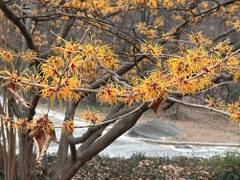
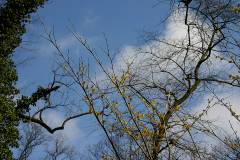
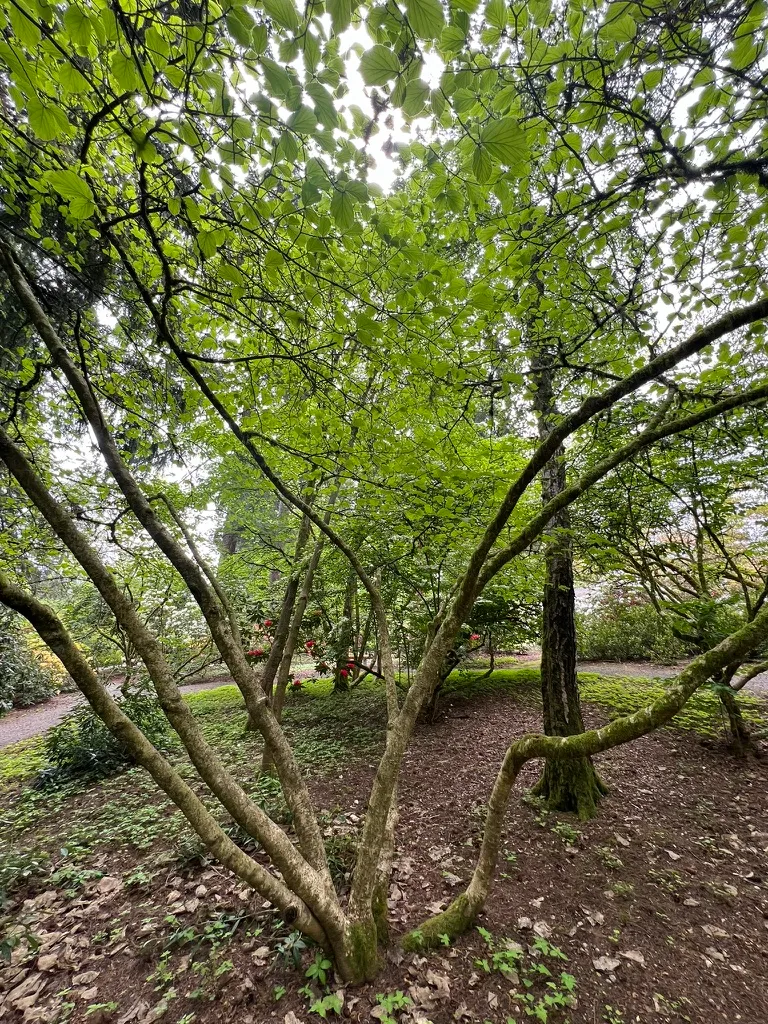
Hamamelis mollis is a spreading deciduous shrub in the family Hamamelidaceae reaching 8–15 feet (2.4–4.5 m) tall and 8–15 feet (2.4–4.5 m) wide with a broad vase-shaped form. Leaves are large, rounded, 3–6 inches (7–15 cm) long, medium green, softly pubescent (felt-like) on the underside, and turn yellow to orange in fall; the epithet mollis (soft) refers to the felt-like leaf underside. Golden-yellow strap-shaped (ribbon-like) flower petals 0.5–0.75 inch (1.3–2 cm) long open in clusters along the bare stems from January through March across a 4-week bloom period, and the flowers carry a strong sweet spicy fragrance that carries 15–25 feet (4.5–7.5 m) on still winter days. The strap-shaped petals curl inward during hard freezes and unfurl again when temperatures rise above freezing, so the bloom survives cold snaps that would destroy the flowers of most winter-blooming species. H. mollis was first introduced to Western cultivation from Hubei Province by Charles Maries in 1879 and is one of the two parents of the widely planted hybrid H. × intermedia, together with H. japonica. Limitation: the species requires consistently moist well-drained acidic soil at pH 5.5–6.5, iron chlorosis develops in alkaline soils above pH 6.5, the species is not drought-tolerant and needs supplemental irrigation during summer dry periods, and marcescent dead leaves sometimes persist on the stems into winter and partially conceal the flowers during the bloom period.
Native Range
Native to central China in Hubei and Sichuan provinces, growing in mountain forests at 2,000–5,000 feet (600–1,500 m) elevation. Introduced to Western cultivation by Charles Maries in 1879 from Hubei.Suggested Uses
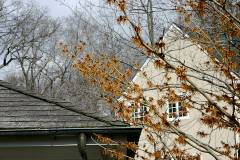
Used as a specimen shrub near entryways, paths, and windows at 8–15 foot (2.4–4.5 m) spacing where the January through March bloom and strong fragrance will be experienced at close range during the winter garden season. A dark evergreen backdrop of conifers or holly helps the pale yellow flowers stand out against the winter landscape. Alkaline sites and drought-prone positions are unsuitable because of the acid-soil requirement and the moisture requirement.How to Identify
Appearance
Size & Dimensions
Height8' - 15'
Width/Spread8' - 15'
Bloom Information
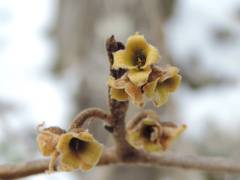
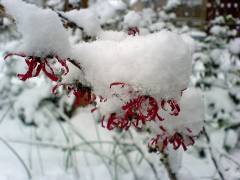
Golden-yellow strap-shaped (ribbon-like) flower petals 0.5–0.75 inch (1.3–2 cm) long open in clusters along the bare stems from January through March across about 4 weeks. The petals curl inward during hard freezes and unfurl again when temperatures rise above freezing, so the bloom survives short cold snaps. The flowers carry a strong sweet spicy fragrance and draw early-season bees and flies on mild winter days.
Detailed Descriptions
Flower Description
golden-yellow with strap-shaped (ribbon-like) petals 0.5-0.75 inch (1.3-2 cm) long in clusters along bare stems in late winter; strongly fragrant with a sweet spicy scentFoliage Description
medium green; large, rounded, 3-6 inches (7-15 cm) long, softly pubescent (felt-like) on the underside — the source of the epithet mollis (soft); turns yellow to orange in fallGrowing Conditions
Sun Requirements
Requires 4-8 hours of direct sunlight daily
• Full Sun: 6+ hours of direct sunlight
• Partial Shade: 3-6 hours of direct sunlight
• Full Shade: Less than 3 hours of direct sunlight
Care & Maintenance
Care Guide
Site in full sun to partial shade with 4–8 hours of direct sun per day in well-drained moist acidic soil with a pH of 5.5–6.5. Alkaline soils above pH 6.5 cause iron chlorosis with yellowing foliage and reduced bloom set. The species is not drought-tolerant and soil moisture should remain consistent through summer dry periods. Bloom occurs on previous-season wood, so shaping pruning is done after flowering in March and April. Marcescent dead leaves can be pulled by hand in late winter to reveal the flowers during the bloom period. Hardy in USDA zones 5–8. Routine fertilization is not required in soils with adequate organic matter.Pruning
Pruning is done lightly after flowering in March and April because the shrub blooms on previous-season wood. Shaping cuts remove the tips of overly long stems and thin congested interior growth. The broad vase-shaped form develops naturally and requires little training, and hard renovation is rarely needed on healthy plants.Pruning Schedule
Prune: March–April
early spring