Image 1 of 5
© No machine-readable author provided. Galwaygirl assumed (based on copyright claims)., some rights reserved (CC-BY-SA) · Wikimedia Commons
1 / 5
Hamamelis, Genus, ×, Hybrid, intermedia, Species, 'Diane', Cultivar,
- Genus & species
- Hybrid
- Cultivar
Diane Witch Hazel
Garden origin (hybrid; parent species native to Japan and China)
Overview
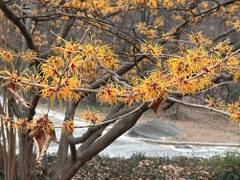
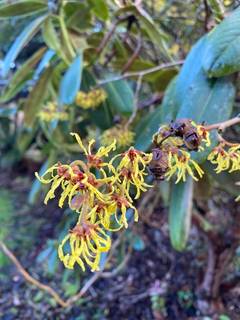
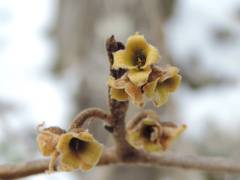
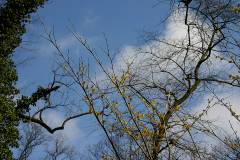
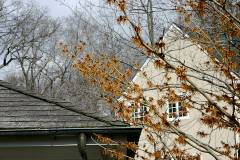
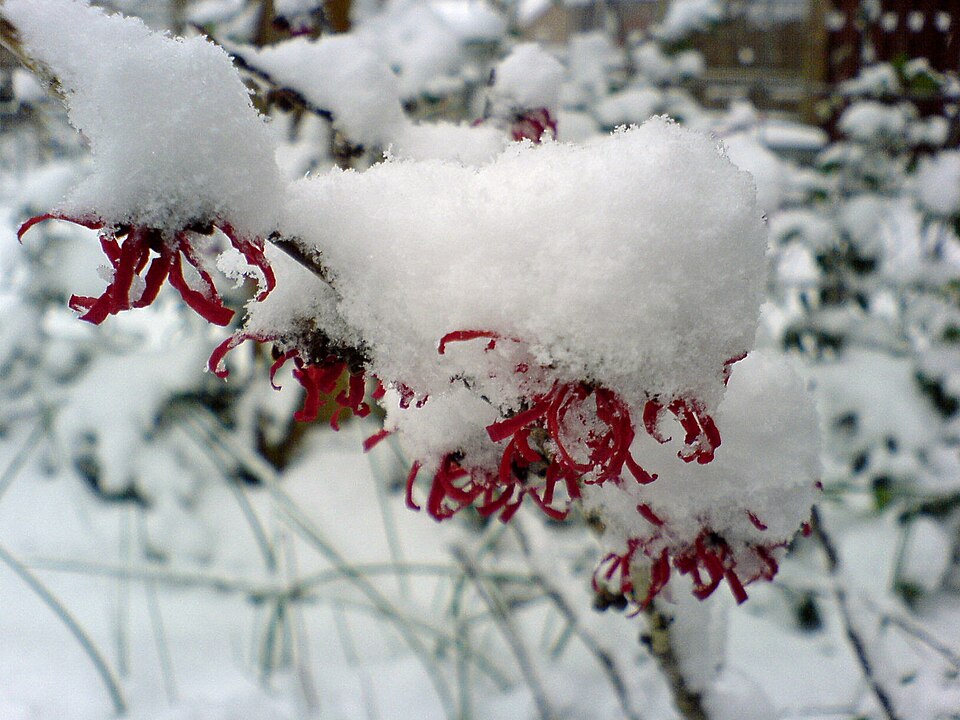
Hamamelis 'Diane' is a deciduous hybrid witch hazel, a cross of H. japonica and H. mollis, grown for late-winter bloom. It forms a broad, vase-shaped shrub 12-15 feet (3.7-4.6 m) tall and wide with spreading branches. The flowers open in late winter, January to March, each with four narrow, crinkled strap-shaped petals about 0.6 inch (1.5 cm) long in deep red, fading to coppery red toward the tips, clustered along the bare stems with a faint fragrance. The petals roll up during hard freezes and reopen as temperatures rise, extending the display over several weeks. Autumn foliage turns yellow, orange, and red before dropping. It is hardy in USDA zones 5-8 and needs space for its broad mature spread, which makes it large for small gardens. It grows in full sun to part shade in moist, acidic, well-drained soil; flower color and fall color are strongest in more sun. Most plants are grafted, and rootstock shoots will overtake the named top if left to grow.
Native Range
Hamamelis 'Diane' is a cultivated hybrid with no wild range, raised at the Kalmthout Arboretum in Belgium from a cross of H. japonica and H. mollis, both native to East Asia. It was selected for flower color and form rather than collected from the wild.Suggested Uses
Used as a specimen, in shrub borders, and at woodland edges where the late-winter flowers and autumn color show, spaced 12-15 feet (3.7-4.6 m) apart. The broad mature size makes it large for tight foundation beds.How to Identify
Appearance
Size & Dimensions
Height12' - 15'
Width/Spread12' - 15'
Bloom Information
Flowers open in late winter, from January to March depending on region, before the leaves emerge. The strap-shaped petals curl shut in hard freezes and unfurl again in milder spells, so bloom can span four to six weeks. The fragrance is faint compared with the yellow-flowered selections.
Detailed Descriptions
Foliage Description
Mid-greenGrowing Conditions
Sun Requirements
Requires 4-8 hours of direct sunlight daily
• Full Sun: 6+ hours of direct sunlight
• Partial Shade: 3-6 hours of direct sunlight
• Full Shade: Less than 3 hours of direct sunlight
Care & Maintenance
Care Guide
This shrub grows in full sun to part shade, with heavier bloom and stronger fall color in more sun. It needs moist, acidic, well-drained soil rich in organic matter at a soil pH of 5.0-6.5 and does not tolerate dry or alkaline ground. Even moisture suits it, and a 2-3 inch (5-8 cm) mulch keeps roots cool. Most plants are grafted, so shoots arising from below the graft are removed before they overtake the named top. Little feeding is needed beyond an annual mulch of compost.Pruning
Pruning, if needed, is done right after flowering in late winter to early spring, removing crossing or crowded branches to keep the vase shape open. Suckers from the rootstock are cut away at the base as they appear. The plant flowers on established wood and needs little routine cutting.Pruning Schedule
Prune: March–April
early spring