Image 1 of 10
1 / 10
© Plant Image Library from Boston, USA, some rights reserved (CC-BY-SA) · Wikimedia Commons
Hamamelis, Genus, vernalis, Species,
- Genus & species
Ozark witch hazel
Ozark Plateau, south-central United States
Overview
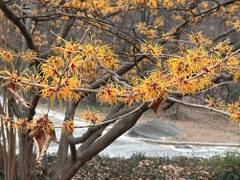
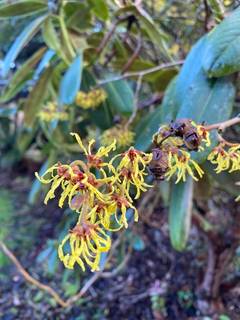
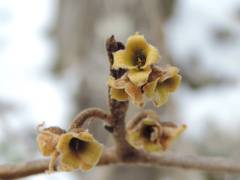
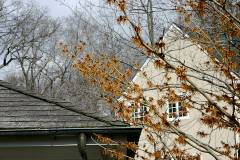
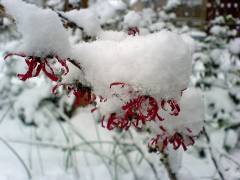
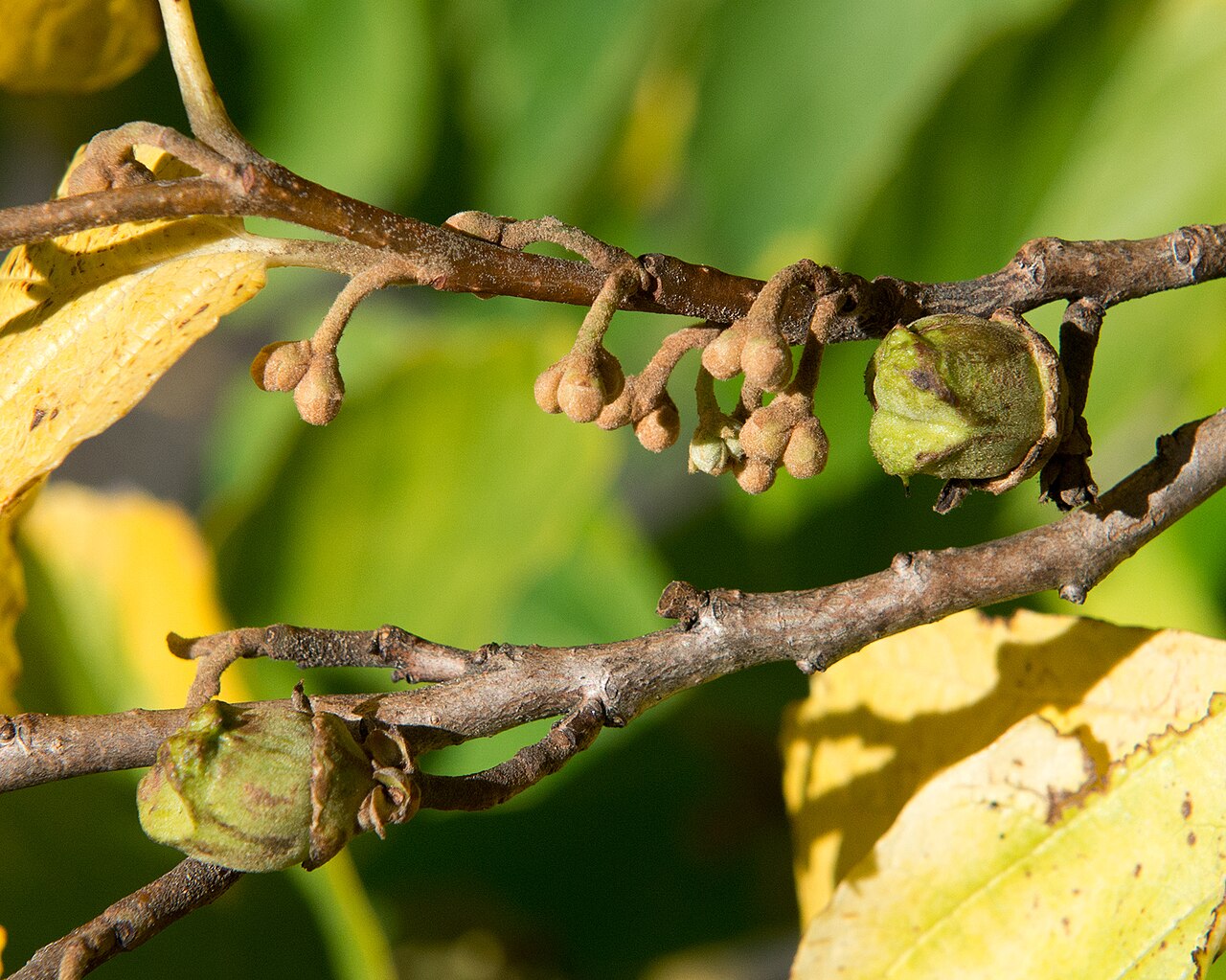
Hamamelis vernalis is a deciduous, suckering shrub in the witch hazel family (Hamamelidaceae), growing 6–10 feet (1.8–3 m) tall and 6–10 feet (1.8–3 m) wide, with an upright, rounded habit. Leaves are broadly obovate to rounded, 2–5 inches (5–13 cm) long, with a wavy, shallowly scalloped margin, an asymmetrical base, and a dull green upper surface with a blue-green underside. Flowers open from January to March on bare stems, each with four ribbon-like petals 0.4–0.6 inch (10–15 mm) long, in red, orange-red, or yellow, with a red-purple calyx cup and a spicy-sweet fragrance. Clusters of 2–4 flowers sit in leaf axils along the stems. Fruits are woody capsules 0.5 inch (13 mm) long that split in autumn, ejecting shiny black seeds up to 30 feet (9 m). Fall foliage is yellow to golden-orange. Plants spread by root suckers and form colonies 10–15 feet (3–4.5 m) wide over 15–20 years. Growth rate is 6–12 inches (15–30 cm) per year, and flowers are small and sit close to the stem, so color shows at close range rather than from a distance.
Native Range
Hamamelis vernalis is native to the Ozark Plateau of south-central United States, in Missouri, Arkansas, and Oklahoma. It grows along gravelly stream banks, rocky creek beds, and moist slopes in the understory of deciduous forest, typically in sites that flood periodically.Suggested Uses
Used in shrub borders, woodland gardens, and naturalized plantings, spaced 6–8 feet (1.8–2.4 m) apart. Plants flower in winter near paths and entries, and the suckering habit is used for stabilizing banks and stream margins. Flowers are visited by winter-active bees and flies.How to Identify
Appearance
Size & Dimensions
Height6' - 10'
Width/Spread6' - 10'
Bloom Information
Flowers open from January to March, with peak bloom in February, and individual flowers last 2–3 weeks. Petals curl inward in freezing temperatures below 20°F (−7°C) and re-expand when temperatures rise. Flowers carry a spicy-sweet fragrance noticeable at 5–10 feet (1.5–3 m).
Detailed Descriptions
Flower Description
Red, orange-red, or yellowFoliage Description
Dull green above, blue-green beneathGrowing Conditions
Sun Requirements
Requires 4-10 hours of direct sunlight daily
• Full Sun: 6+ hours of direct sunlight
• Partial Shade: 3-6 hours of direct sunlight
• Full Shade: Less than 3 hours of direct sunlight
Care & Maintenance
Care Guide
Grows in full sun to part shade in moist, well-drained soil with a pH of 5.5–7.0. Hardy in USDA zones 4–8. Young plants receive 1 inch (2.5 cm) of water per week, and established plants tolerate flooding for short periods. Soil that dries for long periods reduces flower number. Autumn color is strongest in 4–6 hours of direct sun. Mulch 2–3 inches (5–7.5 cm) deep keeps roots cool. Suckers form around the base of mature plants and are removed to keep a single, multi-stem form. Pests and diseases are few, with occasional leaf galls from aphids.Pruning
Pruning takes place immediately after flowering in March–April, because flower buds form the previous summer. Dead and crossing stems are removed, and suckers are cut at ground level. Overgrown plants are cut to 12–18 inches (30–45 cm) above ground and regrow over 2–3 years.Pruning Schedule
Prune: March–April
early springlate spring