Galactia, Genus, spp., Multiple species,
- Genus
- Multiple species
Milkpeas
Pantropical (centered in the Americas)
Overview
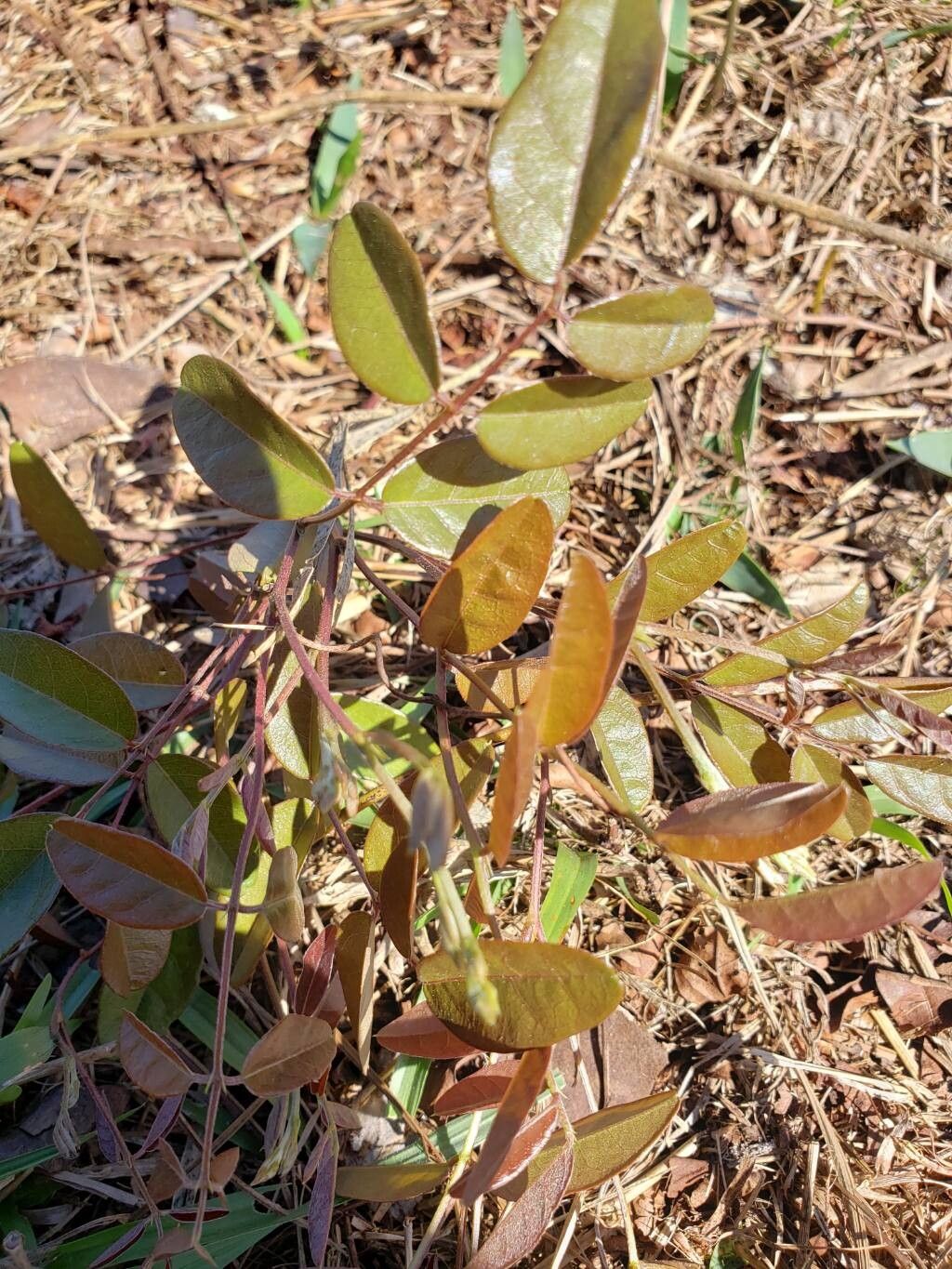
Galactia is a genus of roughly 50 to 120 species of trailing and twining legumes in the family Fabaceae, known collectively as milkpeas. Most are herbaceous to slightly woody perennials whose slender, wiry stems creep along the ground or climb into low vegetation, reaching 1.5 to 6.5 feet (0.5 to 2 m) in length. The leaves are pinnately trifoliate, with three oval to elliptic leaflets each 0.4 to 2 inches (1 to 5 cm) long and often hairy beneath. Pea-type flowers are carried in narrow axillary clusters and range from pink and lavender to reddish-purple, each 0.3 to 0.7 inch (8 to 18 mm) across, opening through summer and into autumn in warmer regions. The flowers are followed by flattened, hairy pods 0.8 to 2 inches (2 to 5 cm) long that split to release several seeds. Species occur across the warmer parts of the Americas, Africa, Asia, and Australia, with the greatest concentration in the southeastern United States, where milkpeas grow in sandy pine flatwoods, coastal scrub, and disturbed roadsides. As nitrogen-fixing legumes they form root nodules with soil bacteria and tolerate poor, droughty ground. The trailing stems and small flowers mean milkpeas are rarely grown in gardens; several species are grazed as forage and act as larval hosts for sulphur butterflies. Twining species can scramble over neighbouring plants.
Native Range
The genus is spread across tropical and warm-temperate regions of the Americas, Africa, Asia, and Australia. In North America the greatest diversity is in the southeastern United States, from Texas east to Florida and north to the Carolinas, with further species through the Caribbean and into Central and South America.Suggested Uses
Milkpeas are planted in native and wildlife gardens in the southeastern United States, where they support bees and butterfly larvae. Twining species can cover banks and low fences, and several are grazed as forage. The spreading habit lends itself to naturalistic and restoration plantings rather than formal borders.How to Identify
Appearance
Size & Dimensions
Height1'6" - 6'6"
Width/Spread2' - 4'
Bloom Information
Flowering is mainly in summer and early autumn, roughly June through September in temperate areas, with tropical species blooming over a longer season. Each raceme opens a few flowers at a time across several weeks. In the southeastern United States peak bloom falls between July and September.
Detailed Descriptions
Flower Description
Pink to reddish-purpleFoliage Description
GreenGrowing Conditions
Sun Requirements
Requires 6-10 hours of direct sunlight daily
• Full Sun: 6+ hours of direct sunlight
• Partial Shade: 3-6 hours of direct sunlight
• Full Shade: Less than 3 hours of direct sunlight
Water & Climate
Water Needs
Drought Tolerance
Drought tolerant when established