Overview
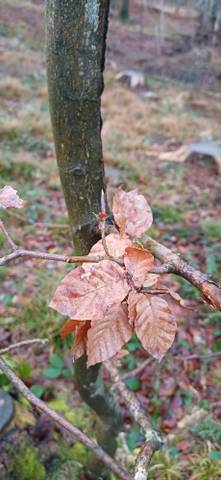
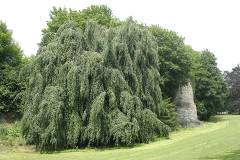
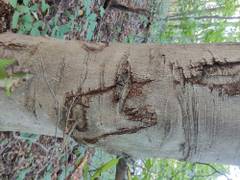
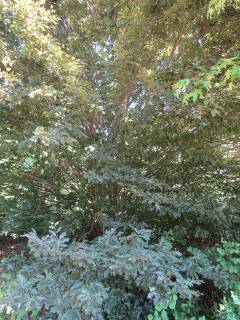
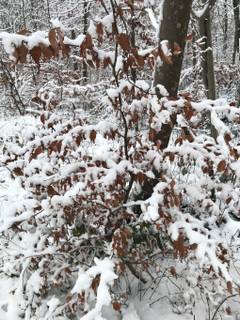
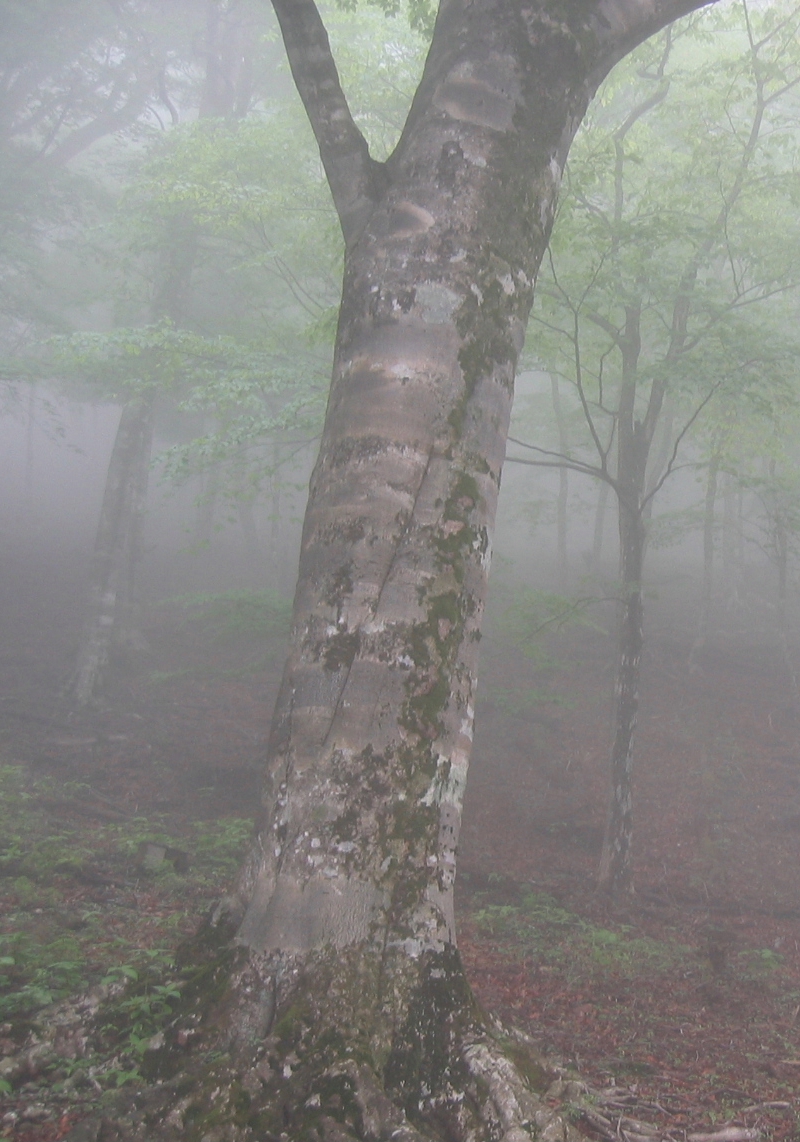
Fagus crenata is a deciduous broadleaf tree of the Fagaceae, reaching 50–100 feet (15–30 m) tall and 40–60 feet (12–18 m) wide in native forest, with trunks to 5 feet (1.5 m) in diameter; cultivated specimens outside Japan usually stop at 30–50 feet (9–15 m). Bark stays smooth and pale grey at all ages and is frequently mottled with lichen. Leaves are alternate and obovate, 2–4 inches (5–10 cm) long, with 7–11 pairs of parallel lateral veins and a wavy, shallowly crenate margin; new leaves carry silky white hairs that shed by early summer. Autumn colour moves through gold to bronze in late October and November, and dead leaves persist on the lower branches of young trees through winter. The species is monoecious and wind-pollinated, with pendulous globular heads of male flowers on stalks 1–1.5 inches (2.5–4 cm) long and paired female flowers held erect in the leaf axils. Fruit is a bristly four-valved cupule holding two triangular nuts about 0.6 inch (15 mm) long, ripening September to October, with full crops at 5–7 year intervals. Growth is slow at 6–12 inches (15–30 cm) a year, and the shallow root system is damaged by soil compaction, trenching, and grade changes around established trees.
Native Range
Fagus crenata is endemic to Japan, growing from southwestern Hokkaido through Honshu and Shikoku to Kyushu at elevations of 650–5,000 feet (200–1,500 m). It forms the dominant canopy of the buna forests on the heavy-snow Sea of Japan side of Honshu, including the Shirakami-Sanchi range. Stands there develop under annual snowpack of 6–15 feet (2–4.5 m).Suggested Uses
Grown as a shade and specimen tree in parks and large gardens, spaced 40–50 feet (12–15 m) apart so the crown can develop. Also clipped as a tall hedge at 6–15 feet (1.8–4.5 m) and trimmed once a year, where the retained brown winter leaves screen through the dormant season. Timber from Japanese stands is used for furniture, plywood, and turned goods.How to Identify
Appearance
Size & Dimensions
Height50' - 100'
Width/Spread40' - 60'
Bloom Information
Flowers open in April and May as the leaves expand, over a period of about two weeks. Male flowers form pendulous globular heads 0.5–0.8 inch (13–20 mm) across on slender stalks, yellow-green and wind-pollinated, while female flowers are paired, erect, and inconspicuous in the axils of new leaves. Nuts ripen from the pollinated female flowers in September and October, and full seed crops occur at 5–7 year intervals with little seed set in between. Raw nuts contain fagin and saponins and cause gastric upset when eaten in quantity.
Detailed Descriptions
Foliage Description
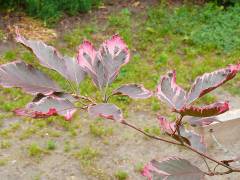
Light green with silky hairs when new, mid-green in summer, gold to bronze in autumnGrowing Conditions
Sun Requirements
Requires 4-10 hours of direct sunlight daily
• Full Sun: 6+ hours of direct sunlight
• Partial Shade: 3-6 hours of direct sunlight
• Full Shade: Less than 3 hours of direct sunlight
Care & Maintenance
Care Guide
Four to ten hours of direct sun daily supports growth, and seedlings persist in deep forest shade for years before releasing into canopy gaps. Moist, free-draining soil with a pH of 5.0 to 6.5 suits the root system, which spreads laterally through the upper 12–24 inches (30–60 cm) and is injured by compaction, trenching, and added fill. Supplemental water during dry spells longer than two weeks sustains growth in the first five years; established trees decline under prolonged drought and on hot, exposed sites. The tree is hardy in USDA zones 5–8, withstanding winter lows near -20°F (-29°C) and deep snow loading. Beech bark disease (Neonectria species following beech scale) and beech leaf disease (Litylenchus crenatae) both affect Fagus plantings in eastern North America. Canopy shade combined with dense surface roots limits what grows beneath the crown, and turf under mature trees thins and dies out.Pruning
Pruning is carried out in late summer, from July into August, because cuts made in late winter or early spring bleed sap heavily. Work is limited to dead, damaged, or crossing wood, since the branch structure develops evenly without correction. Cuts larger than 2 inches (5 cm) across close slowly on smooth-barked beech and leave a permanent scar. Beech grown as a hedge is clipped once in August, which holds the brown marcescent winter foliage on the plants.Pruning Schedule
Prune: July–August
summer