Overview
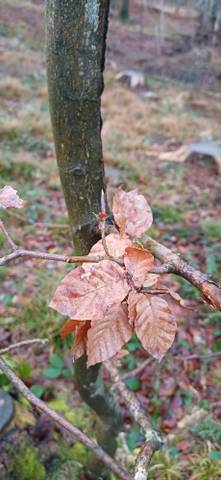
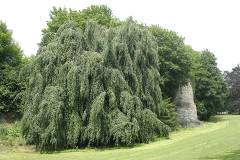
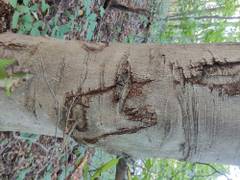
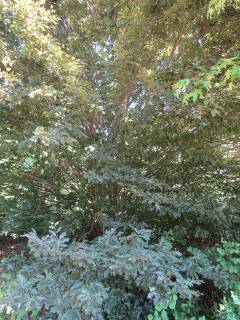
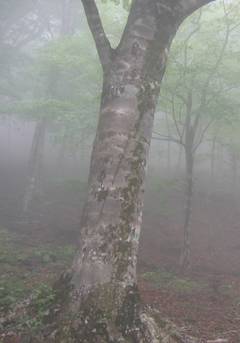
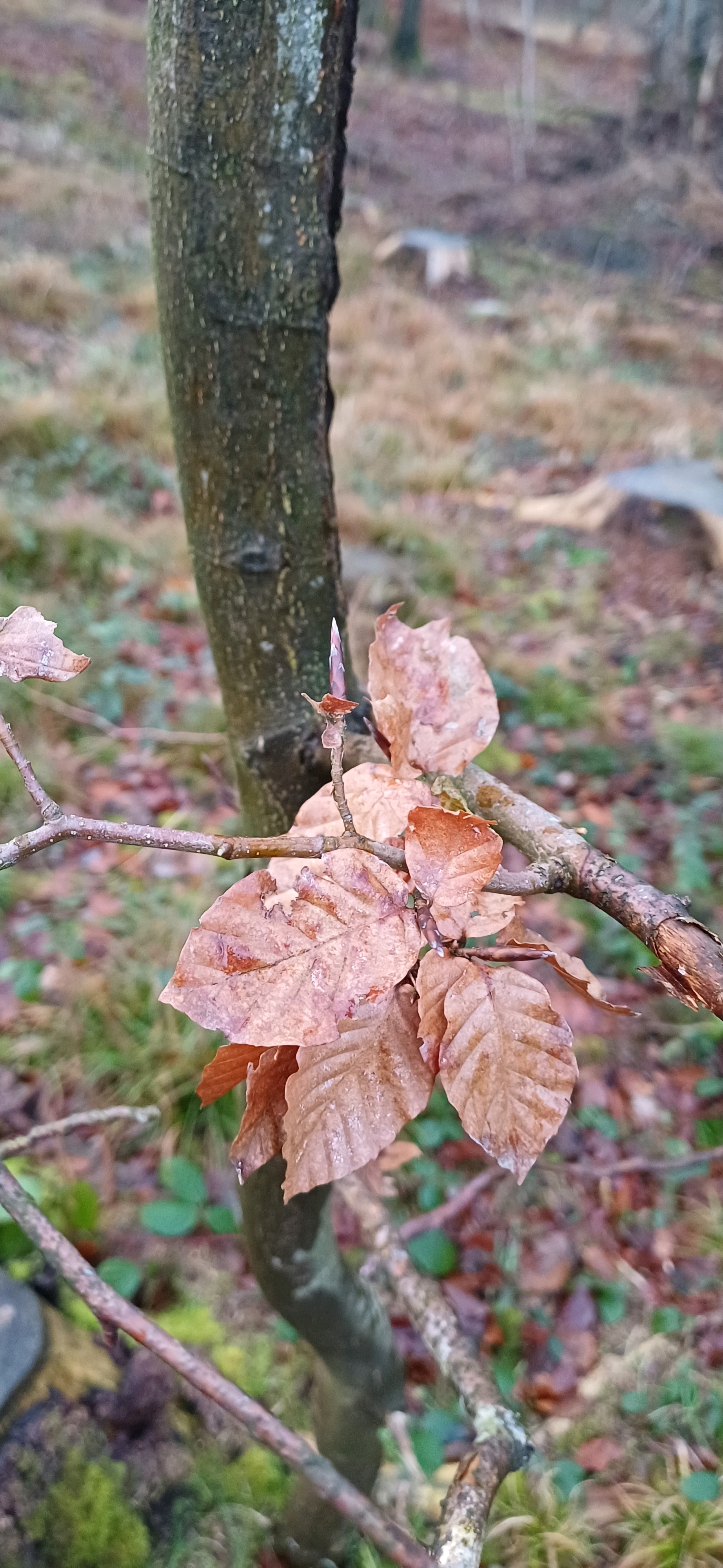
Fagus, the beeches, is a genus of about 10 deciduous trees in the family Fagaceae, native to the temperate Northern Hemisphere across Europe, Asia, and eastern North America. Trees are large and long-lived, reaching 50-130 feet (15-40 m) tall with broad, domed crowns and smooth, thin gray bark that stays unfurrowed for life. Leaves are alternate, simple, oval with wavy or shallowly toothed margins, 2-4 inches (5-10 cm) long, glossy green in summer and turning yellow, copper, and russet-brown in autumn; on hedges and young trees the dead leaves often hang on through winter. The genus is monoecious, with separate male and female flowers on the same tree opening with the leaves in spring. The fruit is a triangular nut, the beechnut or mast, held in pairs inside a soft-spined husk that splits when ripe; heavy mast crops come at irregular intervals. F. sylvatica, the European beech, and F. grandifolia, the American beech, are widely planted. Beeches cast dense shade and have shallow roots, so little grows beneath them. Most species are hardy in USDA zones 4 to 7 and grow on well-drained soil.
Native Range
Fagus is native to the temperate Northern Hemisphere, with species across Europe, temperate eastern Asia, and eastern North America. F. sylvatica ranges through Europe, F. grandifolia through eastern North America, and several species occur in China, Japan, and Korea. Beeches grow in cool, moist forests, often on slopes and well-drained ground.Suggested Uses
Fagus is planted as a shade and specimen tree in large gardens, parks, and avenues. Beech is widely grown as a clipped hedge that holds russet leaves through winter. The timber is used for furniture, flooring, and turnery, and the nuts feed wildlife.How to Identify
Appearance
Size & Dimensions
Height50' - 130'
Width/Spread30' - 80'
Bloom Information
Beeches flower in spring as the leaves expand, usually April to May. The small wind-pollinated flowers are green and inconspicuous, with male flowers in hanging clusters and female flowers in short upright pairs. Pollination leads to triangular nuts that ripen in autumn, in heavy crops only every few years.
Detailed Descriptions
Foliage Description
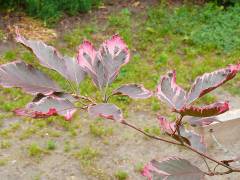
green, copper to russet in autumnGrowing Conditions
Sun Requirements
Requires 4-10 hours of direct sunlight daily
• Full Sun: 6+ hours of direct sunlight
• Partial Shade: 3-6 hours of direct sunlight
• Full Shade: Less than 3 hours of direct sunlight
Care & Maintenance
Care Guide
Fagus species grow in full sun to partial shade on deep, moist, well-drained soil and grow poorly on waterlogged or compacted ground. Most species accept a soil pH from about 5.0 to 7.5, and F. sylvatica tolerates chalk. Trees are hardy in USDA zones 4 to 7 and establish slowly, then live for centuries. The dense canopy and shallow roots leave deep shade and dry soil beneath, where little else grows. Bark is thin and easily damaged by sun scald, mowers, and frost cracks. Beech bark disease and aphids can affect some trees.Pruning
Beeches need little pruning as free-standing trees beyond removing dead or crossing limbs in late summer. Beech hedges are clipped once or twice in summer and hold their dead leaves through winter. Heavy cuts into old wood heal slowly.Pruning Schedule
summer