Euonymus, Genus, atropurpureus, Species,
- Genus & species
wahoo
Overview
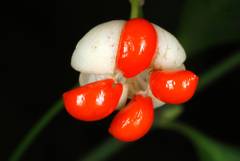
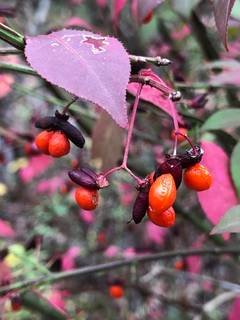
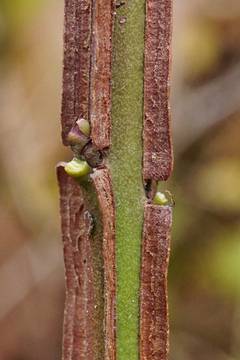
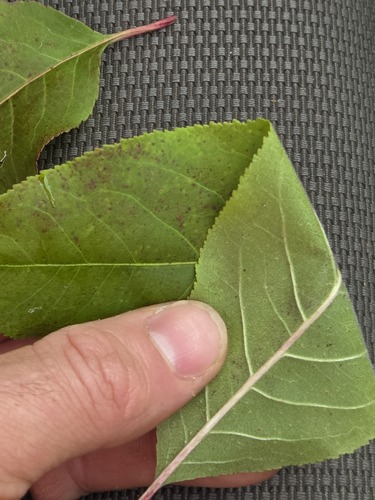
Euonymus atropurpureus is a deciduous shrub or small tree 12-20 feet (3.7-6 m) tall and 10-15 feet (3-4.5 m) wide, with an open, spreading crown and slender green twigs. Leaves are opposite, elliptic to lance-shaped, 2-5 inches (5-13 cm) long, finely toothed, turning red to purple in fall. Small four-petaled flowers about 0.3 inch (8 mm) across, dark purple to maroon, open in branched clusters in May and June. By autumn the fruit forms as a four-lobed pink to purple-red capsule 0.5 inch (1.3 cm) wide that splits open to reveal seeds covered in a scarlet coat. The capsules and exposed seeds persist after the leaves drop. All parts, including the fruit, bark, and seeds, contain cardiac glycosides that are poisonous if eaten and can cause severe digestive upset. Growth is moderate, and plants sucker from the base to form thickets where stems are not removed.
Native Range
Native to eastern and central North America from Ontario and New York west to Montana, and south to Texas and Florida. Grows in moist woodlands, thickets, stream banks, and woodland edges in rich, well-drained soils.Suggested Uses
Grown in native shrub borders, woodland edges, and hedgerows, and as a small specimen tree, spaced 8-12 feet (2.4-3.7 m) apart. The fall capsules and red foliage extend interest into autumn. The toxic fruit makes it unsuited to areas used by young children.How to Identify
Appearance
Size & Dimensions
Height12' - 20'
Width/Spread10' - 15'
Bloom Information
Flowers in May and June, with small dark purple flowers held in branched clusters among the leaves. Bloom lasts about 2-3 weeks. The fruit develops through summer and opens in September and October, lasting on bare branches into late fall.
Detailed Descriptions
Flower Description
dark purple to maroonFoliage Description
greenGrowing Conditions
Sun Requirements
Requires 4-8 hours of direct sunlight daily
• Full Sun: 6+ hours of direct sunlight
• Partial Shade: 3-6 hours of direct sunlight
• Full Shade: Less than 3 hours of direct sunlight
Care & Maintenance
Care Guide
Grows in full sun to part shade in moist, rich, well-drained soil. Water during establishment and in dry spells; the species grows naturally along streams and in moist woods and tolerates short dry periods once rooted. It adapts to a range of soils from sandy to clay loam at near-neutral pH. All parts contain cardiac glycosides that are poisonous if eaten, with the fruit and seeds the most toxic. Suckers from the base form thickets unless removed. Scale insects and foliar fungal spots can occur but rarely affect long-term health.Pruning
Prune in late winter while dormant to shape the plant or to limit its spread. Remove root suckers as they appear to keep a single-stemmed form rather than a thicket. Old or crowded stems can be cut to the base to renew growth.Pruning Schedule
Prune: February–March
winter