Image 1 of 14
1 / 14
Plant Reference
Euonymus, Genus, japonicus, Species,
- Genus & species
Japanese euonymus
Japan, Korea, and China; coastal scrub and forest margins
Overview
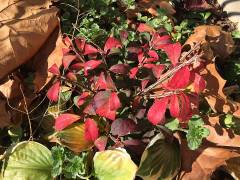
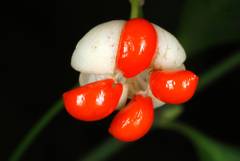
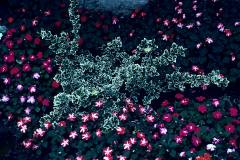
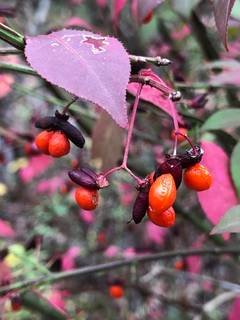
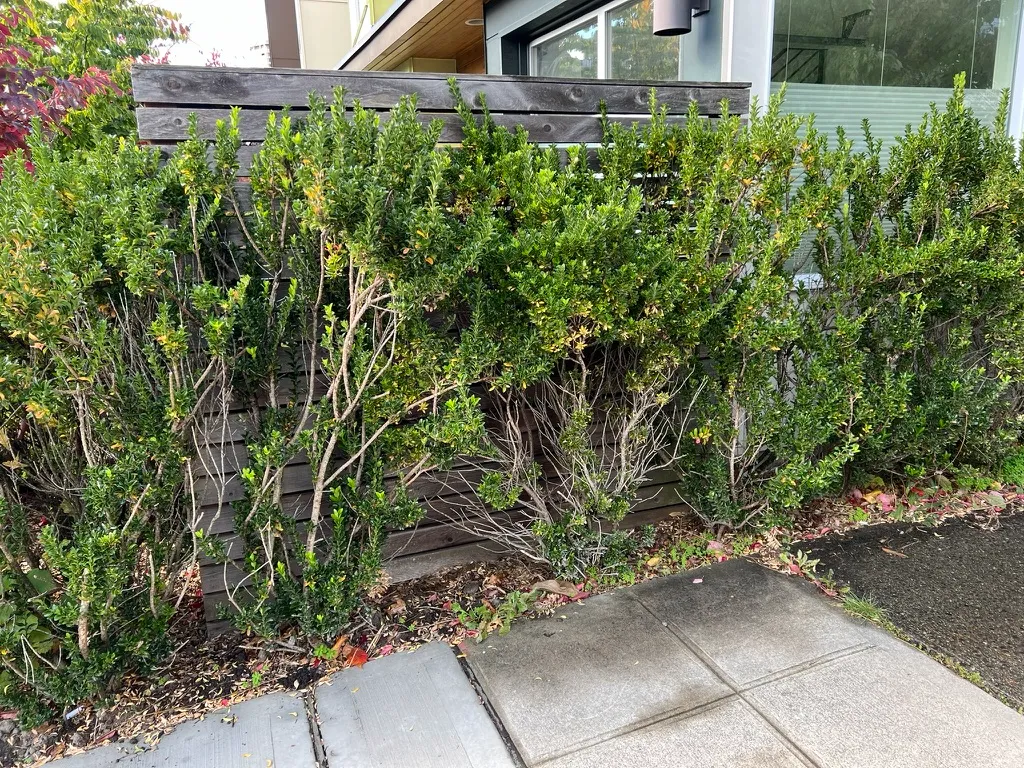
Euonymus japonicus is an upright broadleaf evergreen shrub in the staff-tree family Celastraceae growing 72–120 inches (180–300 cm / 6–10 feet) tall and 48–72 inches (120–180 cm / 4–6 feet) wide from a dense multi-stemmed base that produces a rounded columnar canopy. The species differs from the related Euonymus fortunei in growth habit and leaf character: E. japonicus is a freestanding upright shrub that does not climb and does not produce aerial rootlets, while E. fortunei is a ground cover, mounding shrub, or climbing vine that attaches to walls and trees by aerial rootlets; E. japonicus carries thicker leathery leaves 1–3 inches (2.5–7 cm) long, while E. fortunei carries thinner smaller leaves 1–2 inches (2.5–5 cm) long. Leaves are dark green and glossy on the upper surface, thick, leathery, oval, 1–3 inches (2.5–7 cm) long, and carried in opposite pairs along the stems. Variegated cultivars are more widely planted than the plain-green species type and supply the year-round ornamental foliage color that is the primary design reason for growing the species — 'Aureo-marginatus' has gold-edged leaves, 'Silver King' has cream-white-edged leaves, and 'Microphyllus' is a compact dwarf form 12–36 inches (30–90 cm) tall with small leaves that is used for low formal hedging and clipped topiary. Greenish-white tiny inconspicuous flowers open in axillary cymes in June, and pink-red four-lobed seed capsules with orange arils develop sporadically in fall on mature plants. The species tolerates coastal salt spray, urban air pollution, and repeated shearing — this combination of tolerances makes the species a foundation planting for coastal gardens and urban containers, and the species is a traditional formal hedge plant across the milder regions of Europe, North America, and East Asia. Limitation: euonymus scale (Unaspis euonymi) is a persistent armored scale insect pest that produces yellow leaf spotting, premature leaf drop, branch dieback, and in heavy infestations plant death — the scale is difficult to control once established and is the most significant pest pressure on the species in cultivation. Powdery mildew fungal infection produces a white powdery coating on the leaves in humid warm-summer conditions and is particularly problematic in coastal and southeastern gardens. All parts contain cardiac glycosides and alkaloids and are toxic to humans, cats, and dogs if ingested. Native to Japan, Korea, and China. Drought-tolerant once established. Not deer-resistant.
Native Range
Native to Japan, Korea, and China, growing in coastal scrub and forest margins. The species has been cultivated in gardens in Japan for centuries, and western horticulture adopted the species and its variegated cultivars in the 19th century as a tough formal hedging shrub that tolerates coastal salt spray, urban air pollution, and repeated shearing — this combination of tolerances supported the spread of the species through garden cultivation across the milder regions of Europe, North America, and East Asia.Suggested Uses
Used as formal clipped hedging, screening shrub, foundation planting, coastal garden specimen (tolerates salt spray and wind exposure), urban street-side planting (tolerates air pollution), and container specimen in containers of at least 5 gallons (19 L) at 36–60 inch (90–150 cm) spacing between plants in USDA zones 6 through 9. The thick glossy evergreen foliage, the tolerance of shearing, and the tolerance of coastal and urban conditions combine for a foundation planting in positions where other broadleaf evergreens decline. Humid warm-summer gardens with chronic powdery mildew pressure and gardens with active euonymus scale populations should consider alternative hedging species such as Ilex crenata (Japanese holly) because the scale pressure is often persistent and difficult to resolve once established. Gardens where cat, dog, or child access to the foliage or seed capsules is a concern should account for the cardiac glycoside toxicity.How to Identify
Appearance
Size & Dimensions
Height6' - 10'
Width/Spread4' - 6'
Bloom Information
Greenish-white tiny inconspicuous flowers open in axillary cymes in June across a 1–2 week bloom period. The flowers are not noticed in normal garden viewing and do not contribute to the ornamental value of the species — the year-round glossy evergreen foliage is the reason the species is grown. Pink-red four-lobed seed capsules with orange arils develop sporadically in fall on mature plants and are dispersed by birds.
Detailed Descriptions
Flower Description
greenish-white tiny inconspicuous flowers in axillary cymes in early summer; the flowers are not noticed in normal garden viewing and do not contribute to the ornamental value of the speciesFoliage Description
dark green and glossy on the upper surface; thick leathery oval leaves 1-3 inches (2.5-7 cm) long — larger and thicker than the leaves of the related species Euonymus fortunei and a key character for separating the two cultivated species; variegated cultivars carry gold or cream centers or marginsGrowing Conditions
Sun Requirements
Requires 4-8 hours of direct sunlight daily
• Full Sun: 6+ hours of direct sunlight
• Partial Shade: 3-6 hours of direct sunlight
• Full Shade: Less than 3 hours of direct sunlight
Care & Maintenance
Care Guide
Site in part sun to full sun with 4–8 hours of direct sun per day in well-drained loam or clay soil with a pH of 6.0–7.5. The species tolerates coastal salt spray, urban air pollution, and repeated shearing without decline, and drought tolerance develops once the root system is established. Euonymus scale (Unaspis euonymi) is a persistent armored scale insect pest that produces yellow leaf spotting, premature leaf drop, and branch dieback — treatment with horticultural oil during the dormant season supports scale control before infestations become severe. Powdery mildew fungal infection produces a white powdery coating on the leaves in humid warm-summer conditions and is particularly problematic in coastal and southeastern gardens. All parts contain cardiac glycosides and alkaloids and are toxic to humans, cats, and dogs if ingested. Not deer-resistant. Hardy in USDA zones 6–9.Pruning
Shearing for formal hedging and topiary is tolerated by the species, and 2–3 clippings per growing season (typically in March or April before new growth emerges and again in June or July after the main flush has matured) maintain a tight formal surface. All-green reversion shoots on the variegated cultivars are removed promptly as they appear because the reversion growth is more vigorous than the variegated growth and will overtake the variegated canopy within a few years if allowed to develop. The species tolerates hard renovation pruning back to the woody framework and produces reliable regrowth from the base.Pruning Schedule
Prune: March & June
early springsummer
Container Growing
Suitable for container growing
Minimum container size: 5 gallons