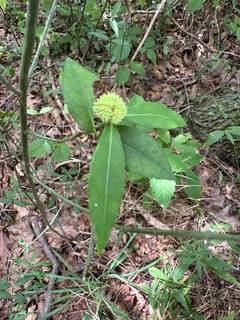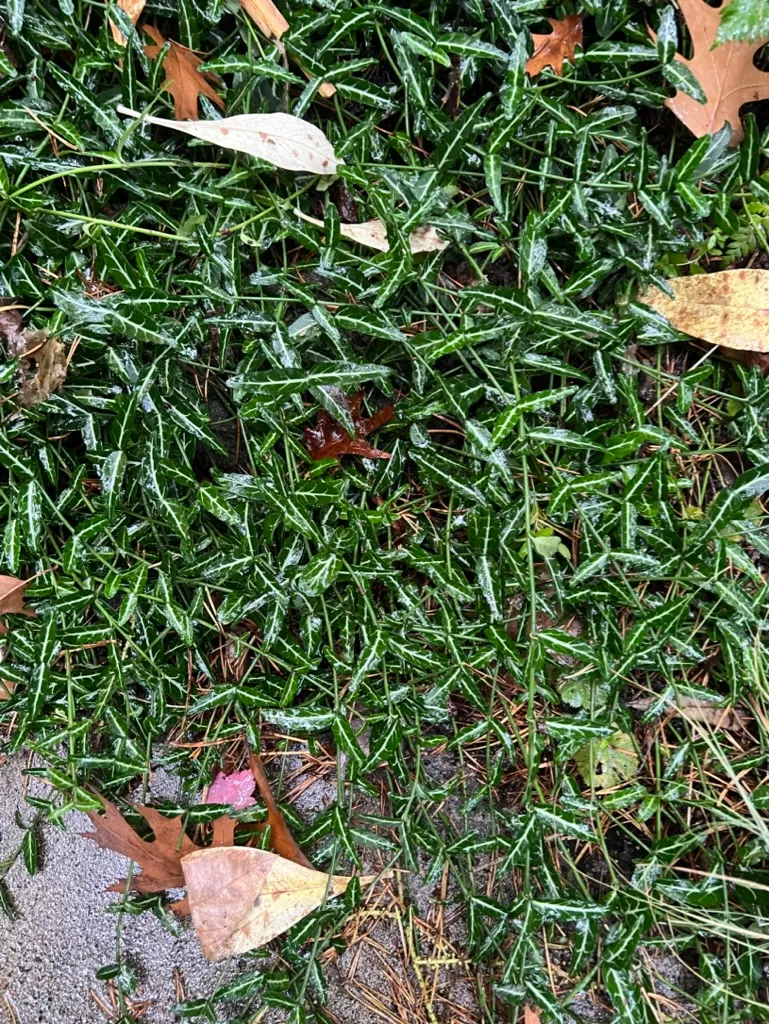
Image 1 of 15
1 / 15
Plant Reference
Euonymus, Genus, fortunei, Species,
- Genus & species
wintercreeper
China, Korea, and Japan; forest understory and rocky slopes at low to middle elevations
Overview
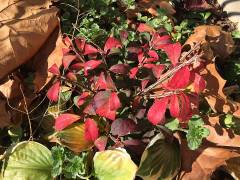
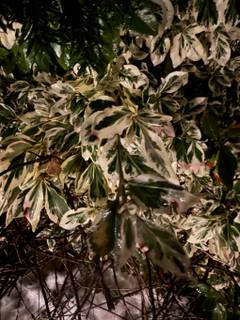
Euonymus fortunei is a broadleaf evergreen species in the staff-tree family Celastraceae that grows in three different forms depending on support and site — as a prostrate ground cover 6–12 inches (15–30 cm) tall without support, as a mounding shrub 24–48 inches (60–120 cm) tall with limited support, or as a climbing vine reaching to 480 inches (1,200 cm / 40 feet) when the plant can attach to walls, trees, or other vertical support by aerial rootlets (the same climbing mechanism used by English ivy Hedera helix). The species is named after Robert Fortune (1812–1880), the Scottish plant collector who traveled across China in the 1840s and 1850s and introduced many Chinese ornamental plants to western horticulture, including this species along with Rhododendron fortunei, Rhaphiolepis, and the Chinese tea plant selections that supported the establishment of the Indian tea industry. Leaves are dark green and glossy on the upper surface, oval, 1–2 inches (2.5–5 cm) long, with small teeth along the margins. Variegated cultivars are more widely planted than the plain-green species type and carry the year-round ornamental interest of the species — 'Emerald Gaiety' has cream-white leaf margins with pink winter tints, 'Emerald 'n' Gold' has gold leaf margins, and 'Coloratus' has green leaves that develop purple tints through cold winter weather. Greenish-white tiny inconspicuous flowers open in axillary cymes in June and July only on mature climbing growth that has reached the adult leaf stage on vertical stems, and the flowers are not a significant ornamental feature — orange-red seed capsules develop from the flowers in fall on mature plants. Limitation: the species is classified as an invasive plant in much of eastern North America where bird-dispersed seeds and climbing vegetative growth escape garden plantings to colonize native forest understory and tree trunks, and regional invasive species lists should be consulted before planting in jurisdictions where the species is restricted. Euonymus scale (Unaspis euonymi) is a serious armored scale insect pest that causes yellow leaf spotting, premature leaf drop, and branch dieback — the scale is difficult to control once established and can kill heavily infested plants. All parts of the plant contain cardiac glycosides and alkaloids and are toxic to humans, cats, and dogs if ingested; symptoms of ingestion include gastrointestinal distress and heart rhythm disturbance. Native to China, Korea, and Japan. Adapts to a wide light range from full sun to full shade and tolerates alkaline soil up to pH 8.0.
Native Range
Native to China, Korea, and Japan, growing in forest understory and on rocky slopes at low to middle elevations. The species was introduced to western horticulture by Robert Fortune (1812–1880), the Scottish plant collector who collected the species during his four expeditions to China between 1843 and 1861, and the species has subsequently naturalized across much of eastern North America where it is classified as an invasive plant because the bird-dispersed seed and the climbing vegetative growth combine to colonize native forest understory and tree trunks.Suggested Uses
Used as a ground cover, wall cover on masonry walls (the aerial rootlets can damage softer substrates and wood siding), foundation planting, and erosion-control planting on slopes and banks in USDA zones 5 through 9. The three growth forms (ground cover, mounding shrub, climbing vine) give the species a wide range of design applications, and the variegated cultivars supply year-round foliage color. Jurisdictions where the species is classified as invasive (much of eastern North America) are unsuitable because of the bird-dispersed seed spread and the climbing growth into native tree canopies. Tree trunks within a planting bed are unsuitable because the climbing growth will reach the canopy where it produces the seed-bearing mature growth. Gardens where cat, dog, or child access to the foliage or seed capsules is a concern should account for the cardiac glycoside toxicity. Euonymus scale management is a cultural requirement.How to Identify
Appearance
Size & Dimensions
Height6" - 40'
Width/Spread3' - 8'
Bloom Information
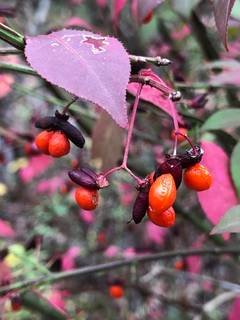
Greenish-white tiny inconspicuous flowers open in axillary cymes in June and July only on mature climbing growth that has reached the adult leaf stage on vertical stems. The flowers are not a significant ornamental feature and do not appear on the ground-cover or shrub forms of the plant because those growth forms do not produce the vertical adult leaf stage. Orange-red seed capsules develop from the flowers in fall on mature plants and are dispersed by birds — the bird-dispersed seed is the primary mechanism behind the species' invasive spread into native vegetation in regions where the species has naturalized.
Detailed Descriptions
Flower Description
greenish-white tiny inconspicuous flowers in axillary cymes carried only on the mature climbing-form growth where the vine has produced adult leaves on vertical stems; the flowers are not noticed in normal garden viewing and do not contribute to the ornamental value of the speciesFoliage Description
dark green and glossy on the upper surface; oval leaves 1-2 inches (2.5-5 cm) long with small teeth along the margins; variegated cultivars carry cream, gold, or white margins along the leaf edges; 'Coloratus' develops purple leaf tints through cold winter weatherGrowing Conditions
Sun Requirements
Requires 2-8 hours of direct sunlight daily
• Full Sun: 6+ hours of direct sunlight
• Partial Shade: 3-6 hours of direct sunlight
• Full Shade: Less than 3 hours of direct sunlight
Care & Maintenance
Care Guide
Site in full sun to full shade with 2–8 hours of direct sun per day in well-drained soil with a pH of 6.0–8.0. The species adapts to a wide light range, tolerates alkaline soil including chalk and limestone substrates, and develops drought tolerance once the root system is established. The species is classified as invasive in much of eastern North America — regional invasive species lists should be consulted before planting in jurisdictions where the species is restricted. Euonymus scale (Unaspis euonymi) is a serious armored scale insect pest that causes yellow leaf spotting, premature leaf drop, and branch dieback, and treatment with horticultural oil during the dormant season supports scale control before infestations become severe. All parts contain cardiac glycosides and alkaloids and are toxic to humans, cats, and dogs if ingested. Hardy in USDA zones 5–9.Pruning
Pruning is done at any time during the growing season to control the spread of the ground-cover form, to contain the climbing vine form from reaching into tree canopies, and to remove all-green reversion shoots on the variegated cultivars (the reversion growth is more vigorous and will overtake the variegated growth if not removed). Annual edging of the ground-cover form contains horizontal spread, and removal of climbing growth from tree trunks prevents the vine from reaching the canopy where it can produce the flowering and seed-bearing mature growth that drives the invasive spread of the species. Hard renovation pruning back to the woody framework is tolerated and produces reliable regrowth from the base.Container Growing
Suitable for container growing
Minimum container size: 3 gallons